
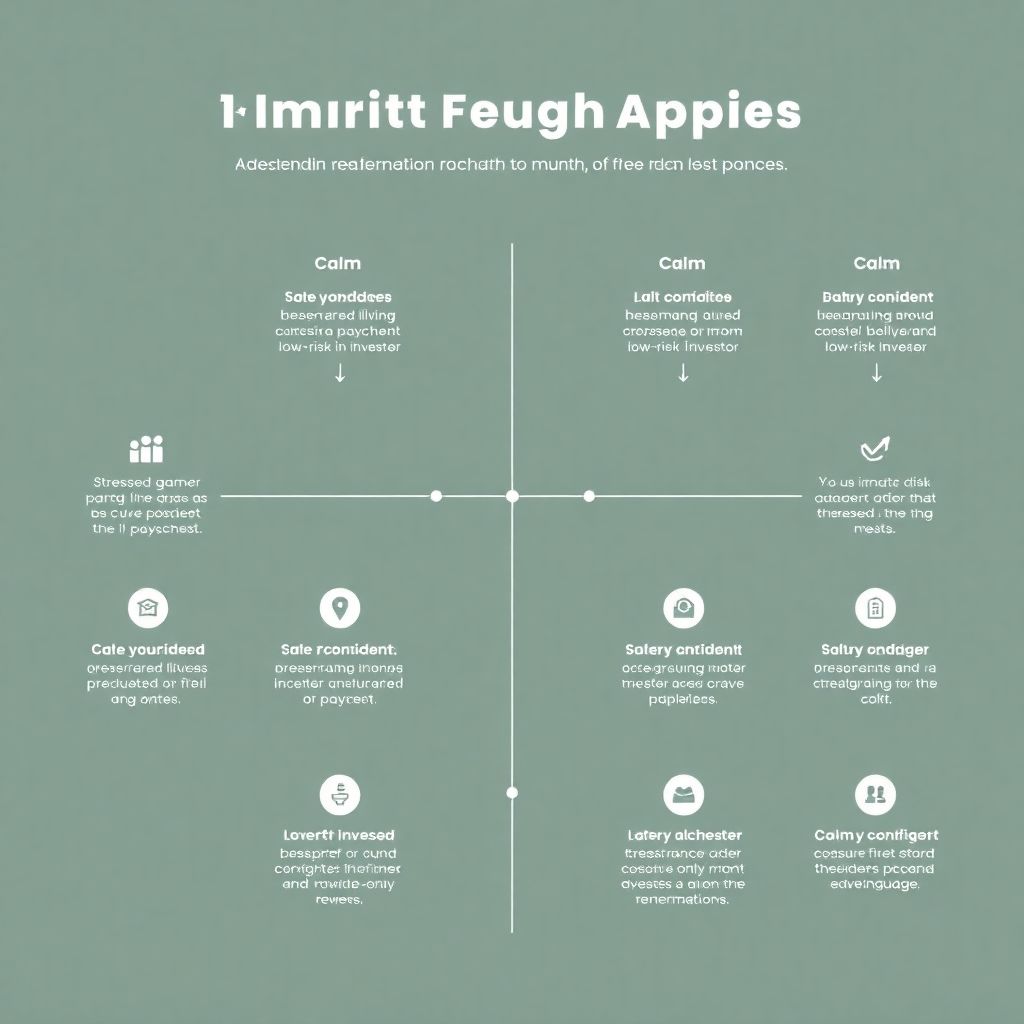
This 12 month roadmap to financial freedom for beginners shows how to go from paycheck to investor in one year using low-risk, boring systems. You will stabilize cash flow, build an emergency fund, create side income, then start investing with conservative rules. It is a step by step guide to start investing while broke and gaming-focused.
Quarterly milestones at a glance
- Quarter 1: Track every dollar, stop leaks in subscriptions and in-game spending, clear the most dangerous debts, and reach a small but consistent monthly surplus.
- Quarter 2: Build a 3-6 month cash buffer, lock in a lean budget, and automate transfers so saving happens before discretionary spending.
- Quarter 3: Launch at least one side-revenue system, test earning paths relevant to gamers on a budget, and hit your first stable extra income stream.
- Quarter 4 (Month 10): Learn core investing principles, open accounts, and deploy your first small, diversified, low-cost positions with strict risk controls.
- Quarter 4 (Month 11): Optimize for taxes, diversify across asset types, and avoid overconcentration in any one stock, coin, or speculative play.
- Quarter 4 (Month 12): Review results, fix weak spots, and commit to a 3-5 year plan that scales what worked while protecting downside.
Months 1-3: Stabilize cash flow and stop the leak
This phase is for anyone who feels broke, juggles bills, or lives one failed raid away from overdraft fees. It is the right starting point if you do not yet know where your money goes each month or you are asking how to start investing with no money for beginners.
Do not jump into investing here if:
- You are already behind on rent, utilities, or essential medical payments.
- You are using high-interest credit (payday loans, revolving credit cards) to buy games, skins, or hardware.
- You have unstable income (for example, inconsistent gig work) with no basic budget yet.
In these months the goal is simple: create a dependable surplus, even if it is tiny.
- Track every transaction for 30 days. Use a basic budget app or a spreadsheet. Split spending into: essentials, gaming, other wants, and debt payments.
- Cut recurring drains first. Cancel unused subscriptions (games, platforms, premium apps), downgrade data plans, and set a hard monthly cap for in-game purchases.
- Prioritize dangerous debt. List all debts with balances and APR. Focus extra payments on the highest-interest one while paying minimums on the rest.
- Create a realistic bare-bones budget. Define a “survival mode” version of your month: rent, utilities, food, transport, basic internet, and a small, fixed gaming allowance.
- Automate a starter surplus. As soon as income lands, move a fixed amount (even a small one) into a separate savings account before you spend anything else.
Monthly action table for visual tracking
| Month | Primary goal | Key metric to track | Suggested tools / helpers |
|---|---|---|---|
| Month 1 | Know exactly where every dollar goes | 100% of transactions categorized | Budget app, bank app export, simple spreadsheet |
| Month 2 | Cut obvious leaks and subscriptions | Monthly recurring costs reduced vs. Month 1 | Subscription manager, app store subscription list |
| Month 3 | Create consistent monthly surplus | Surplus amount after all bills every month | Zero-based budget template, calendar reminders |
| Months 4-6 | Build emergency fund and automate saving | Emergency fund size in months of expenses | High-yield savings account, automatic transfers |
| Months 7-9 | Launch sustainable side-revenue | Average monthly side income over 3 months | Freelance platform, creator tools, time tracker |
| Month 10 | Place first small, diversified investments | Percentage in low-cost diversified funds | Brokerage account, index fund screener, risk quiz |
| Month 11 | Optimize tax and diversification | Number of accounts and asset categories used | Tax estimator, portfolio tracker |
| Month 12 | Set 3-5 year growth plan | Documented plan and annual savings rate | Compound interest calculator, written plan doc |
Months 4-6: Build a 3-6 month emergency fund and cut discretionary drain
In this stage you convert your small surplus into a real safety buffer.
You will need:
- Separate savings account at a bank or credit union, ideally with no card attached, used only for emergencies.
- Access to your transaction history (bank and card statements) for at least the last 3-6 months to estimate true monthly expenses.
- A basic compound interest or savings goal calculator to test how different monthly contributions grow over time.
- Calendar or reminder system to track bill due dates and automatic transfers into savings.
- Willingness to cap discretionary spending on gaming, food delivery, and impulse buys for at least three months.
Core steps for these months:
- Set a target emergency fund size. For most people, 3-6 months of essential expenses (rent, utilities, food, transport, required insurance) is the long-term goal.
- Automate transfers the day after payday. Pay your future self first. Start with an amount that does not break your budget, then increase it slowly.
- Cut “low joy per dollar” spending. Keep the 1-2 gaming or entertainment expenses you truly value and cut or rotate the rest.
- Use windfalls wisely. Tax refunds, bonuses, tournament winnings, and item sales should go mostly to the emergency fund until the target is reached.
- Protect the fund with rules. Only use it for true emergencies (job loss, medical, essential repairs), never for sales, gifts, or new hardware.
Months 7-9: Establish reliable passive income and side-revenue systems
Before the step by step guide to start investing while broke moves into actual investment products, you first expand income sources. For many readers the best investment strategies for gamers on a budget start with monetizing skills and habits built in-game: focus, communication, and consistency.
Risk limits and constraints for side income
- Do not borrow money to start a side hustle, buy gear, or speculate on future sponsorships.
- Cap weekly hours so side work does not harm your main job or studies; burning out can destroy your earning power.
- Avoid any scheme promising guaranteed returns, unrealistically high daily profits, or requiring recruitment of others.
- If a platform or game economy can change overnight, treat that income as unstable and never base essential bills on it.
-
Choose one main side-income lane.
Pick something aligned with your current skills and hardware: coaching, content creation, moderation, game testing, or freelance digital work.
- List your strengths: aim, strategy, communication, editing, design, coding.
- Match each strength with at least one earning idea.
-
Validate demand with small tests.
Before investing major time, do tiny experiments to see if anyone will pay. Aim for the first small sale or paid gig, not perfection.
- Offer a limited-time coaching session or review for a modest fee.
- Post two or three pieces of focused content and track engagement objectively.
-
Set minimum profit thresholds.
Define what “worth it” means in numbers. If an activity does not hit that threshold after a set period, cut it and test another.
- Calculate hourly effective rate: earnings divided by total time invested.
- Keep only activities with a rising or stable hourly rate over time.
-
Systematize what works.
Turn successful experiments into recurring systems with schedules, templates, and batching so they run with less effort per dollar earned.
- Create a weekly content or client schedule and stick to it.
- Save templates for thumbnails, outreach messages, and invoices.
-
Separate and protect side income.
Route side earnings into a dedicated account. From there, allocate a fixed percentage to taxes, a percentage to savings, and a percentage to reinvest in growth.
- Never let lifestyle creep absorb all side income.
- Use a simple income and expense tracker for the side business.
-
Keep “passive” income honest.
Most passive income still requires setup work. If something claims to be totally hands-off yet high-return, treat it as a red flag and walk away.
Month 10: Core investing fundamentals and layered risk controls
Now you finally move from gamer with cash buffer to true beginner investor. The best investment strategies for gamers on a budget in this stage are boring on purpose: low-cost, diversified, and rule-based.
Use this checklist before and during your first investments:
- You have no unpaid bills in collections and at least a start on your emergency fund.
- You understand the difference between saving (short-term safety) and investing (long-term growth with risk).
- You have completed a basic risk tolerance quiz and know your comfort level with volatility.
- You have opened the right account type for your situation (for example, taxable brokerage, retirement account, or both, depending on your country).
- Your first investments are broadly diversified funds, not single stocks or speculative assets.
- No more than a small, predefined percentage of your total portfolio is in high-risk plays (individual stocks, crypto, leverage).
- You have a written rule for maximum loss per position and per month; if breached, you stop adding risk and review.
- You commit to a minimum holding period measured in years, not days, for your core investments.
- You use a simple compound interest calculator to understand how consistent contributions grow over time instead of chasing quick wins.
- You automate monthly contributions so investing happens regardless of market headlines or mood.
Month 11: Tax-smart scaling and portfolio diversification tactics
This month focuses on avoiding common mistakes as you scale. Many people accidentally undo years of progress here, so caution matters more than excitement.
- Confusing short-term trading with investing. Frequent buying and selling is usually closer to gambling than to the 12 month roadmap to financial freedom for beginners described here.
- Ignoring taxes until filing season. Not tracking taxable events can lead to surprise bills; use a basic tax estimator throughout the year.
- Overconcentration in one company, token, or industry. If a single asset failing would wreck your finances, you are not diversified.
- Chasing past performance. Buying whatever recently pumped without understanding why it moved often ends with buying high and selling low.
- Using leverage or margin without full understanding. Borrowing to invest can magnify losses; for this roadmap, avoid leverage entirely.
- Letting lifestyle expand with each gain. Upgrading gear and subscriptions every time your portfolio grows keeps you stuck at the same net worth.
- Ignoring fees and hidden costs. High-fee products quietly drain returns over time; prefer low-cost index funds or broadly diversified vehicles.
- Skipping written rules. Operating without a simple one-page investing policy invites emotional decisions during market swings.
Month 12: Consolidation, performance review and 3-5 year growth plan
At this point you have gone through how to go from paycheck to investor in one year using structured, low-risk steps. Month 12 is about choosing how aggressively to continue and which path fits your life over the next few years.
-
Slow-and-steady core investor
Focus on steady contributions to diversified funds, minimal time spent per week, and high protection of downside. Suitable if your job or studies already demand most of your energy.
-
Side-business-first builder
Channel more effort into scaling side income systems from Months 7-9 while keeping investing simple and automated. Suitable if your earning potential outside investing is clearly higher than average market returns.
-
Skill-up and specialize
Invest time into learning more advanced topics like valuation, options, or business building, but only after your core, low-risk plan is running. Suitable if you enjoy research and can separate experimentation money from core savings.
-
Safety-max “defensive” mode
Emphasize cash buffers and low-volatility assets if your income becomes uncertain or you expect major life changes. Suitable when preserving flexibility matters more than maximum growth.
Whichever path you choose, revisit your plan annually, use a portfolio tracker, and keep using calculators and simple tools to test decisions before committing real money.
Typical setbacks, overlooked risks and quick remedies
What if I cannot even create a small surplus in Months 1-3?
Increase income before obsessing over investing. Add temporary shifts, freelance gigs, or sell unused items. Treat this as an emergency: your first goal is breaking even with a tiny surplus, not picking the perfect fund.
How should I handle high-interest debt while following this roadmap?
Prioritize paying down the highest-interest debt while maintaining only a minimal emergency cushion. Delay increasing investments until the worst debt is under control, because guaranteed high interest against you usually beats potential investment returns.
Is it worth investing small amounts, or should I wait until I have more?
Small, regular contributions help you build habits and learn platforms with low risk. The dollar amounts can be modest while you are still stabilizing; consistency and discipline matter more than starting size.
How do I avoid scams and bad “opportunities” when I start earning side income?
Never pay to access work, never trust guaranteed returns, and research any platform before sharing personal or banking data. If earnings depend mainly on recruiting others or buying overpriced training, walk away.
What if markets crash right after I start investing?

Market drops are normal. If you followed the roadmap, your essential money is in cash, not at risk. Keep contributions small but steady, avoid panic selling, and review your risk level only after emotions cool down.
How much gaming spending is acceptable while trying to invest?

Set a fixed monthly cap that fits inside your budget after savings and bills. If you blow the cap regularly, lock purchases behind a waiting rule or prepaid card so you cannot overspend impulsively.
How long until I feel “financially safe” following this plan?
Safety is gradual, not a single milestone. You will typically feel more stable once you have a few months of expenses saved, no critical unpaid bills, multiple income sources, and consistent automated investments, even if totals are still small.