

Retirement for esports pros and streamers means building a safety-first plan to replace volatile prize money and subs with stable, long-term income. You need three pillars: disciplined saving and investing, clear career pivots outside competition, and strong protection for health, taxes, and contracts. This guide gives stepwise, practical actions.
Core Principles for Post-Esports Transition
- Separate your real, recurring income from hype spikes such as one-off events, donations, or viral months.
- Prioritize emergency cash and insurance before chasing aggressive investment returns.
- Turn unstable streaming revenue into automated, rules-based saving and investing habits.
- Map gaming skills to real-world roles so you are not dependent on reaction speed and meta knowledge.
- Use professional help selectively: a financial advisor for streamers and content creators plus an entertainment lawyer.
- Plan retirement as a phased exit from competition, not an overnight stop.
Assessing Financial Position: Income, Assets, and Liabilities
This framework works best for esports pros, partnered streamers, and content creators who have at least several months of consistent earnings and the ability to save. It is not ideal if you are buried in high-interest debt, have unstable housing, or cannot yet cover basic living costs without support.
- Map your income stability
List the last 12 months of income by source:- Team salary or org stipend
- Tournament winnings
- Platform payouts (subs, bits, ads, memberships)
- Sponsors, affiliate, and merch
- Coaching, consulting, or editing
Highlight which parts are recurring and which are one-off spikes.
- Inventory your assets
Capture everything you own with financial value:- Cash and checking
- Savings and emergency funds
- Brokerage and crypto accounts
- Retirement accounts, including the best retirement accounts for online streamers and influencers you already use
- Equipment and owned IP (courses, overlays, brand)
Note where assets are very volatile or hard to sell.
- List your liabilities and fixed costs
Write down:- Credit cards and personal loans
- Student loans
- Taxes owed or unpaid VAT/sales tax
- Rent or mortgage, utilities, subscriptions
Mark any high-interest debt as top priority to reduce risk.
- Estimate your minimum survival budget
Calculate the monthly amount needed for:- Housing and utilities
- Food and basic transport
- Health insurance and essentials
- Debt minimum payments
This is your baseline target for earnings replacement in retirement planning for esports professionals.
- Measure your runways
Using current savings, compute:- Emergency runway: months you can cover your minimum budget with no new income.
- Transition runway: months you can cover budget while earnings slowly decline.
If your emergency runway is under three months, prioritize cash savings before big retirement moves.
Designing a Sustainable Earnings-Replacement Strategy
Before focusing on how to invest income from streaming and esports, you need the right tools and accounts. These are the core components you will likely need to design a safe, long term financial planning for professional gamers and creators.
- Core tools and accounts
- Two bank accounts: one for personal spending, one for business or creator income.
- At least one retirement account appropriate to your country and work status.
- A low-cost brokerage account for flexible, long-term investing.
- Reliable tracking and automation
- Budgeting or cashflow app to tag each income stream and expense.
- Automatic transfers on payday to savings and investment accounts.
- Cloud storage for invoices, contracts, and tax records.
- Professional support where risk is highest
- A tax professional familiar with creators and esports.
- A financial advisor for streamers and content creators who uses transparent, fiduciary standards.
- An entertainment or contract lawyer to review team and sponsorship agreements.
- Rules-based earnings allocation
- Set fixed percentages of every payout to go toward:
- Taxes
- Baseline living costs
- Debt payoff
- Retirement and long-term investing
- Apply these rules even in viral months to avoid lifestyle creep.
- Set fixed percentages of every payout to go toward:
- Simple, diversified investment approach
- Favor broad, low-cost funds over speculative bets that mimic esports volatility.
- Keep speculative assets like individual stocks or crypto as a small, capped percentage.
- Review allocations at least once a year or after big life changes.
Healthcare, Mental Health, and Insurance for Retirees from Gaming
Before following any steps, consider core risks and limits:
- Health and insurance laws differ by country; always confirm local rules before acting.
- Stopping team contracts can instantly remove health coverage.
- Ignoring mental health until after burnout can lengthen recovery and delay career shifts.
- Underinsuring disability can leave you exposed if repetitive strain or injury ends your playing career early.
- Audit your current health and coverage
List any ongoing physical or mental health issues, medications, and regular treatments. Document what your current plan covers, including deductibles, co-pays, therapy sessions, and out-of-network rules. - Set a realistic healthcare budget
Estimate annual costs:- Insurance premiums if you buy your own plan
- Out-of-pocket visits, medication, and therapy
- Vision, dental, and physio for gaming-related strain
Divide by 12 to build this into your monthly retirement and transition budget.
- Secure post-team or post-org health insurance
If you are leaving a team:- Ask exactly when your current coverage ends.
- Explore options through a partner, national exchanges, or private plans.
- Do not allow a gap in coverage; align start dates carefully.
If you are self-employed, schedule time yearly to compare plans and adjust.
- Add disability and income protection
Gaming injuries and mental health breaks can end your ability to compete or stream full-time. Look into:- Short-term disability: covers income gaps for months.
- Long-term disability: protects against longer or permanent issues.
- Policy riders that cover self-employed or creator income.
Choose coverage that at least protects your minimum survival budget.
- Consider life insurance if others depend on you
If you support family or share major debts, a simple term life policy can protect them. Match the coverage length to obligations such as mortgage terms or children reaching independence, and avoid complex investment-linked life products unless advised by a trusted, fee-based planner. - Build a mental health support system
Plan for the psychological impact of leaving the spotlight:- Identify a therapist or counselor familiar with performance or gaming.
- Schedule sessions before you fully retire, not after a crisis.
- Maintain non-gaming communities or hobbies to reduce identity loss.
Treat therapy as a normal part of high-performance career transitions.
- Document and review yearly
Keep a one-page summary of all coverage types, costs, and renewal dates. Review once a year or whenever your role, income, or country of residence changes, updating your budget and coverage choices accordingly.
Skill Mapping: Translating Competitive Experience into Careers
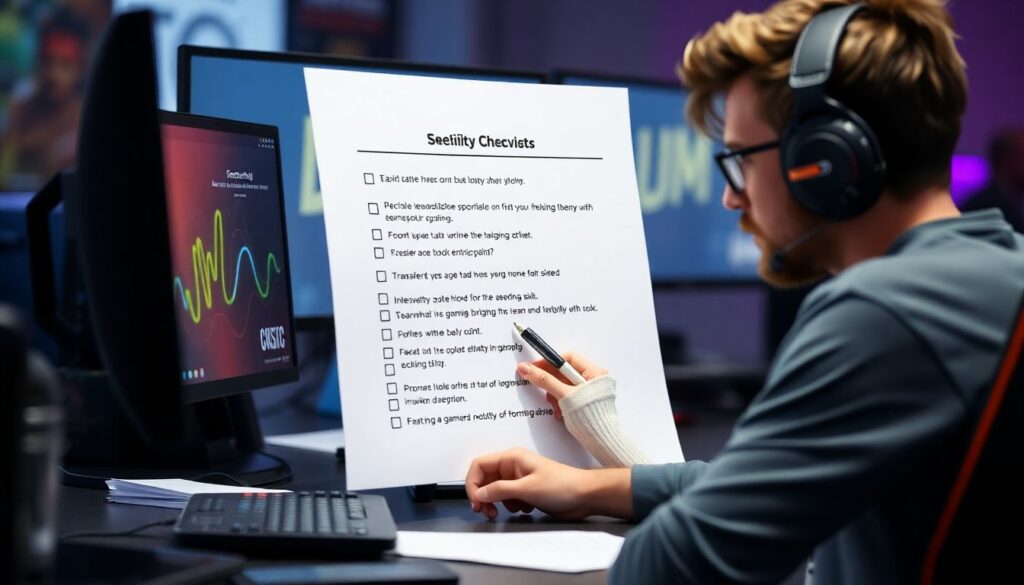
Use this checklist to verify that your skills map cleanly into post-esports paths and to reduce the risk of over-relying on your in-game reputation.
- You can describe your strengths without mentioning any specific title, role, or meta.
- You have written, bullet-point examples of teamwork, leadership, or conflict resolution taken from team or org life.
- You can explain your content pipeline as a process: ideation, production, editing, distribution, feedback.
- You have at least three non-playing roles in mind where your skills fit, such as coaching, production, community, product, or marketing.
- Your resume or portfolio shows measurable outcomes, such as growth, retention, or project delivery, not just teams and follower counts.
- You can speak about time management, practice structure, and review routines that would impress a non-gaming manager.
- You have at least one skill under active development that is valuable outside of esports, such as coding, design, sales, data, or operations.
- You can introduce yourself in two ways: as a former pro or streamer, and as a professional in your next target field.
Tax, Contracts, and Legal Protections for Streamers and Pros
Avoid these common, high-impact mistakes that often damage retirement planning for esports professionals and creators.
- Mixing personal and business money, which makes tax filing, audits, and budgeting harder.
- Ignoring estimated taxes on streaming, sponsorship, and prize income until a large unexpected bill arrives.
- Signing team or sponsorship contracts without independent legal review.
- Granting perpetual rights to your likeness, emotes, or content without clear compensation or exit clauses.
- Failing to clarify ownership of channels, accounts, and brand assets built under an org.
- Relying on verbal agreements for coaching, editing, or collab work instead of simple written terms.
- Not checking how your country treats income from foreign tournaments, platforms, or sponsors.
- Ignoring platform terms of service that affect monetization, chargebacks, and bans during your exit.
- Skipping basic estate planning, such as naming beneficiaries on retirement accounts and major assets.
Exit Execution: Timing, Branding, and Monetizing Your Legacy
There is no single correct way to retire from esports or streaming. These alternatives can be combined or phased, depending on your finances, energy, and brand strength.
- Gradual drawdown with part-time competition or streaming
Suitable if you still enjoy the game but need more stability. Reduce schedule and high-pressure events, build other income streams, and direct viewers toward evergreen content, coaching, or products that can keep earning with less live time. - Pivot to adjacent industry roles
Works well if you have strong networking and communication skills. Move into roles such as coaching, talent management, production, broadcasting, community leadership, or game development, while keeping a light content presence to preserve your legacy. - Brand-focused exit with evergreen assets
Best for larger creators or pros with strong, loyal audiences. Before your final season or announcement, create courses, VOD libraries, guides, or merch that can sell passively, and clearly communicate how your community can support you in the next chapter. - Clean break to a new field with minimal public profile
Appropriate if burnout, privacy, or mental health requires distance from the scene. Use savings and conservative investing to extend your runway while you retrain or study, and keep just enough of your public brand to leverage references if needed later.
Practical Answers to Typical Retirement Concerns for Players and Streamers
When should I start planning retirement from esports or streaming?
Start once you have any consistent income, even if it is modest. The earlier you separate taxes, build emergency savings, and open basic investment or retirement accounts, the more options you will have when results, viewership, or motivation decline.
How much should I save before reducing my schedule or retiring?
Aim for enough cash to cover several months of essential expenses, plus a clear plan to keep earning from part-time work or a new role. If your income is very volatile, lean toward a longer runway rather than pushing aggressive investments first.
What are the best retirement accounts for online streamers and influencers?
The best account depends on your country and whether you are an employee, contractor, or business owner. Look for tax-advantaged accounts that accept self-employment income, low fees, and easy automation, and consider professional advice to choose the right mix.
How do I handle taxes with income from multiple platforms and countries?
Track every income stream and its source country, and keep invoices or statements for each. Work with a tax specialist who understands digital creators to handle estimated payments and prevent double taxation or penalties.
Can I retire fully from competition but keep streaming part-time?

Yes, many pros do this. Treat part-time streaming as one income stream among others, automate savings from it, and avoid letting viewer expectations dictate your schedule or risk your health.
What if my investments drop in value right when I retire from esports?
Reduce risk ahead of your planned exit by holding more cash and lower volatility investments. If a downturn hits anyway, cut discretionary spending, delay big purchases, and avoid panic selling long-term assets if your basic needs are still covered.
How do I know if working with a financial advisor makes sense for me?
Consider an advisor if you earn meaningful money from multiple sources, feel overwhelmed by choices, or plan big transitions. Prefer fee-only advisors who act as fiduciaries and have experience with creators, athletes, or freelancers.