
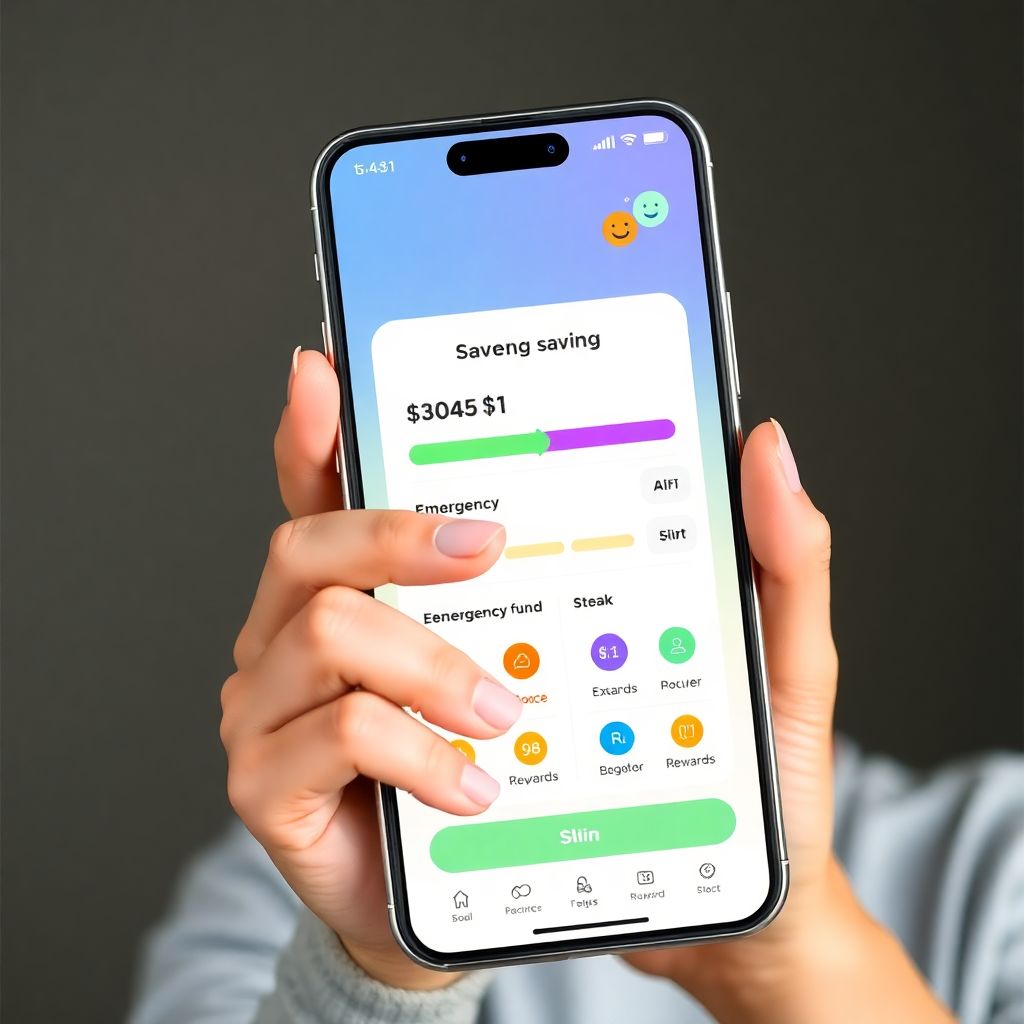
Gamifying your emergency fund means turning saving into a structured “game” with clear goals, visible progress, and simple rewards-without risking your money. You set a realistic target, automate safe transfers, track progress visually, and use small challenges, streaks, and social or personal rewards to stay consistent and reach your buffer faster.
Core gamified principles for a resilient emergency fund
- Always protect the core rule: emergency money stays in safe, liquid accounts (not investments that can lose value).
- Define a clear target and mini-milestones so every “level up” feels achievable and motivating.
- Use automation first; gamification is a layer on top, not a replacement for good systems.
- Design only low-risk rewards and non-financial penalties (never punish yourself with debt or reduced essentials).
- Favor small daily or weekly actions over aggressive one-time pushes that you cannot sustain.
- Track progress in a visual, simple dashboard so “winning” is obvious and satisfying.
- Predefine rules for when you can withdraw, and exactly how you will rebuild after using the fund.
Set a measurable emergency target and define acceptable risk
Gamified strategies work best if you already cover basic bills and are not in high-interest debt. They suit people who like structure, light competition, and clear goals. If you are struggling to pay rent, focus on stability and debt relief first; then return to gamification.
To decide how to build an emergency fund fast without taking unhealthy risks, clarify:
- Your minimum safety buffer. Many people start with a “starter” target (for example, one month of bare-bones expenses) before aiming for a larger cushion.
- Your time horizon. Are you building this starter buffer in three months, six months, or a year? A moderate horizon keeps pressure high enough to be motivating but not extreme.
- Your acceptable lifestyle trade-offs. Decide what you are willing to cut or delay (subscriptions, takeout, impulse shopping) and what remains non-negotiable (rent, medication, basic food).
- Your risk boundaries. For emergency funds, avoid stocks, crypto, or illiquid assets. Keep the money in:
- a basic savings account, or
- a high-yield savings account or money market account at a reputable bank or credit union.
Once you know your target and boundaries, you can design “levels” (for example, 10%, 25%, 50%, 75%, 100% of goal) and attach safe rewards to each level-up.
Design rewards and penalties that align with financial safety
A good game loop keeps you engaged while protecting your safety. Before touching apps or challenges, choose tools and constraints:
- Safe storage location. Open or designate a separate savings account just for emergencies, ideally at a different bank from your checking to reduce mindless spending.
- Tracking method. Decide where you will see progress:
- a note-taking app or spreadsheet,
- a habit tracker app, or
- one of the top budgeting apps to build emergency fund progress bars.
- Reward menu. Prepare 5-10 small, low-cost rewards you genuinely enjoy:
- a special home-made drink or snack,
- one rented movie or game night,
- an hour of guilt-free gaming/reading,
- a small add-on to something you already planned (nicer coffee, better in-game skin-but only from fun money).
- Penalty menu (non-financial). Use light, behavior-based penalties:
- do an extra chore you dislike,
- add 10 minutes of exercise,
- post a weekly status to an accountability buddy if you missed your goal.
- Hard safety rules. Set red lines you will not cross:
- no new debt as a “penalty” or “reward”,
- no touching rent, utilities, or medical budgets,
- no putting emergency money into volatile investments.
To amplify motivation safely, you can use the best apps to save money with gamification, focusing on those that support goal-based savings, streaks, and badges without nudging you into risky products.
Micro-quests and rituals: turning recurring habits into momentum
Before the step-by-step sequence, be clear about the main risks and constraints of gamified savings:
- Avoid setting goals so aggressive that you later binge-spend out of frustration.
- Never fund savings by skipping essential medication, bills, or healthy food.
- Stop any challenge that triggers anxiety, guilt spirals, or compulsive behavior.
- Keep all transfers reversible within the banking app (no locked or speculative products).
- Review your plan monthly; you can always lower targets rather than quitting entirely.
Now, turn saving into repeatable micro-quests that feel winnable and safe.
- Define your “Season 1” goal and levels. Treat your first emergency fund push as a game season lasting 8-12 weeks.
- Write one clear season goal: “Save $X in my emergency fund by [date].”
- Break it into 4-6 level checkpoints (for example, each 20-25% of the goal).
- Assign one pre-chosen reward for each level reached.
- Set a weekly base quest. Your base quest is the minimum automatic move you commit to every week.
- Choose a fixed amount or percentage to transfer weekly (for example, from paycheck day).
- Link it to your bank or to automatic savings apps for emergency fund goals if available.
- Make this amount small enough that it is nearly impossible to miss, even during bad weeks.
- Add two “bonus quests” for extra progress. Bonus quests are optional challenges you trigger when conditions are right:
- Round-up quest: every time you spend, round up to the next whole number and move the difference to savings (some automatic savings apps for emergency fund style this as a built-in feature).
- No-spend streak quest: choose one category (for example, takeout) and earn a fixed bonus transfer for each day you skip it.
- Track bonus quests as points (for example, 1 point = $5 transferred).
- Create a simple daily ritual. Rituals keep saving top-of-mind with minimal effort.
- Once a day, at a fixed time, check your emergency fund balance and mark the day as “Protected” or “Progress.”
- “Protected” means you did not withdraw for non-emergencies; “Progress” means money went in.
- After seven consecutive “Protected” days, trigger a tiny non-money reward (for example, extended game session).
- Pick one gamified savings challenge at a time. Gamified savings challenges to save money can be fun, but stack them slowly.
- Examples: “52-week increasing challenge”, “alphabet challenge” (amounts by letter), or “payday boss fight” (extra chunk after each paycheck).
- Cap total challenge transfers so they never exceed what you can afford after bills and basic needs.
- If a challenge makes you anxious, scale the amounts down instead of quitting entirely.
- Schedule a weekly “review and respec” session. Treat this like tuning a game build.
- Once a week, review: How much moved into your emergency fund? How did it feel?
- Adjust amounts or quests if you are consistently overshooting or missing targets.
- Confirm that all transfers came from genuine surplus, not from skipping essentials.
Leverage behavioral nudges: defaults, commitment, and loss aversion
Use this checklist to confirm your nudges are working and not pushing you into unsafe behavior:
- Your emergency transfer is set as the default action on payday (for example, automatic split deposit to savings before money hits checking).
- Opt-out is possible but requires a conscious step (for example, logging in and actively canceling or editing a transfer).
- You have at least one public or semi-public commitment (for example, telling a friend your goal or posting an anonymized tracker screenshot each month).
- Any “loss” mechanic is symbolic only (for example, losing streak badges or fun points), never real money or access to essentials.
- You use simple friction against withdrawals: separate bank, no card directly attached to the emergency account, or a 24-hour cooling-off rule.
- Your gamified system never suggests credit cards or loans as a solution for missing a goal.
- Every nudge is clearly documented so you can reverse or pause it without confusion.
- When stressed or overwhelmed, you have a pre-agreed rule that you may pause extra challenges but keep a tiny base automatic transfer.
Automation, dashboards, and transparent progress metrics
Automation and dashboards are powerful, but misused they cause stress and mistakes. Avoid these common pitfalls:
- Over-automation without oversight. Setting multiple overlapping rules in different apps so you lose track of where money moves and risk overdrafts.
- Using complex tools you do not fully understand. For example, connecting several banking and investing platforms just to get fancy visuals.
- Checking dashboards obsessively. Refreshing balances many times a day increases anxiety instead of motivation.
- Confusing emergency funds with general savings goals. Mixing vacation or hobby savings into the same account and tracker blurs what is “untouchable.”
- Letting apps upsell risky products. Some tools that look like the best apps to save money with gamification may aggressively promote credit or volatile investments.
- Dashboards with unclear metrics. If you cannot quickly see current balance, percent of target, and days to goal, the view is too busy.
- Ignoring bank notifications. Muting alerts completely makes it easier to miss failed transfers or unexpected withdrawals.
- Relying only on one app. If your primary app breaks or changes terms, you still need direct access to your bank and a simple backup tracking method.
When you choose top budgeting apps to build emergency fund dashboards, prioritize simplicity, clear goal tracking, and strong privacy over advanced “gamified” visuals.
Stress tests, withdrawal rules, and recovery playbooks
No game plan survives real emergencies unchanged. Build alternatives and “difficulty settings” so you can adapt without abandoning the system.
- Conservative mode: ultra-safe automation only.
- Use a single bank-based automatic transfer into a labeled emergency savings account.
- Track progress in a basic spreadsheet or notebook without extra challenges.
- Best when your income is unstable or you feel overwhelmed by apps and games.
- Light gamified mode: soft goals and simple rituals.
- Keep one small weekly quest and one visual tracker (for example, a progress bar or habit app).
- Skip strict penalties; focus on streaks and level-up rewards only.
- Good for people who want motivation but worry about pressure or guilt.
- Challenge mode: layered quests with strict rules.
- Combine automatic transfers, 1-2 gamified savings challenges to save money, and public commitments.
- Predefine withdrawal rules (for example, true medical, housing, or job emergencies only).
- Write a recovery playbook: after any withdrawal, automatically restart Season 1 with a smaller, fast rebuild target.
- Offline mode: paper-first system.
- If digital tools feel distracting or risky, use your bank’s basic online access plus a paper tracker or wall chart.
- Mark level-ups physically (stickers, bars, color-in grid) to preserve the game feeling without technology.
- Useful when you want full control and minimal data sharing.
Practical concerns, edge cases, and implementation pitfalls
How big should my first emergency fund goal be?
Start with a small, concrete target that feels reachable within a few months, then expand. A “starter” goal is often just enough to cover the absolute basics (for example, one month of bare-bones expenses), and you can gamify a second, larger season afterward.
Is it safe to use multiple savings and budgeting apps at once?
It can be safe if you keep the structure simple and understand every automation. Limit yourself to one primary budgeting app and, at most, one dedicated savings app, and make sure you always know which app is moving which amount and when.
What if my income is irregular or gig-based?
Use percentage-based quests instead of fixed amounts. For example, auto-transfer a small percentage of every payout to your emergency fund, then add optional bonus quests during strong weeks while allowing yourself to pause extras during lean periods.
How do I avoid turning gamified saving into unhealthy obsession?
Cap the amount of time you spend tracking and reviewing (for example, 10-15 minutes weekly), and use only light, non-punishing penalties. If you notice anxiety, guilt, or compulsive checking, temporarily switch to a simpler “conservative mode” with one automatic transfer and no challenges.
Can I invest my emergency fund to speed up growth?

For most people, emergency funds should stay in safe, liquid accounts, even if returns are modest. Gamification should focus on behavior and consistency, not on chasing higher yield with products that can lose value or be hard to access when you urgently need cash.
What if I need to spend from the emergency fund for something borderline?
Use a 24-hour cooling-off rule before large withdrawals and ask yourself whether the situation affects health, housing, or income. If you still decide to withdraw, log it in your tracker and immediately start a new short “rebuild season” with a smaller, time-bound goal.
Do I need friends or public accountability for this to work?

No, but it can help if it feels supportive rather than shaming. You can keep the game entirely private, share only with one trusted person, or join online communities that focus on encouragement instead of comparison and pressure.