

Why Crypto and Gaming Finally Make Sense Together
If you’ve been watching games and crypto collide over the last few years, you’ve probably seen the full spectrum: insane hype, brutal crashes, and a few quiet success stories that actually kept building.
In 2025 the picture is a lot clearer than it was during the 2021–2022 NFT madness. Play‑to‑earn isn’t dead, but the narrative has shifted. It’s less “quit your job and farm tokens” and more “treat crypto gaming as a high‑risk, experimental part of your investment strategy — if at all.”
This guide breaks down how play to earn crypto games investment can fit into a broader portfolio, without gambling your entire net worth on the next “Axie killer”.
We’ll go step by step, highlight common traps, and outline what to do if you’re just getting started.
From Gold Farming to Web3: A Short History Lesson
Step 1: Understand Where We Came From
Before Web3, players were already trying to turn time into money.
In the 2000s, people farmed gold in World of Warcraft and sold accounts in RuneScape. Those were black‑market economies: technically against the rules, centralised, and risky. You didn’t “own” anything; Blizzard or Jagex could ban you overnight.
Then blockchain gaming showed up.
– 2017–2018: Early experiments like CryptoKitties clogged Ethereum and revealed both demand and technical limits.
– 2020–2021: Axie Infinity, DeFi Kingdoms and others made play‑to‑earn mainstream. Yields were insane, especially in places with low wages. For a while, it really did look like a new economic model.
– 2022–2023: The bear market hit. Token prices collapsed, unsustainable reward models imploded, and a lot of “earn” games turned into ghost towns.
– 2023–2024: Builders regrouped. The narrative shifted toward “play‑and‑earn,” asset ownership, and sustainable game economies, while VCs started funding fewer but more serious studios.
– 2025: We now see fewer slot‑machine “click‑to‑earn” titles and more actual games with crypto under the hood — plus clearer regulations in major regions.
Why does this matter for you as an investor or gamer?
Because history shows a pattern: most early projects chase short‑term hype and die; a small minority evolve, add real gameplay, and sometimes become long‑term platforms. Your job is to tell the difference and size your bets accordingly.
What Makes Play‑to‑Earn Different From Normal Gaming?
Step 2: Separate “Fun” From “Finance”
At a basic level, play‑to‑earn and Web3 games add three layers on top of regular gaming:
1. Tradable in‑game assets
Skins, characters, land, and items can be NFTs that you can sell or lend, sometimes even outside the game’s own marketplace.
2. Tokens and in‑game economies
You often get rewarded with a native token. That token may be used for governance, upgrades, or simple speculation.
3. Interoperability (in theory)
In practice, most items stay within a single game or ecosystem, but some projects experiment with cross‑game assets or shared wallets.
The big shift for your investment strategy is this: your time and spending in a game can turn into on‑chain assets with market value. That doesn’t mean they *will* be valuable — just that they *can* be, and that you need to think like both a player and an investor.
Warning: Don’t Confuse Revenue With Profit
Earning tokens or NFTs doesn’t automatically mean you’re ahead:
– You might have to buy an expensive “starter pack” just to play.
– Token prices can fall faster than you can earn.
– Gas fees, marketplace commissions, and taxes eat into returns.
Always track net results: money in vs money out, including your time if you want to think like a serious investor.
Where Crypto Gaming Fits in a Portfolio
Step 3: Treat It as a Satellite, Not the Core
For most people, crypto gaming should be a small, speculative slice of an overall investment plan, not the foundation.
A simple mental model:
1. Core: diversified index funds, stable income streams, maybe blue‑chip crypto like BTC/ETH.
2. Satellite: higher‑risk bets — this is where Web3 gaming goes.
3. Wildcards: extremely speculative plays you’re ready to lose completely.
Crypto gaming usually sits in bucket 2 or 3. Returns can be extreme in both directions.
Rule of Thumb for Newcomers
If you’re just getting into Web3 games:
– Put in an amount that, if it went to zero, wouldn’t affect your rent, food, or long‑term plans.
– Cap your total exposure to gaming tokens and NFTs to a small percentage of your net worth, not “whatever looks promising on Twitter.”
– Assume lockups and illiquidity; don’t use money you might need quickly.
A Step‑By‑Step Framework to Evaluate Crypto Games
Step 4: Start With the Game, Not the Token
If the core gameplay looks like a spreadsheet with buttons, be suspicious. Sustainable projects increasingly look like real games first.
Ask yourself:
– Would people play this if there were no rewards?
– Is there clear progression, skill expression, and long‑term depth?
– Who is the target audience — hardcore, mobile casual, esports?
If the only “fun” is watching numbers go up, you’re probably looking at a short‑lived farm, not a durable platform.
Step 5: Analyze the Economy Like a Mini‑Country
Every Web3 game with tokens and NFTs is basically a small economy. Approach it analytically:
1. Token sinks vs token faucets
– Faucets: ways new tokens are created (rewards, emissions, staking yields).
– Sinks: ways tokens are burned or removed (upgrades, fees, crafting, cosmetic purchases).
Too many faucets and not enough sinks usually equals inflation and price collapse.
2. Player incentives
Are players there to enjoy the game, or only to farm? The more “tourist capital” (pure speculators) a game has, the more violently things can swing.
3. External demand
Top NFT games to make money in the long run typically have non‑farmers who want assets for status, convenience, or esports, not just for flipping.
If a whitepaper promises “infinite yield” with no clear sinks, it’s not a miracle; it’s a delayed crash.
Step 6: Look at the Builders and Backers
Even in 2025, many Web3 games are launched by anonymous teams with no track record.
As an investor, check:
– Team history: Have they shipped games before? On PC, mobile, consoles, doesn’t matter — shipping anything complex is a good sign.
– Funding: Are there reputable backers? Or is it just a meme coin with a trailer?
– Transparency: Regular dev updates, public roadmaps, and realistic timelines are much better than hype‑only Twitter accounts.
Red flag: constant marketing partnerships and almost no talk about actual game systems, testing, or player metrics.
How to Actually Allocate and Invest
Step 7: Choose Your Exposure Type
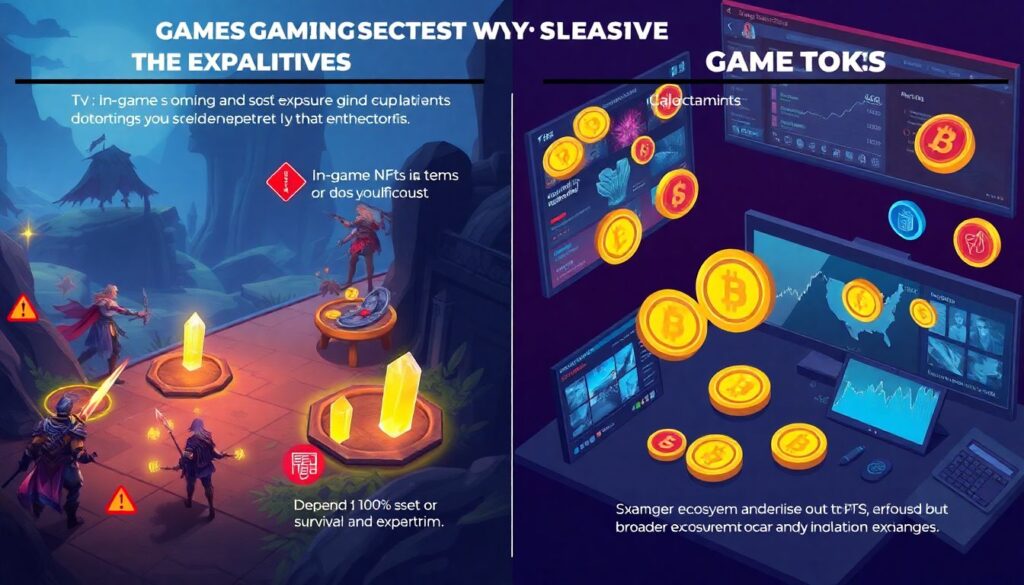
There are several ways to get exposure to the crypto gaming sector, each with different risk profiles.
1. In‑game NFTs and items
– You buy characters, land, or cosmetic items, and hope demand grows.
– Highly illiquid and risky; depends 100% on that game’s survival.
2. Game tokens
– Native tokens that can be staked, used, or governed.
– Often volatile, exposed to speculation and vesting unlocks.
3. Platform / ecosystem tokens
– Tokens of chains or platforms that multiple games build on (e.g., a gaming‑focused L2).
– Slightly more diversified; still risky but less tied to one title.
4. Equity in studios or gaming funds (if available in your jurisdiction)
– Harder to access for retail, but more traditional investment structure.
When people talk about how to invest in crypto gaming projects, they usually mean some combination of game tokens, NFTs, and occasionally broader ecosystem coins.
Starter Strategy for Newcomers
If you’re new and not sure where to start:
1. Pick one or two games you genuinely want to play.
2. Start with free or low‑cost participation if possible (free‑to‑play paths, testnets).
3. Only after understanding the economy from the inside, consider:
– A small token position; and/or
– One or two NFTs that enhance your gameplay, not just speculation.
4. Set a *pre‑defined* maximum allocation and stick to it.
Step 8: Timing and Narrative Cycles
Crypto gaming is extremely narrative‑driven. Capital pours in when a new buzzword hits (metaverse, GameFi, interoperable avatars, etc.), then exits just as fast.
To survive this:
– Don’t chase every new narrative; pick a few themes you understand.
– Be wary of buying after major influencer campaigns or exchange listings; that’s often late.
– Accumulate gradually when attention is low and fundamentals are building, not when everyone on TikTok is screaming about 10x returns.
Play‑to‑Earn as Part of an “Investment of Time” Strategy
Step 9: Monetize Your Time Intelligently
Many gamers think only in terms of “how much money can I put in?” You should also ask, “how much is my time worth here?”
Examples of using time strategically:
– Be early in testing phases: Some of the best web3 games to earn crypto 2025 are running testnets and beta programs that reward early testers with airdrops or exclusive assets — often with no upfront capital risk.
– Guilds and DAOs: Participating in organised groups can let you borrow NFTs, get training, and share yields in exchange for time and performance.
– Specialisation: Getting good at a niche (e.g., PvP in a specific title, or economy arbitrage in a farming game) can yield outsized returns compared to casual play.
Treat your gameplay like a side‑gig: track hours vs output, avoid burnout, and remember that fun still matters. If every session feels like a shift at a job you hate, you’re doing it wrong.
Big Mistake: Chasing Yesterday’s Meta
Newcomers often pile into last year’s winners. By the time something is widely known as a “top earner,” the easy gains are usually gone, and token inflation is kicking in.
Look forward, not backward:
– Follow dev updates, not just charts.
– Watch for structural changes to economies (new sinks, new modes, new audiences).
– Focus on where player numbers and engagement are *growing*, not where APR screenshots look highest right now.
Risk Management: Staying in the Game Long Enough to Win
Step 10: Build Guardrails Before You Need Them
There’s no such thing as low‑risk play‑to‑earn. But you can make it less reckless.
Implement concrete rules:
1. Position sizing
Never put more than a small percentage of your portfolio into a single gaming token or NFT collection.
2. Exit rules
Decide in advance:
– Profit‑taking levels (e.g., sell part if you 2x or 3x).
– Maximum loss you’ll tolerate before cutting a position.
3. Diversification within the sector
Mix different genres, chains, and economic models. For example:
– A strategy game with land NFTs
– A mobile‑friendly action title with a dual‑token model
– A platform token that benefits from multiple games
4. Security hygiene
Use hardware wallets, beware fake marketplaces, double‑check URLs. Security failures erase returns instantly.
Common Pitfalls for Beginners
Avoid these frequent errors:
– All‑in on “starter packs” because a YouTuber said it’s “passive income.”
– Ignoring vesting schedules; big unlocks can crush prices.
– Confusing daily rewards with sustainable yield; high numbers today say nothing about six months from now.
– Underestimating liquidity risk; just because an NFT is “worth” 1 ETH on paper doesn’t mean someone will actually buy it at that price.
Choosing the “Best” Gaming Crypto Without Guessing
Step 11: Build a Simple Filter Instead of Chasing Tips
Instead of asking, “What are the best gaming crypto coins to buy?”, build a checklist you apply to every opportunity:
1. Product
– Is there a playable build?
– Do players return after trying it once?
2. Economy
– Clear token sinks?
– Limited reliance on Ponzi‑like referral schemes?
3. Data
– On‑chain activity, daily active users, retention.
– Not just Discord member counts, which are easy to fake.
4. Alignment
– Does the game align with your skill set and time budget?
– Do you understand the mechanics well enough to have an edge?
Using a filter like this won’t find every moonshot, but it will dramatically reduce the number of disasters you walk into.
Practical 5‑Step Plan to Get Started in 2025
Step 12: From Zero to First Smart Allocation
Here’s a straightforward path you can follow:
1. Define your risk budget
Decide how much of your total net worth — if any — can go into crypto gaming. Write it down.
2. Pick one ecosystem and one game to learn deeply
Maybe a chain with several gaming titles, or a single flagship game with active development. Don’t scatter yourself across ten projects on day one.
3. Play first, invest later
Spend at least a week playing for free or at minimal cost. Take notes: What are players doing to earn? What are they spending on? Does it feel sustainable?
4. Make a tiny, intentional investment
Allocate a small amount into either:
– The game token, if the economy looks healthy; or
– A single NFT that improves your experience and has real in‑game utility.
5. Review monthly and adjust
Once a month, check:
– Are player numbers and dev updates trending in the right direction?
– Are you on track with your risk budget?
– Do you still believe in the thesis, or are you just emotionally attached?
If the answers are negative, don’t hesitate to scale back or exit.
Final Thoughts: Fun First, Speculation Second
Crypto gaming in 2025 is no longer the wild frontier it was a few years ago, but it’s still far from “safe.” The upside is that we now have better tools, clearer historical lessons, and more mature projects to choose from.
Used wisely, Web3 games can:
– Turn some of your playtime into ownership.
– Give you early exposure to innovative game economies.
– Add a high‑risk, high‑reward edge to a diversified portfolio.
Used recklessly, they can just as easily become an expensive distraction disguised as investment.
Anchor your strategy on fundamentals: real gameplay, sustainable economies, disciplined risk management. Let the “earn” side be a bonus layered on top of games you’d enjoy anyway, not the sole reason you’re there.
That mindset won’t make you the loudest voice on social media — but it will keep you in the game long enough to benefit from the next cycle of innovation in play‑to‑earn and Web3.