
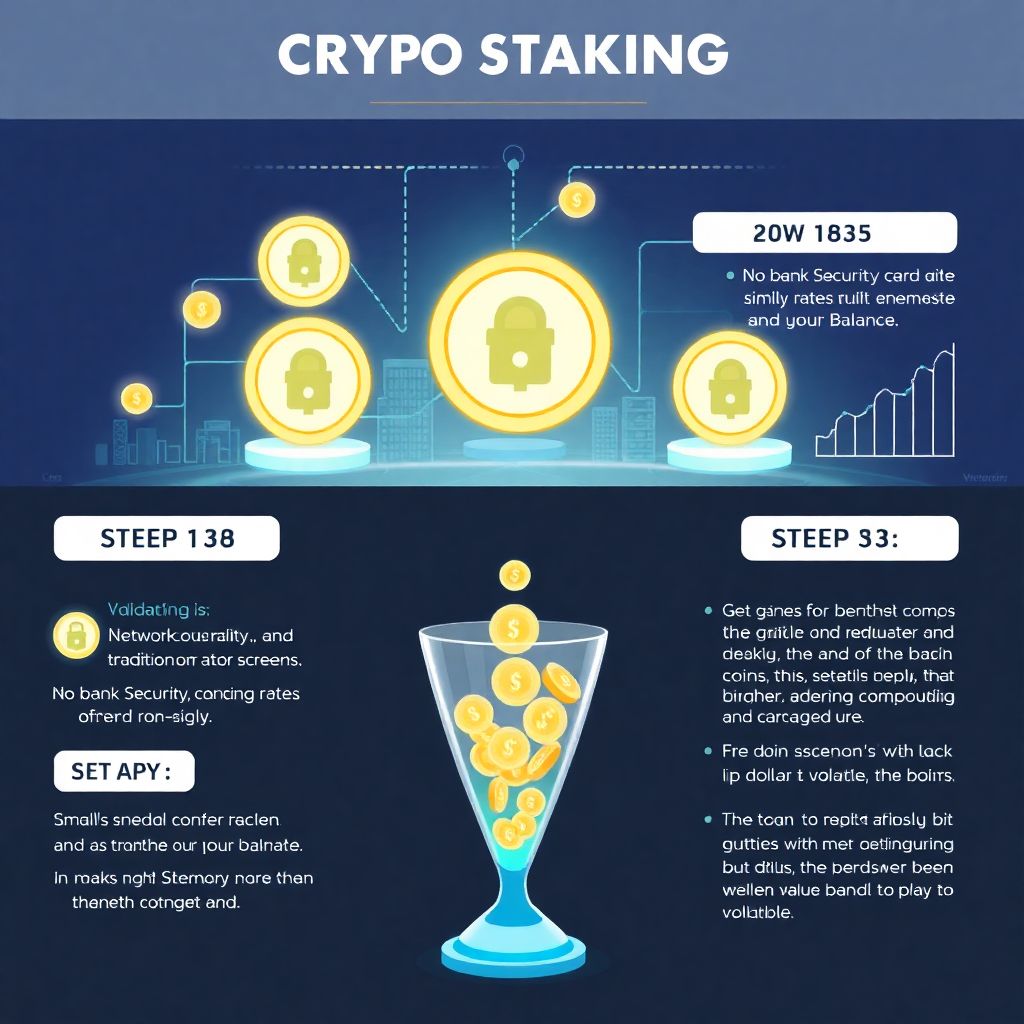
Step 1: Understand what crypto staking really is

Crypto staking sounds fancy, but the idea is simple: you lock your coins to help secure a blockchain and, in return, you get rewarded with more coins. Instead of running noisy mining rigs, you just hold a supported token in a wallet or on an exchange that participates in a proof‑of‑stake network. The network uses your stake as a kind of “vote” that you believe in the chain’s validity, and you earn a cut of the block rewards. In practice, staking often feels like putting money in a savings account, but that comparison is dangerous, because there’s no bank insurance, the price of the token jumps up and down, and some projects can change rules overnight. Before even searching for the best crypto staking platforms with highest rewards, you want to be clear on one thing: your coins are working for the network, not for a bank, so everything — from yields to lockup periods — is governed by code, validators, and market mood, not by your local regulator or deposit guarantee scheme.
Step 2: How staking rewards actually work day to day
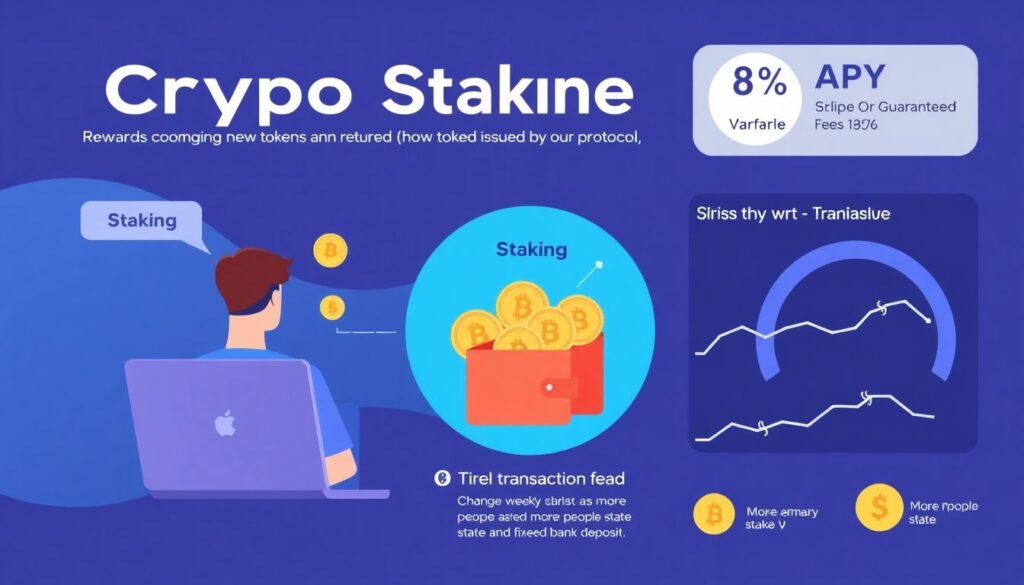
When you stake, rewards usually come from new tokens the protocol issues plus a slice of transaction fees. Platforms will show an APR or APY, for example “8% APY,” but this number is not guaranteed like a fixed deposit; it’s an estimate that can change weekly as more people stake or network parameters shift. Some coins pay out rewards every few seconds, others once a day or even less often, and many services auto‑compound, meaning your earned tokens are added to your staked balance so the next payout is slightly bigger. That’s how to earn passive income with crypto staking in practice: you deposit, wait, and watch your coin balance grow while the dollar value still depends on the market. A quick tip for beginners: don’t just chase the highest percentage; check how rewards are calculated, whether there are performance or validator fees, and what happens if the validator you’re delegating to misbehaves or goes offline.
Step 3: Risks behind the “easy money” narrative
People often ask, “is crypto staking safe risks and rewards explained in simple terms?” The short answer is that staking is safer than many degen strategies, but far from risk‑free. First, there’s price risk: if you stake a token that dumps 50%, that juicy 12% APR suddenly looks tiny. Second, there’s protocol risk: bugs, economic exploits, or governance decisions can wreck a project even if your staking setup worked fine. Third, if you stake through a centralized platform, you add custody risk; the provider might get hacked, go insolvent, or freeze withdrawals. On some networks you also face slashing, where a validator’s bad behavior leads to a penalty that burns part of your stake. Beginners often overlook lockup terms: if your coins are locked for, say, 21 days, you can’t exit during a market crash. The practical takeaway is to treat rewards as compensation for real, layered risk, not as a free bonus for pressing a button.
Step 4: Picking platforms and exchanges without getting burned
Once you grasp the basics, the next step is choosing where to stake: on‑chain through your own wallet or via an exchange or staking service. Many newcomers start with the top crypto exchanges for staking rewards comparison, because the interface is familiar and setup is simple: you pick a coin, choose flexible or locked staking, confirm, and you’re done. The trade‑off is that you trust the exchange with both custody and the actual validator selection, and the platform takes a cut of rewards. On‑chain staking with a wallet and your own choice of validator demands more effort: you must handle private keys, understand delegation, and double‑check addresses, but you keep more control and usually higher net yields. A balanced approach is to split: use centralized staking for smaller, liquid amounts and experiment with native staking only for assets and networks you’ve researched. No matter the route, read the fine print on fees, unbonding periods, and whether rewards are auto‑restaked or paid to a separate balance.
Step 5: Comparing yields – when staking beats just holding
A common dilemma is crypto staking interest rates vs holding which is better, and the honest answer is “it depends on your time frame and the coin.” If you plan to hold a token for a year anyway, staking it can make sense, because you might as well collect a few extra percent along the way. However, if the asset is highly volatile and you like to trade swings, locking it up for fixed periods can backfire; you’ll miss chances to sell during pumps or cut losses during dumps. Do a small mental experiment: estimate a realistic price range, not a fantasy moonshot, then calculate how much extra coin you’d earn from staking versus the potential loss from being unable to exit quickly. For stablecoins, yields might be lower but price risk is smaller, while for new speculative tokens, double‑digit staking APRs often hide serious downside and inflation. Treat staking as a way to slightly tilt odds in your favor on long‑term positions, not as a magic button that overrides market risk.
Step 6: A simple beginner‑friendly staking game plan
If you’re just starting, forget complicated strategies and aim for something you can actually manage. Begin with a coin you already understand and planned to hold for months, like a major layer‑1 or a top‑tier staking token, and use a well‑known platform rather than chasing obscure services. Instead of hunting for the absolute best crypto staking platforms with highest rewards, prioritize those with a track record, transparent terms, and clear documentation. Start small, maybe a fraction of your stack, and watch how rewards flow in for a few weeks: check payout frequency, how fast you can unstake, and what happens to rewards during market volatility. As you gain confidence, you can diversify across two or three networks and mix flexible and locked options. Keep a simple rule: never stake coins you might need on short notice for rent, emergencies, or taxes, because even “flexible” products can suffer delays during exchange outages or heavy network congestion.
Step 7: Red flags and newbie mistakes to avoid
The biggest trap for beginners is seeing a double‑ or triple‑digit APR and assuming it’s a sign of opportunity rather than risk. Extremely high yields are often powered by unsustainable token emissions, and when the music stops, the token price collapses faster than you can collect rewards. Another common mistake is staking everything on one platform, turning a diversified portfolio into a single‑point‑of‑failure bet on a custodian or protocol. Be wary of platforms that hide who runs the validators, don’t explain where rewards come from, or bombard you with referral bonuses instead of solid docs. If a service promises “guaranteed” yields in crypto without disclosing risk, that’s a red flag. For self‑custodial staking, double‑check every transaction, keep seed phrases offline, and never sign messages or approvals you don’t understand. Remember, in this space, clicking too fast is more dangerous than moving too slowly, so take a breath and verify each step before committing funds.
Step 8: Knowing when staking is not the right move
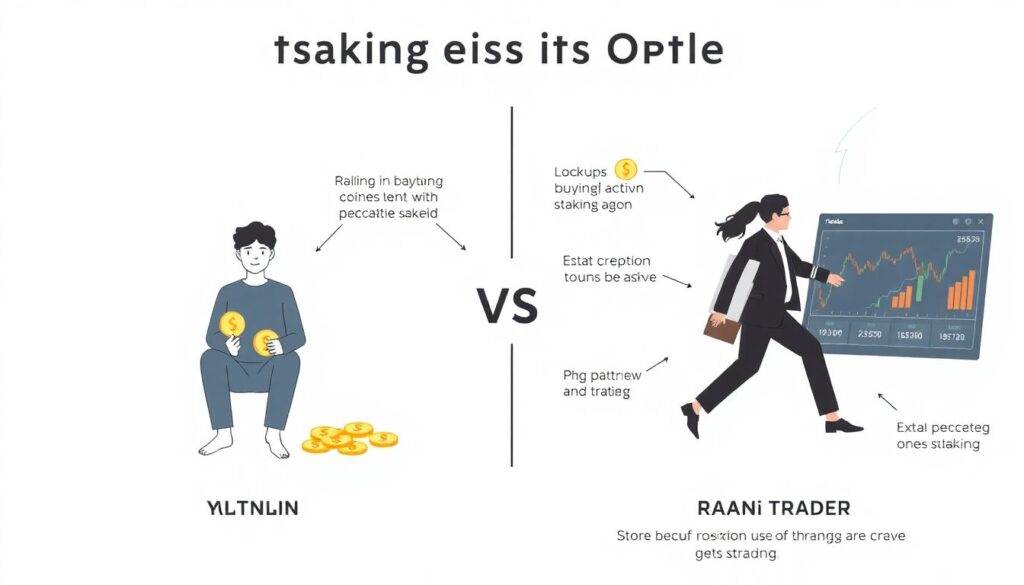
Staking is optional, not a requirement for every coin you own, and there are times when sitting on the sidelines makes more sense. If you’re actively trading a token, constantly moving in and out of positions, the extra few percent from staking may not justify lockups, withdrawal queues, or the mental overhead of tracking multiple positions. If a project is brand‑new, poorly documented, or has unclear tokenomics, you may want to observe how early stakers fare before joining in, rather than being experimental liquidity for a half‑baked idea. Similarly, if your risk tolerance is low or you’re still building a basic emergency fund in regular cash, focus there first; crypto rewards will not help if you’re forced to sell at a loss during a downturn. When you feel you genuinely understand how to earn passive income with crypto staking, can explain the risks to a friend, and have spare capital you’re okay locking up, that’s a healthier moment to scale in.