
The Money Problem in Esports No One Explains
From zero paychecks to prize-pool illusions
If you’re grinding ranked every night, nobody has to tell you that the skill ceiling is high. What almost nobody talks about is the financial ceiling. The path from “no org, no salary, maybe a few tournament scraps” to “unstable esports income” is messy. One month you get a decent prize split and a couple of paid coaching sessions, the next month you can’t cover your headset that just died. Most “success stories” skip this period, but for 90% of aspiring pros, this limbo lasts for years, not months, and if you don’t structure it correctly, you’re broke right at the moment when an opportunity finally appears.
—
What Esports Income Really Looks Like
Why “esports player salary” is a misleading number
When people Google *esports player salary*, they usually see screenshots of star contracts and massive prize earnings. The reality is layered. At the top tier you might see a fixed monthly salary, small signing bonuses, prize splits, revenue share from stickers or skins, and occasional appearance fees. In tier 2–3 scenes the “salary” is often a symbolic stipend, late payments, or “we’ll pay you when we get sponsors.” You can technically be a “paid pro” and still earn less than a part-time barista. The problem is not just the amount, but how inconsistent and fragile every income source is, compared to a regular job.
Real-world case snapshots (names changed, patterns real)
Take “Leo,” a 20-year-old FPS player on a mid-tier European roster. On paper, his org offers $1,000 per month, with 10% of team prize money and partial bootcamp coverage. In practice, payments slip by two to three weeks, and event travel is sometimes fronted on players’ personal cards. After taxes, rent on a shared apartment, and basic food, Leo has maybe $100–150 “freedom money” left. Meanwhile, “Maya,” a high‑rank support player who never broke into Tier 1, streams six evenings a week, coaches directly via Discord, and subs for teams as needed. Her “esports income” is not glamorous, but between coaching, stream subs, and occasional analyst work, she quietly clears more than some signed players with less stress and more control.
—
Financial Planning for Gamers on Unstable Income
A baseline system when cashflow is chaotic
*Financial planning for gamers* can’t copy-paste a normal office worker’s budget template. Instead of stable paychecks, you have streaky cashflows: one big tournament, three dry months, a random sponsor test, some stream donations. Rather than blindly budgeting month by month, think in “runway blocks.” Every time money comes in, you first extend the time you can safely survive at a minimal standard, and only then think about upgrades or extra gear. In practice, that means when you finally win $2,000, it shouldn’t magically transform into a new PC, a jersey collection, and daily food delivery; it should buy you months of low-stress focus.
A simple baseline system: define your “barebones survival number” (rent + food + utilities + cheap internet + transport). Let’s say that’s $700. Every serious income you get, immediately ask: “How many months of barebones does this cover?” If you just pulled $900 after a small event and a coaching package, that’s 1.3 months of survival. Your priority is to lock that in: clear urgent debts, pre-pay what you reasonably can (without penalties), and keep the rest as liquid cash. Only leftover money beyond a 3–6 month runway becomes “upgrade money” or “travel to LAN money.”
Buckets, not chaos: managing unstable paychecks
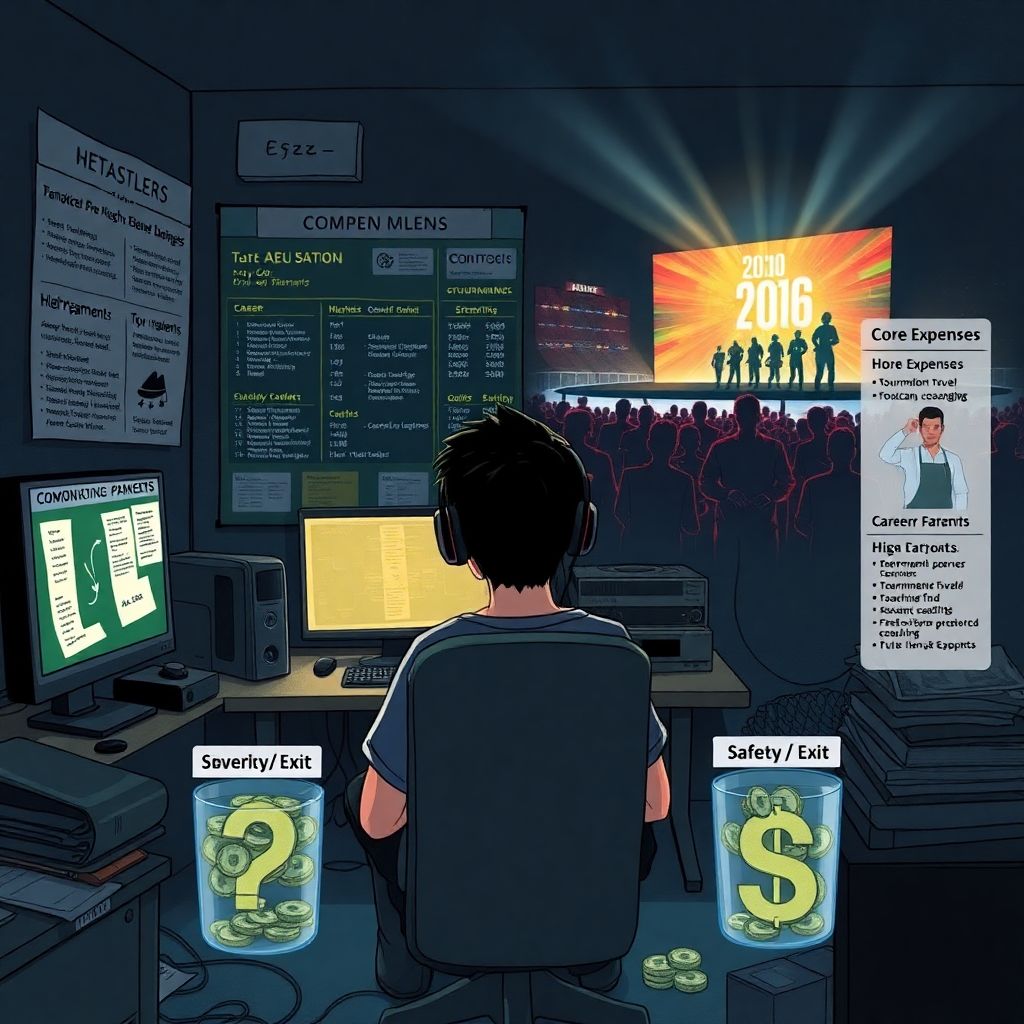
Instead of one chaotic bank account, split your money into mental or actual “buckets.” This isn’t a fancy finance hack; it’s a way to protect your future self from your tilted, sleep‑deprived, post‑scrim self. You can use multiple bank accounts, labeled sub-accounts, or even physical envelopes if digital tools are not accessible. The logic is what matters.
Basic buckets that work well for aspiring pros:
– Core expenses bucket: rent, food, internet, transport, phone. Absolutely off‑limits for impulse purchases.
– Career bucket: tournament travel, better mouse/monitor, coaching from stronger players, analyst tools, maybe bootcamp contributions.
– Safety + exit bucket: emergency medical costs, moving back home if needed, short course or skill training for a non‑esports job later.
This structure sounds boring next to highlight reels, but it’s the difference between taking a risk on a trial with a foreign team and declining because you can’t afford a month without pay. A solid bucket system increases your options when rare chances appear, and that is literally edge in a competitive scene.
—
Non‑Obvious Money Moves for Future Pros
How to become a pro gamer and make money… without delusion
Most “how to become a pro gamer and make money” threads focus on pure mechanics and networking: play eight hours, climb ladder, join scrims, get noticed. Financially, that is a bet on a single outcome. A more robust approach looks closer to a real *esports career guide*: build multiple monetizable skills around your main game grind. You don’t stop trying to join a team; you make sure that while you’re trying, you’re not bleeding out financially.
Non‑obvious but powerful moves:
– Treat coaching as a skill, not a side hustle. Learn how to structure VOD reviews, track client progress, and communicate clearly. Good coaches get repeat clients and word-of-mouth, even if they are not Tier 1 pros.
– Learn basic content production: clipping, simple editing, thumbnails, and scripting short educational videos. These skills create both personal brand and backup work (for other players, small orgs, even non‑gaming clients).
– Build one “off‑game” competence: it could be basic data analysis for match stats, social media management, or even translation if you’re bilingual. All of those can be monetized online, often on flexible hours.
These aren’t distractions if you manage them like real micro-businesses with low, consistent time slots. Properly planned, they stabilize the rollercoaster of tournaments and help you avoid taking destructive short-term deals just to pay rent.
Alternative income streams that don’t kill your grind
Alternative methods to support the grind need to respect two constraints: they must have flexible timing around scrims and must not crush mental energy. Night shifts in physical jobs usually fail both tests, no matter how romantic “I’ll work at the warehouse and play at night” sounds. Fully remote, task‑based, or appointment‑based work is far more compatible with competitive gaming.
Some examples that actually work in practice: online coaching sessions scheduled on off‑days, remote freelance work like thumbnail design or short video editing, running a small Patreon or Discord community with educational content, or doing VOD reviews for mid‑ranked players. For some, low‑pressure streaming with a clear educational angle (e.g., “climbing from Diamond to Immortal with full comms”) stabilizes income faster than chasing every local LAN. None of these sources alone may feel huge, but together they smooth volatility so that when you do get a trial offer or bootcamp invite, you don’t have to say no because your landlord won’t wait.
—
Avoidable Traps: Contracts, Taxes, and Hidden Risks
Reading between the lines of “opportunities”
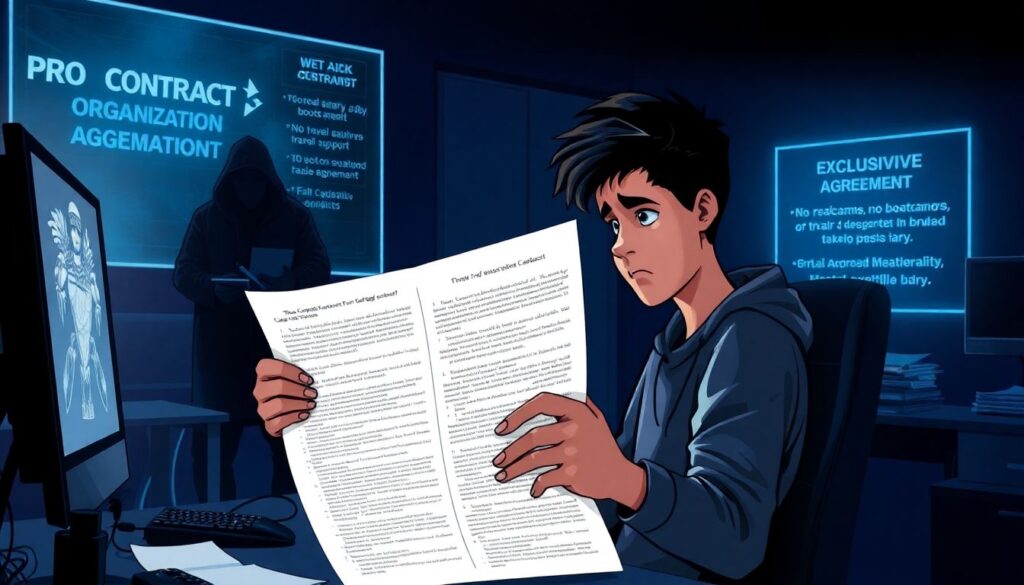
At the aspiring level, the biggest financial risk isn’t just losing—it’s signing bad deals out of desperation. Young players sign contracts that freeze them into orgs with no real salary, no clear bootcamp or travel support, and brutal termination clauses. Some are effectively unpaid exclusivity agreements: you cannot stream certain games, cannot take sponsors independently, and still get nothing guaranteed. This is how a “dream shot” quietly blocks multiple income streams at once.
Before saying yes, treat every offer as a business proposal. Ask: what is guaranteed, what is performance-based, and what are my rights if the org stops paying? If you can’t afford a lawyer, at least show the contract to a more experienced player, coach, or even a local legal clinic. Keep in mind that even if *how much do pro gamers earn* looks impressive at the top, most of that money doesn’t go to players locked into weak contracts with no leverage. Literacy here is a direct financial skill, not a “nice to have.”
Taxes, regions, and the illusion of “free money”
Prize winnings and platform payouts feel like free money because nobody withholds taxes upfront in many countries. But governments don’t care that you got your income in skins, crypto, or PayPal. If you consistently ignore taxes, eventually you can’t get a visa, can’t pass a background check for normal jobs, or end up with fines that wipe out an entire year of small winnings. Players in high-tax regions especially need a minimal system: track income, set aside a percentage (often 20–30%, region‑dependent) into a separate account, and once a year talk to a tax specialist, even if it hurts.
Also, don’t ignore currency and region arbitrage. Some players move to cheaper cities or countries during grind years to stretch low incomes, especially if their scrim blocks and competitions are online. Lower living costs can transform a thin esports player salary into something tolerable. This is not for everyone—visas, language, social support all matter—but for some it’s the difference between three stressed-out years and five sustainable ones.
—
Advanced Lifehacks for Established Pros
Peak-earning years: squeeze the window, don’t waste it

Once you’re finally on a solid roster, your reality flips: you may suddenly see more money in six months than in the previous three years combined. That’s exactly when poor decisions hit hardest: lifestyle explosions, daily ordering in, expensive cars, and random crypto punts sold as “investing.” Instead, treat your peak years like a short‑duration startup exit. You don’t know *how much do pro gamers earn* in the future or how long you’ll stay in the top tier; you only know that right now you have leverage and visibility.
Professional‑grade lifehacks:
– Cap lifestyle creep. Decide in advance what “comfortable but sane” living looks like: decent apartment, health insurance, one or two indulgences. Everything above that goes into savings or conservative investments, not more toys.
– Build a 12–24 month cash runway outside esports. That means if your team cuts you tomorrow and no one picks you up, you can live at a modest standard for at least a year while you recalibrate.
– Use visibility to plant future seeds: guest analyst spots, co‑stream with commentators, networking with managers, meeting people in game dev and production. These relationships are what later convert into non‑playing roles.
Preparing for life after esports while you’re still “in”
Most careers in traditional sports have strong support structures for retirement. In esports, we’re only in 2025 and most ecosystems still pretend that burnout and aging don’t exist. The harsh reality is that your reflex‑based peak is limited, and meta shifts can sideline you in months. Planning an exit path is not pessimism; it’s capitalizing on the brand and knowledge you build now.
By mid‑career, aim to have at least one of these in motion: a consistent personal brand beyond your current team tag, a portfolio of content or analysis work you can show outside your main game, a partially completed education (formal or self‑directed) in something that transitions well—broadcasting, coaching methodology, marketing, development, sports psychology. The player who does this can pivot into coaching, talent, game design feedback roles, or even broader digital industries. The one who doesn’t wakes up at 27 with wrist pain, an empty savings account, and no clear next step.
—
2025–2030 Outlook: Where Money in Esports Is Actually Going
Structural shifts that will shape your wallet
From the 2025 vantage point, a few trends are already clear. Classic VC‑fueled org models with bloated budgets are shrinking or restructuring. Franchise leagues are re‑negotiating or merging, and pure reliance on massive team salaries plus uncertain prize pools is becoming less stable. On the other hand, direct‑to‑player ecosystems—creator programs, in‑client tournament circuits, co‑stream rights, digital item revenue shares—are growing. This doesn’t necessarily mean a huge raise in average esports player salary, but it does mean the income mix will be more diversified and more directly tied to individual player brands and engagement.
Expect three medium‑term shifts: more short contracts and trial deals instead of multi‑year security; more regional circuits where cost of living and travel logistics heavily affect whether a scene is viable; and more hybrid roles where a “pro” is also officially a content creator, in‑client event face, or coach for a dev‑run academy. Stability will increasingly belong to those who can navigate both competitive and content ecosystems, not those who rely on one narrow definition of “pro.”
What to do now, knowing the future is volatile
If you’re serious about an esports future between now and 2030, build a plan that assumes volatile but potentially high upside income. Treat this article as a lightweight esports career guide, not as a strict script:
– Train mechanics and team skills like everyone else—but also build monetizable side skills around your game.
– Implement a simple but disciplined money system: buckets, runway targets, tax planning, and contract literacy.
– Use every peak moment (win, viral clip, successful trial) to enhance long‑term assets: your audience, your relationships, and your savings buffer.
The big picture: learning *how to become a pro gamer and make money* sustainably is less about discovering some hidden secret sponsor and more about managing risk and options in a very young, unstable industry. If you respect the financial side early—when you’re still on zero paychecks—you’ll be one of the few who can actually choose what to do when the unstable income finally arrives, instead of having that instability choose for you.