

Why gamers should care about saving vs investing
If you can memorize raid mechanics, item stats and patch notes, you can definitely learn the difference between saving and investing. For gamers, money is just another resource system: you grind, you manage cooldowns, you choose where to allocate points. The trick is understanding that “saving” and “investing” are two different builds for your real‑life character, and mixing them up can slow your progress toward that new GPU, PS5, or even financial freedom.
Saving is about safety and short‑term goals. Investing is about growth and long‑term goals. Both matter, but they’re used in different situations—just like you wouldn’t use a sniper rifle in a tight corridor map (well, you could, but it’s not ideal).
—
Saving: your basic health potion
Think of saving as stacking health potions in your inventory. Cash in a savings account, an envelope, or a digital wallet sits there, stable and easy to access. The goal is not to “deal tons of damage” (make big returns) but to avoid dying to random crits from real life: broken laptop, sudden bill, controller dies the day before a tournament.
Saving is what you use when you’re trying to figure out how to save money as a gamer for something you’ll need fairly soon—like a new headset in 3 months or a gaming chair by the end of the year. The value doesn’t jump around every day; you always know what you’ve got. The trade‑off is that your money doesn’t grow fast, and sometimes interest rates are so low they barely beat inflation. But that’s okay, because saving is about reliability, not big gains.
—
Investing: your late‑game build
Investing is where you stop thinking about next season’s battle pass and start thinking in “expansion pack” timeframes. Instead of leaving your money idle, you put it into assets that can go up (or down) in value—stocks, index funds, ETFs, sometimes even crypto (with strong caution). This is more like building a late‑game DPS build: higher risk, higher potential, and you need to understand the mechanics before charging in.
For gamers with some extra cash or a steady side income from streaming, coaching, or selling in‑game services, the question becomes how to invest money from gaming side hustle in a way that doesn’t feel like gambling. That’s where simple, diversified investments shine: broad index funds instead of “YOLO on the hottest stock.” Investing is what helps your future self afford not just a better PC, but also bigger goals like moving out, retirement, or taking a year off to pursue esports.
—
Key differences: cooldowns, risk and mission objectives
Here’s the core comparison in gamer language: saving is a short cooldown defensive ability; investing is a long cooldown ultimate.
1. Timeframe
Saving: money you’ll use within 0–3 years (emergencies, upgrades, travel, new console).
Investing: money you don’t need for at least 5–10 years (house, long‑term security, future you).
2. Risk
Saving: almost no risk if you use a reputable bank or insured account.
Investing: prices fluctuate daily. In the short term, your balance can drop; in the long term, historically, diversified stock markets have grown.
3. Access
Saving: fast access—like opening your inventory. Perfect for a sudden “my GPU just died” moment.
Investing: slower access and sometimes tax implications. More like going back to town to respec.
4. Growth
Saving: low but stable growth. You might barely feel the XP gain.
Investing: unstable short‑term, but potentially strong long‑term XP, especially with compounding returns.
Once you see it like this, it becomes obvious: you need both. Using investments for next month’s rent is as dangerous as entering ranked with no armor. Using savings for 30‑year goals is like farming level‑1 mobs forever instead of pushing into higher zones.
—
Necessary tools: what belongs in a gamer’s money loadout
You don’t start a new game with endgame loot—you begin with basics and slowly upgrade. Same thing with money tools. Before you even look at the best investing apps for beginners gamers, you need a few essentials:
First, a simple, no‑fee checking account and a separate savings account. Think of checking as your main hotbar and savings as a stash chest you don’t casually click. Keeping them separate helps you not “accidentally” spend your upgrade fund on another sale.
Next, some kind of gaming budget planner to save for pc upgrade or other goals. This doesn’t have to be fancy: a spreadsheet, a budgeting app, or even a note on your phone that tracks income, fixed bills, and your flexible “fun” money. The important part is that you see where your game‑related spending and real‑life expenses are actually going.
Only after that do you add investing tools: a brokerage account or a simple investment app that lets you buy index funds or ETFs with low fees. Different regions have different platforms, so read reviews and double‑check fees. Start with something that feels as simple as a game launcher, not a spaceship cockpit.
—
Step‑by‑step process: from chaos to a clean money build
Let’s walk through a basic “money progression path” for gamers. Treat this like a game tutorial you don’t want to skip.
1. Track your current spend (the “know your DPS” step)
For at least a month, track every expense: games, subs, in‑game purchases, food, rent, random snacks. You can use apps, banking exports, or manual notes. The goal is to see patterns: maybe you’re spending more on skins than you realize, or those food deliveries are eating your future GPU.
2. Set clear goals: short vs long term
Short‑term saving goals: “New 144Hz monitor in 6 months,” “emergency fund of 1–3 months of expenses.”
Long‑term investing goals: “Down payment in 10 years,” “enough investments that I can choose whether to work or not later in life.” Naming these turns them into actual quests, not vague wishes.
3. Build your emergency fund first
Before investing, stack that emergency HP bar—usually 1–3 months of essential expenses in a savings account. Boring? Yes. But it stops unexpected events from forcing you to sell investments at a bad time or take on debt.
4. Create a basic gamer budget
Decide how much goes to essentials, how much to fun, how much to goals. A lot of personal finance tips for gamers boil down to: “Cap your monthly gaming spend and stick to it.” For example:
– 50% needs (rent, food, bills)
– 30% wants (games, entertainment)
– 20% future you (savings + investing)
Tweak numbers to your reality, but keep “future you” as a non‑negotiable line item.
5. Automate saving for near‑term goals
Set automatic transfers from checking to savings right after you get paid. Want that PC upgrade in a year? Divide the cost by 12 and auto‑move that amount monthly. This is how to save money as a gamer without relying on willpower—your default settings do the work.
6. Start tiny with investing once the basics are secure
When your emergency fund is in place and short‑term goals are funded, start investing with small amounts. Use apps that let you buy fractional shares or low‑fee index funds. Even $20–$50 a month is a good “tutorial mode.” Focus on consistency, not timing the market.
7. Level up: use side hustles strategically
If you get income from streaming, coaching, content creation or other game‑related work, don’t let it all evaporate on impulse purchases. Decide a split: maybe 50% you can blow on fun, 50% goes to savings and investments. This turns your hobby into a stat boost for your future life, making “how to invest money from gaming side hustle” a clear, repeatable routine.
—
Troubleshooting common “money bugs” for gamers
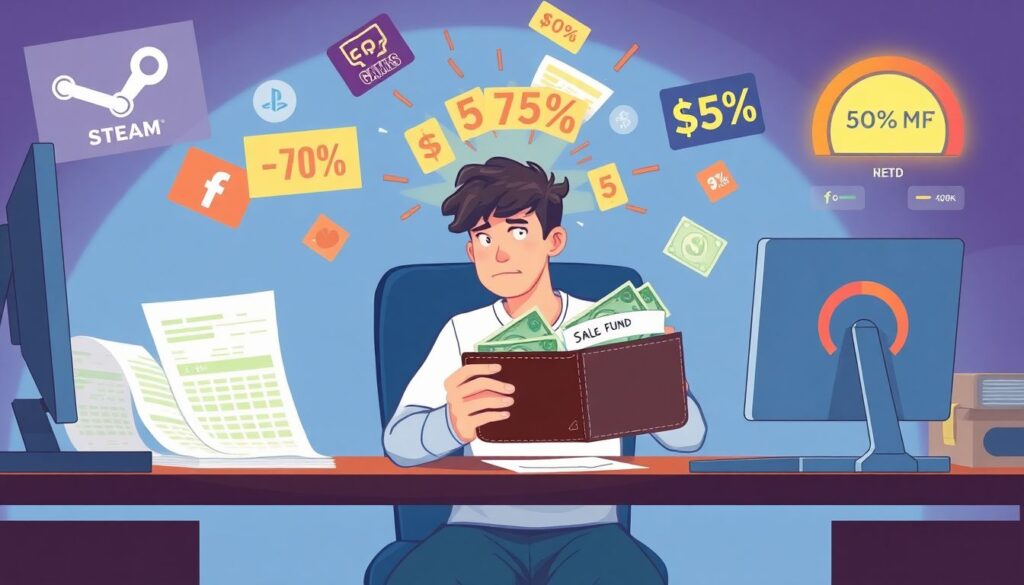
Even with a solid plan, money management can feel like a buggy early‑access build. That’s fine; you patch as you go. One common issue: you plan a budget and then a huge sale hits—Steam, PSN, Epic—and suddenly your “future me” money is gone. The fix is to pre‑allocate a monthly “sale fund” as part of your gaming budget, instead of pretending you’ll never be tempted.
Another frequent bug: going all‑in on investing with no safety net because someone on YouTube made it sound easy. Then the market dips, you panic‑sell, and swear investing is a scam. The patch here is simple: never invest money you’ll need soon, and never skip the emergency fund. Invest only what you can leave alone through the usual ups and downs.
There’s also the emotional bug: comparing your progress to others. Maybe your friend “got rich” on crypto or meme stocks. This is like comparing your first‑time playthrough to someone’s speedrun with glitches. You don’t see their full risk or the times they lost. Your goal is a stable, repeatable strategy, not a one‑time lucky crit.
If you keep failing to stick to your plan, lower the difficulty. Start with smaller savings targets, fewer investing choices, and a very simple rule like: “Every time I buy a new game, I also put $10 into savings or investments.” Micro‑habits beat “perfect plans” that never survive contact with real life.
—
Different approaches: min‑maxing vs balanced builds
Gamers fall into a few typical money playstyles. None is 100% right or wrong, but each has trade‑offs you should understand.
Some people go full “save everything” tank build. They hoard cash, avoid any risk, and sometimes sit on large balances in low‑interest accounts. This feels safe, but long‑term inflation can slowly erode your buying power. It’s like stacking only armor and never upgrading your weapon—safe, but you’re not clearing future content efficiently.
Others go “all‑in investor” glass cannon. They throw every spare dollar into risky assets, chase hype, and ignore savings. When it works, it looks impressive. When it doesn’t, they’re forced to sell at the worst moment or take on high‑interest debt. Great highlight reels, terrible consistency.
The healthiest approach for most gamers is a balanced hybrid build:
– Save for short‑term goals and emergencies (defense).
– Invest steadily for long‑term growth (offense).
– Keep your gaming life fun but capped so it doesn’t eat every resource (utility).
You’re not trying to “beat” the market in a flashy way; you’re trying to ensure that five or ten years from now you’re glad you made the choices you did. The right mix will depend on your income, risk tolerance, and goals, but the principle holds: short‑term money = saving, long‑term money = investing.
—
Bringing it all together for your real‑life character
Saving and investing aren’t rival factions; they’re two roles in the same party. Saving handles short‑term stability and sudden damage; investing focuses on future power and bigger maps. When you use each for the right mission, money stops feeling like chaos and starts to feel like a game you understand.
Set up your basic tools, define what’s “soon” and what’s “later” in your life, and let your budget reflect that. Use your gamer mindset—planning, optimizing, learning from losses—to gradually refine your approach. Over time, the gap between “I hope I can afford this upgrade” and “I know exactly when I’ll afford it” gets smaller.
Your future self won’t remember every random loot box you opened, but they will feel the difference between having a thin wallet and a well‑built mix of savings and investments. Treat your money strategy like a long campaign, not a single match—and play it to win.