
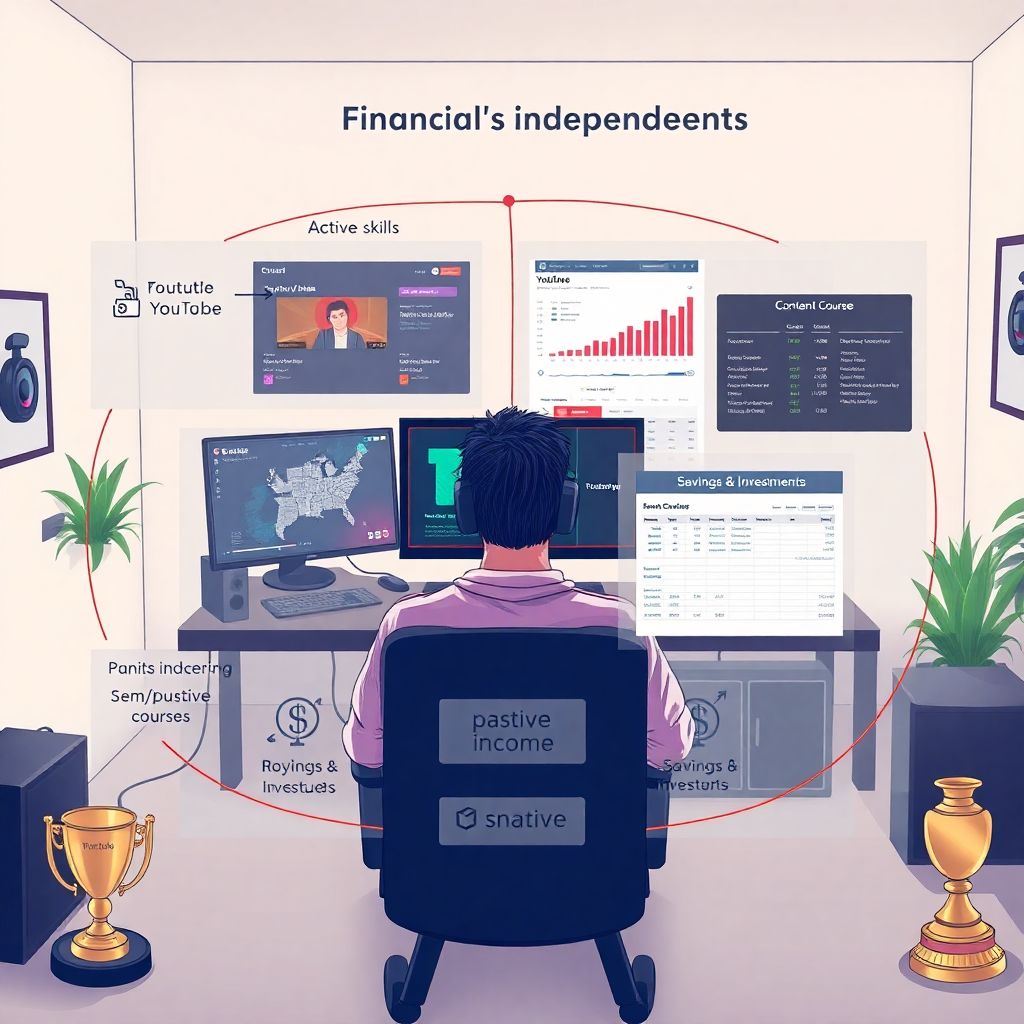
Why financial independence for gamers is a real thing (not a meme)
Financial independence for gamers is no longer just “win a big tournament and retire.” In a modern, more technical sense, it means this: your recurring, relatively stable income from gaming-related activities covers your living expenses without you needing a full‑time traditional job.
In other words, if you stopped streaming or competing tomorrow, the systems you built (content libraries, royalties, revenue shares, investments) would still keep paying you.
This article walks through how to make money gaming online, how to turn active hustle into semi‑passive income, and how to think like a small gaming startup instead of “a guy with a PC and a dream.”
—
Key terms gamers should actually understand
Core financial concepts in gamer language
Let’s iron out terminology first, because experts keep using these words and most guides never explain them in gamer context.
– Active income – money you get only while you’re actively doing something.
Examples: live streaming, coaching sessions, tournaments, short‑term sponsorship deals.
– Passive income – money that still comes in after the work is done, from assets you already created.
Examples: YouTube ad revenue from old videos, sales of a training course, revenue from a game asset you made last year.
– Semi‑passive income – you don’t need to grind every day, but you do need maintenance.
Example: a YouTube channel where old videos generate most revenue, but you still upload sometimes to keep the algorithm happy.
– Financial independence – your passive + semi‑passive + active income from gaming covers your real‑world costs (rent, food, gear, health, taxes) with a comfortable safety margin.
– Revenue diversification – using multiple income streams so you’re not destroyed when one platform changes the rules or a game dies.
—
Strategy map: from “just playing” to “running a gaming business”
Imagine a simple text diagram of what a typical gamer does:
1. Play game
2. Maybe stream
3. Hope something happens
Now compare it to a strategic gamer who thinks in systems:
> [Game skills] → [Content / Services] → [Monetization channels] → [Savings & Investments]
So you go from “I’m good at X game” to “I package that skill into content and services, then turn profits into long‑term assets.”
Let’s break down realistic ways to earn real money from video games, then we’ll talk about risk, stability and expert recommendations.
—
Active income: professional gamer income strategies
1. Competitive play and esports
Tournament winnings and team salaries are the most obvious professional gamer income strategies, but they’re also the least reliable for most players.
Typical revenue components for pros:
– Team salary (fixed monthly)
– Tournament winnings (high variance)
– Sponsorships (jersey logos, brand deals)
– Appearance fees / bootcamps / events
Expert‑level reality checks from esports managers:
– Skill ceiling is brutal. Only a tiny top % earns life‑changing money from tournaments alone.
– Career length is short. Mechanics drop, metas change, younger talent appears. Plan your exit early.
– Brand > rank (long term). Players who develop an audience transition better to streaming, coaching, or content.
Esports works financially only if you treat it as one stream among many, not the one golden ticket.
—
2. Streaming on Twitch, YouTube, Kick and others
Streaming is the default answer people give for how to make money gaming online, but it’s mostly an attention engine, not an automatic paycheck.
Revenue sources for streamers:
– Subscriptions / memberships
– Donations and Bits / Super Chats
– Ad revenue (platform‑controlled CPM)
– Sponsorships and brand integrations
– Affiliate links (gear, games, VPNs, etc.)
Expert recommendations from partnered streamers and talent agents:
1. Schedule wins. Consistent time slots grow faster than “stream whenever.” Your audience needs predictability.
2. Niche hard first, then broaden. Being “the X champion player” or “the chill late‑night RPG streamer” is easier to grow than trying to be “variety” from day one.
3. Use streaming as a funnel. Send viewers to platforms with better long‑term monetization (YouTube VODs, Patreon, your Discord, your email list).
Streaming alone is active income and unstable. The real value is using live content to grow assets that keep paying you later.
—
3. Coaching, boosting, and consulting
If you’re above average with strong game knowledge, coaching can beat ad revenue per hour.
Examples of coaching‑style services:
– One‑on‑one coaching with VOD reviews
– Group workshops (“Climb from Gold to Plat in 4 weeks”)
– Team coaching for amateur squads
– Draft analysis, macro strategy consulting
Expert notes from top coaches:
– Specialize by problem, not just game. For instance, “help D2–Immortal players fix macro in Dota 2” sells better than “I coach Dota.”
– Show receipts. Clients want rank proof, tournament results or testimonials. Screenshots and short case studies work.
– Standardize your system. Turn your method into a repeatable framework so you can later build courses — this is how you transition from active to semi‑passive income.
Boosting exists, but: platforms ban it, publishers hate it, and it often has ethical issues. Long‑term, coaching and education build a personal brand; boosting doesn’t.
—
Content as an asset: recording once, earning for years
4. YouTube and on‑demand content
YouTube is one of the best passive income ideas for gamers if you treat each video as a long‑term asset, not just “today’s content.”
Monetization paths:
– Ad revenue from evergreen videos
– Sponsorship segments embedded into VODs
– Affiliate links in descriptions
– Selling your own products (courses, guides, overlays)
Think about this simple diagram:
> [1 hour session] → [VOD] → [Highlight reel] → [Shorts/TikTok clips]
One play session can feed multiple formats across platforms. Over time, you build a library that continues to pull in views and income.
Expert recommendations from successful gaming creators:
– Focus on searchable content early. “How to counter X hero,” “Best early game builds in 2025,” “Beginner’s guide to Y” rank in search and keep getting views for months or years.
– Optimize retention, not just clickbait. Fancy thumbnails get clicks; structured, concise videos get watch time, which drives recommendations.
– Batch production. Record several videos in one session, then upload on a schedule. This makes content creation more systematic and less exhausting.
—
5. Courses, e‑books, and paid guides
Once you’ve coached enough players or made a lot of educational content, packaging your knowledge into a paid course or guide is a powerful leap towards independence.
Formats that work:
– Structured “from Bronze to Platinum” courses
– Role‑specific guides (e.g., in‑depth support playbook)
– VOD breakdown libraries for a particular meta or patch
– Monetized Notion / PDF “bibles” for complex games
Technically, this is semi‑passive: you build once, then update occasionally for new patches.
Expert tips from creators who’ve done this:
– Collect questions first. Before building a big course, list the 20–50 most common questions your viewers or students ask — that’s your curriculum.
– Presell to test demand. Offer early‑bird pricing before you finish building. If no one buys, you just saved months of your life.
– Bundle smart. Combining a course with coaching sessions or community access increases perceived value and stabilizes revenue.
—
In‑game economies and digital product creation
6. Skins, mods, and digital assets
If you have design or dev skills, there are ways to earn real money from video games by creating things _for_ those games:
– Skins and cosmetics (where marketplaces or revenue shares exist)
– Mods, custom maps, and plugins
– UI packs, overlays, and HUDs
– Stream overlay packages, emotes, alerts
This is closer to a traditional digital product business: you build an asset once and sell it repeatedly.
However, you must respect:
– Game terms of service
– Marketplace rules
– Copyright and IP laws
Experts with years in modding and asset stores point out:
– Document your pipeline. Faster, repeatable production = viable business.
– Support is part of the product. Updating assets when the game patches can be the difference between 3‑month and multi‑year income.
– Think cross‑game where possible. UI/overlay packs often work across multiple titles, meaning bigger markets for the same work.
—
7. Game testing and QA (the unglamorous path)
Game testing is real work, but it’s not just “play games early and get paid.”
You’re doing:
– Structured test cases
– Bug reproduction and documentation
– Regression testing after fixes
– Reporting in bug‑tracking tools (JIRA, etc.)
For most gamers, QA is a bridge into the industry rather than a path to financial independence on its own. However, its value is:
– Stable income (employee or contractor)
– Industry contacts
– Deep understanding of how games are actually made
—
Platforms that pay: comparing main options
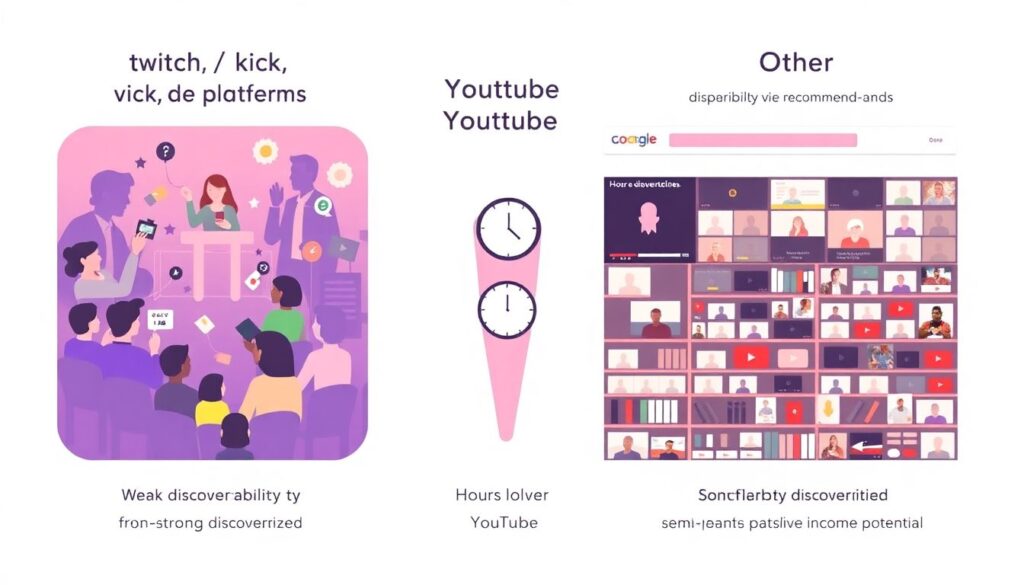
Let’s compare common platforms conceptually, without a table:
– Twitch / Kick / live platforms
– Pros: Strong community feel, direct support (subs, donos).
– Cons: Discoverability is weak; hours streamed ≈ income.
– YouTube
– Pros: Discoverability via search & recommendations, VOD library = semi‑passive.
– Cons: Monetization depends heavily on watch time and niche CPM.
– Patreon / Memberful / channel memberships
– Pros: Recurring revenue, tight community, good for stable base income.
– Cons: Requires consistent content and perks to justify ongoing payment.
– Marketplaces (Steam Workshop rev‑share programs, asset stores, Gumroad, itch.io)
– Pros: Can become long‑tail income, especially for tools and assets.
– Cons: Platform rules can change, discoverability is competitive.
Experts usually recommend combining:
> Live platform (for community) + VOD/evergreen platform (for long‑tail income) + at least one owned channel (email list / Discord).
Owning at least one channel is important because algorithms and platform policies are outside your control.
—
From hustle to systems: designing your income mix
Active vs passive balance
To actually reach financial independence for gamers, you can’t rely only on “time‑for‑money” activities. A healthy mix (example for a mid‑tier creator):
– 40% – Streaming and live content
– 30% – YouTube ad revenue and sponsorships
– 20% – Courses, guides, and coaching
– 10% – Merch / digital products / other experiments
This profile can shift over time. Ideally, the passive and semi‑passive slice grows as your content library, products, and investments mature.
—
Risk analysis: what can go wrong
Things experts warn about, over and over:
– Single‑platform dependency. Bans, DMCA strikes, policy changes, or just algorithm shifts can nuke your income overnight.
– Single‑game dependency. Metas die, sequels flop, publishers kill esports, interest moves on.
– Lifestyle creep. Income spikes during good months, but expenses stay high when the spike disappears.
– Tax and legal blind spots. Many gamers treat all income as “bonus money” and get hit hard during tax season.
The fix is to build redundancy and buffers into your system, like any other business.
—
Money management: the unsexy part that makes you free
Budgeting and runway
You can’t be independent if you’re one bad month away from quitting.
Simple, practical approach used by many creators:
– Separate accounts.
– One for business (all gaming income).
– One for personal expenses.
– One for taxes and emergency savings.
– Minimum runway target. Aim for at least 6 months of living expenses in cash or cash‑like savings. Many experienced streamers push for 12 months before calling themselves “financially secure.”
– Fixed vs variable costs. Know your fixed monthly burn: rent, food, insurance, basic gear replacement. Treat everything else as flexible.
—
Taxes, legal structure, and basic protection
Depending on your country, you may need to register as:
– Sole proprietor / freelancer
– Single‑person company or LLC
– Partnership / small studio, if you work as a team
Experts in creator finance typically suggest:
– Track everything. Income from all platforms, sponsorships, ad networks. Use basic accounting tools or at least a detailed spreadsheet.
– Let a professional handle complexity. Once you’re making consistent four figures per month, talk to an accountant who understands online income.
– Think in after‑tax money. That “$5,000 month” is not $5,000 you can spend.
Insurance (health, sometimes liability) and basic contracts for sponsorships are also part of a serious setup.
—
Long‑term: when gaming money funds real independence
Investing outside of gaming
Even the best gaming income is exposed to trends and platforms. Long‑term independence comes when you move a chunk of your profits into assets that don’t care what game is popular.
Typical routes creators use:
– Broad stock market index funds or ETFs
– Retirement accounts where available (401k, IRA, etc. — names vary by country)
– Real‑world businesses or skills (coding, design, media production)
Think of a simple diagram:
> [Gaming income] → [Safety (runway + taxes)] → [Long‑term investments]
Any month where your gaming revenue is higher than your expenses is a chance to buy future freedom.
—
Expert‑driven practical plan: 0 → 12 months
Here’s a condensed, realistic roadmap influenced by what full‑time creators and esports veterans recommend.
Months 0–3: Build foundations
– Pick 1–2 games you genuinely enjoy and that have demand for content.
– Start a simple streaming schedule (even 3 days/week) and record everything.
– Launch a YouTube channel focusing on short, educational or entertaining clips made from your streams.
– Join relevant Discords, subreddits, and communities — listen more than you talk at first.
– Track all income and hours worked, even if the numbers are tiny.
Months 4–8: Turn skills into products
– Introduce coaching or VOD reviews for your niche.
– Start building at least one evergreen series on YouTube (guides, breakdowns, etc.).
– Collect the most common questions from your audience; outline a paid mini‑course or advanced guide.
– Experiment with a small Patreon or membership for bonus content or replay reviews.
Months 9–12: Systematize and stabilize
– Launch your first paid product (course, e‑book, asset pack).
– Analyze which streams, videos, or products bring the most income per hour of work and slowly shift energy toward them.
– Set up separate bank accounts and define your tax, savings, and investing rules.
– If numbers look stable, gradually reduce other work hours or studies — but only with a minimum runway secured.
—
Putting it all together
Financial independence for gamers is less about discovering one secret trick and more about stacking multiple, well‑designed systems:
– Use live content to grow an audience.
– Turn your knowledge and personality into evergreen content and products.
– Diversify income across platforms and formats.
– Protect your downside with budgeting, saving, and basic legal/financial structure.
– Gradually move profits into investments outside of gaming.
If you treat your gaming activity like a small, experimental tech business — with data, tests, and risk management — the dream of independence stops being fantasy and becomes an engineering problem you can actually solve.