
Most people think going pro or streaming full time is just “get good, go live, get rich.” Reality is closer to starting a tiny, risky business around your skills and personality. A proper long term financial roadmap for professional gamers is what separates folks who burn out after a hot year from those who quietly build a sustainable, independent career. Below is a practical, battle-tested way to treat your esports or streaming dream like a real job, without killing the fun that got you into games in the first place.
Essential money tools for future pros and streamers
Before talking deals, subs, and prize pools, you need a basic toolkit. Experts who do financial planning for pro gamers and streamers usually start with the same three pillars: separation, tracking, and automation. First, open a dedicated business account (even if you’re a solo creator) so esports prize money, Twitch payouts and sponsorships never mix with grocery runs. Second, use a simple budgeting app or spreadsheet that tags income sources: tournament winnings, Twitch, YouTube, donations, coaching. Finally, automate transfers: a fixed slice to taxes, a slice to savings, and a slice to an emergency fund. The goal isn’t complexity; it’s to make good behavior the default, even on hectic grind weeks.
Understanding how the money actually flows
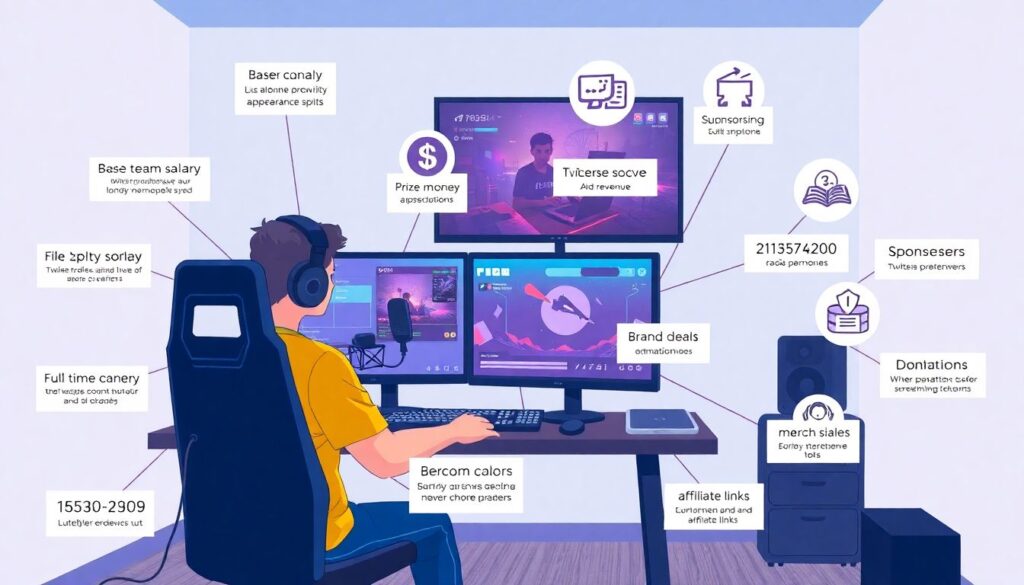
A surprising number of players hit decent MMR or viewership without understanding how to make money as a full time game streamer beyond “I need more subs.” Pros advising young talents insist you map all revenue streams early, even if they’re tiny: base team salary, prize splits, appearance fees, Twitch subs and bits, YouTube AdSense, affiliate links, sponsorships, creator codes, coaching sessions. This isn’t about daydreaming; it’s about seeing which levers you can actually pull. When you see that 70% of your income comes from one platform, you’ll know where an algorithm change could hurt you most and why diversifying is not a luxury but a form of insurance.
Step‑by‑step roadmap: from side hustle to full‑time
Think of your career path as an experiment, not a blind leap. A lot of coaches and agents suggest a simple five‑step sequence instead of “I quit my job and hope for the best”:
1. Prove demand: hit consistent viewership or stable team results for 3–6 months while keeping another income source.
2. Set a minimum income line: calculate rent, food, utilities, health insurance, and add 20–30% buffer.
3. Build a 6‑month cash cushion before going all‑in.
4. Slowly increase hours and content volume while tracking burnout signals.
5. Only drop other work when streaming or esports income beats that minimum line for several months. This staged approach protects both your wallet and your mental game.
Budgeting, taxes and hidden costs nobody tells you about
The boring stuff becomes very un‑boring the moment the tax office calls. Specialists in budgeting and taxes for professional esports players treat you like freelancers, not celebrities: irregular income, messy paperwork, and lots of potential write‑offs. You’ll likely owe quarterly estimated taxes, not just an annual bill, so skimming 25–35% off every payment into a “tax only” sub‑account is non‑negotiable. Track expenses that are clearly tied to content or competition: gear, internet, software, event travel, coaching, even a home office portion in some countries. A good accountant who understands digital creators often saves more than they cost by avoiding penalties and capturing deductions you’d miss.
Income strategies for Twitch and YouTube gaming streamers
Coaches who specialize in income strategies for Twitch and YouTube gaming streamers push one mantra: don’t rely on a single faucet. Live subs and donations are volatile; ad rates swing; sponsors change direction overnight. Aim for a mix of “active” income (live streams, coaching, tournament play) and “leveraged” income (VODs, evergreen guides, highlight channels, digital products). Experiment with low‑friction offers first: a Patreon with behind‑the‑scenes content, a Discord with member perks, or simple merch drops. Analyze which offers resonate with your audience instead of copying bigger creators; your viewers might prefer coaching sessions over hoodies, or VOD reviews over physical merch.
Building resilience: savings, insurance and career pivots
Every expert who’s seen careers derailed by injuries, bans, or burnout repeats the same advice: plan for “after” while you’re still “on top.” That means three layers. First, an emergency fund that covers 6–12 months of bare‑bones living, parked in a safe, liquid account. Second, insurance that actually fits your situation: health, maybe income protection if available in your country, and gear insurance if losing your setup would end your content. Third, skill stacking: editing, social media, game design, coaching, or analytics. Even if your peak performance window as a player closes, these skills let you pivot into org management, content direction, or coaching without starting from zero.
Troubleshooting common money problems in gaming careers
When things go off‑script, treat it like debugging a build, not a personal failure. If income drops suddenly, first separate platform issues from performance issues: did an algorithm change, a patch hurt your main game, or did you simply stream less? Next, cut discretionary costs fast—subscriptions, impulse gear, non‑essential travel—so you extend your runway. If you’re behind on taxes, professionals say don’t hide; contact the tax office or an accountant early to set up a payment plan. And if burnout hits, reduce hours strategically rather than disappearing: shorter, higher‑quality streams and more VOD content can stabilize income while you recover and reassess your strategy.