
Market basics and clear definitions
When people talk about investment opportunities in gaming, they often mix very different things in one basket, so it helps to define terms. A gaming startup is usually a young company building either games, tools for game developers, or services around players and esports. A gaming fund is a professional pool of capital that spreads money across many such teams. When you decide to invest in gaming startups directly, you’re buying a stake in a specific company. When you buy into a fund, you’re basically hiring a team of professionals to choose projects for you and manage risk across a portfolio instead of betting on a single studio or platform.
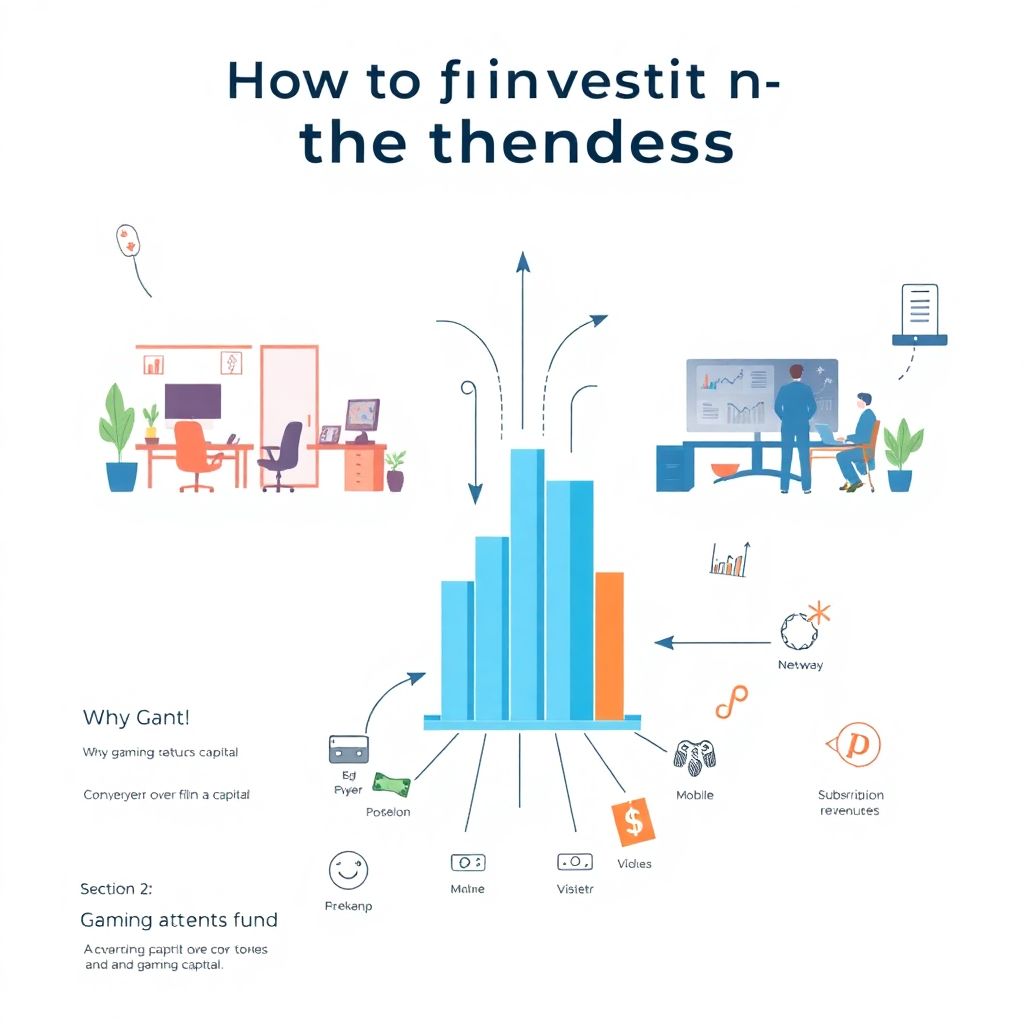
Why gaming attracts so much capital right now

The gaming market has quietly become bigger than film and recorded music combined, and that is exactly what attracts gaming venture capital funds. Revenue streams are also more diverse than many newcomers realize: there are premium games, free‑to‑play titles with in‑game purchases, subscriptions, advertising, virtual items, and licensing of game IP into movies and merchandise. On top of that, games sit at the crossroads of several trends: cloud computing, mobile, AR/VR, creator economy, and AI. Experts often highlight that this “stacked growth” is what turns ordinary projects into the best video game investment opportunities, provided the team can execute and keep users engaged for years instead of months.
Key segments of gaming‑related startups
Not every bet in this field is a pure game studio. Analysts usually divide the space into three broad buckets. First, content: studios that develop games, interactive stories, or virtual worlds. Second, infrastructure: engines, development tools, back‑end services, analytics, user acquisition platforms. Third, ecosystem: esports organizations, tournament platforms, creator tools, modding platforms, virtual goods marketplaces. If you want to invest in gaming startups with a bit more stability, experts often lean toward infrastructure and ecosystem plays, since they can earn from multiple games and publishers instead of hoping one hit title carries the whole company.
- Content startups: high upside, high hit‑risk, very sensitive to user tastes.
- Infrastructure tools: B2B revenue, recurring contracts, slower but steadier growth.
- Ecosystem services: benefit from rising player numbers across many games.
Funds: from broad tech VC to niche esports vehicles
At one end of the spectrum, classic tech funds allocate a slice of their portfolio to gaming, treating it like any other consumer tech play. Then you have specialized gaming venture capital funds that focus almost exclusively on games, tools, and interactive entertainment. Even narrower are esports investment funds, which concentrate on competitive gaming teams, leagues, media rights, and betting infrastructure. Compared with a general tech fund, sector‑focused managers usually know more about user acquisition, retention metrics, and monetization patterns, but they may be more exposed to sector cycles. Many experts suggest combining a broad tech fund with a niche gaming or esports vehicle to balance expertise and diversification.
Direct vs fund investing: a quick comparison

Putting your own money straight into a studio or platform via angel deals or crowdfunding feels exciting and hands‑on, but it demands time, network, and tolerance for failure. Professionals stress that most early game projects will never reach break‑even, let alone exit. Funds pool many such bets and typically negotiate better terms, but they also add fees and longer lock‑ups. A simple way to picture the trade‑off is: direct deals give you control and story, funds give you statistics and structure. For a newcomer, experts often recommend learning with small fund tickets first and only later experimenting with single‑company bets when you understand the pipeline from prototype to live operations.
- Direct deals: more control, more volatility, need strong due diligence skills.
- Funds: diversification, professional selection, management fees and less liquidity.
- Public markets: easiest access, but you pay for past success and sentiment swings.
How to invest in gaming industry: practical entry routes
When people ask how to invest in gaming industry assets without drowning in details, professionals usually outline three accessible paths. The first is public equities: buying shares or ETFs holding big publishers, platform companies, and tool providers. The second is backing gaming‑focused or mixed tech funds on reputable platforms; minimum tickets are slowly drifting down. The third is carefully chosen crowdfunding or syndicate deals for those who want a closer look at early projects. Experts warn against jumping straight into illiquid private deals with large checks: they recommend starting with listed companies and funds, building a feel for cycles, and only then moving into private gaming startups with money you can freeze for 7–10 years.
Risk, cycles, and portfolio role
Gaming is cyclical: tastes shift, platforms change, regulation appears, and hit‑driven economics never fully disappear. Because of this, experienced investors see gaming as a satellite allocation rather than the core of a portfolio. Typical advice is to cap early‑stage gaming exposure at a single‑digit share of your net investable assets and to spread it across different business models and regions. Macro risk also matters: advertising budgets, hardware supply, and app‑store policies can change overnight. To navigate this, professionals track a few core metrics: user acquisition cost versus lifetime value, retention curves by cohort, and revenue concentration in the top 5–10% of spenders, which reveals how fragile monetization really is.
Signals of strong opportunities: what experts actually look at

When fund managers talk about the best video game investment opportunities, they rarely start with pretty graphics. They start with people, data, and distribution. On the people side, they look for teams that shipped games together before, and founders who understand both design and metrics. On the data side, they dig into early playtests, day‑1/day‑7/day‑30 retention, and how quickly players reach core fun. On distribution, they want a realistic go‑to‑market plan, whether via platforms, influencers, or existing communities. A common expert tip: if the pitch leans mainly on “we’ll go viral” and not on concrete channels and budgets, the risk is far higher than the glossy trailer suggests.
- Team: prior shipped titles, balance of creative and analytical skills, low churn.
- Product: clear core loop, replayability, fair monetization aligned with fun.
- Distribution: tested channels, realistic CPI targets, community strategy.
Text‑only diagrams to think about the space
Since charts help to structure intuition, imagine three simple schemes. The first is a value‑chain view of where capital can flow:
Player → Platform (PC / console / mobile / cloud) → Game Studio → Tools & Infrastructure → Esports & Media
Each arrow is a potential investment layer, from hardware to content to services around attention. The second is a risk ladder:
Public publishers (lowest risk) → Listed tools providers → Specialized funds → Late‑stage private studios → Early‑stage content teams (highest risk).
The third combines them: for a beginner, experts often advise starting on the lower‑risk rungs of the ladder in several points of the value chain, then adding bolder bets gradually as knowledge and conviction grow.