
Why volatility is now every gamer’s problem
Long story short: if you earn money from games, you’re already in a high‑volatility business. Prize pools jump from season to season, sponsors change budgets overnight, and streaming revenue can swing 40–60% in a single month just because the algorithm sneezed. That’s why real pros quietly discuss not only training routines, but also how to protect gaming income from market volatility — while others still hope “next month will be better.” Volatility itself isn’t evil: it’s the price you pay for high upside. The problem starts when your rent, food and health depend on numbers you don’t control and haven’t buffered with a system.
Short version: if you treat gaming like a career, you must treat money like a system, not a lucky streak.
Step 1. Turn chaos into data: know your real income pattern
Most players seriously underestimate how unstable their cashflow is. You remember the $5k tournament win clearly, but you forget the four “zero” months around it. Financial planners who work with esports athletes start with boring analytics: at least 12 months of income and expenses, sorted by source. Only after that you can talk about best risk management strategies for professional gamers — before that it’s pure guesswork disguised as optimism.
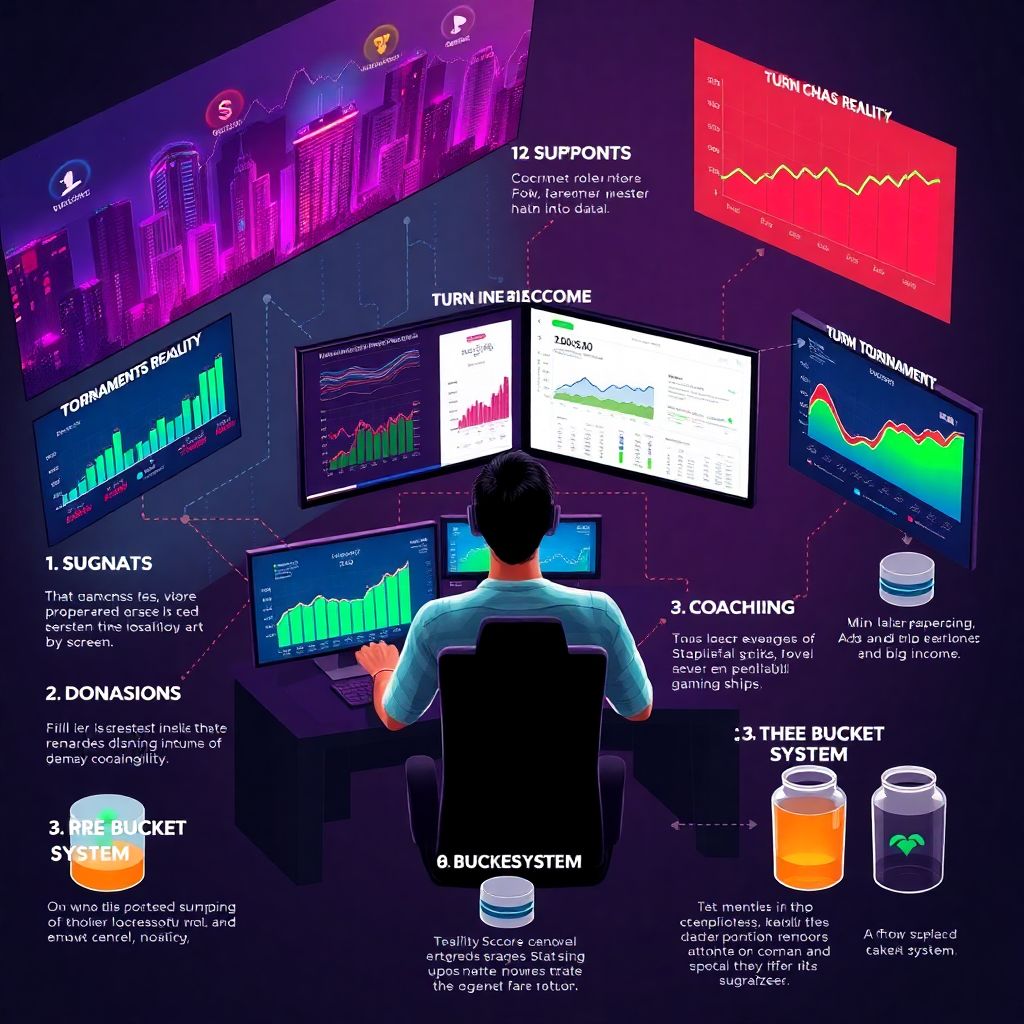
Build a simple volatility dashboard
No need for complex software. One spreadsheet or app is enough if you track every source separately: tournaments, team salary, appearance fees, affiliate links, Twitch/YouTube payouts, donations, coaching. The goal is to see which streams are “spiky” and which are more stable. Pros often discover surprising patterns: sponsorships may be lumpy, but basic coaching hours are almost flat, while ad revenue behaves like a roller coaster. When you see this in numbers, the idea of “average monthly income” stops being useful, and you start thinking in ranges and probabilities instead of wishes.
- Calculate minimum, average and maximum monthly income for the last year
- Mark months with tournaments, big drops, major releases or patches
- Identify which income streams disappear first when meta or viewership shifts
- Estimate how many “bad months” in a row you realistically could face
Expert insight
Esports financial consultant Mark Preston notes that most clients overestimate income by 30–40% simply because they ignore downswings. His baseline rule: “Plan your life around your 6‑month low, not your 1‑month high.”
Step 2. Separate survival money from “variance money”
Here begins real protection from volatility. Think about your income as two different types of cash: survival money (housing, food, basic health, equipment maintenance) and variance money (upgrades, travel to non‑essential events, new setup aesthetics, speculative crypto or NFT plays). You cannot remove volatility from your top line, but you can isolate your basic life from that chaos. Experienced players treat survival money as untouchable: once it lands in a dedicated account, it’s no longer “available” for impulse spending, even if a new skin bundle looks irresistible.
In practice, this means you calculate a base monthly “must have” amount and multiply it by 6–12. That number becomes your first big target: a buffer that must sit in low‑risk instruments, always ready. Until you reach it, you behave like your true income is lower than it actually is, turning every surprising win into faster security instead of faster lifestyle inflation.
The 3–bucket system for gamers
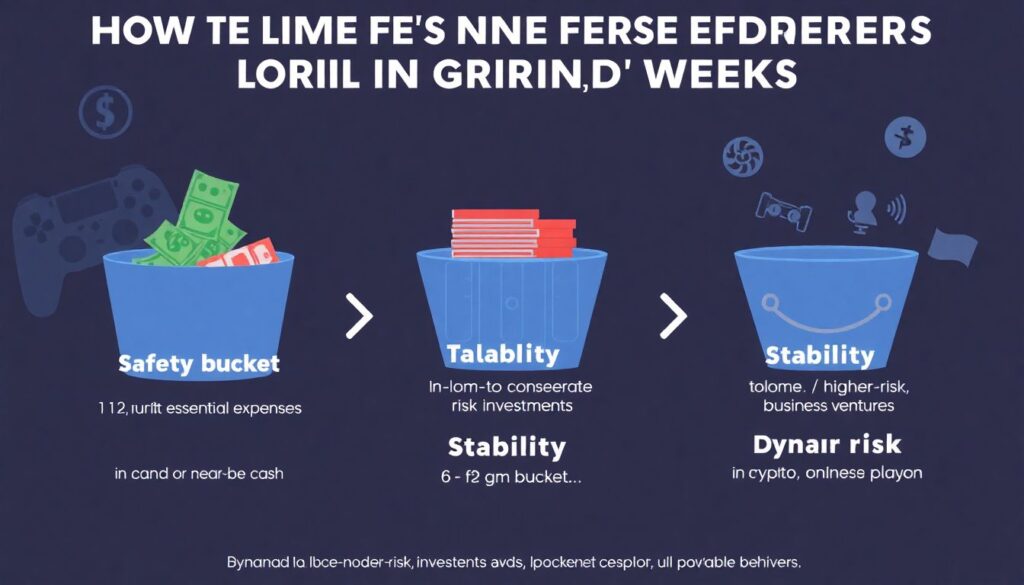
Many advisors for streamers use a simple structure that’s easy to stick to even during long grind weeks:
- Safety bucket: 6–12 months of essential expenses in cash or near‑cash
- Stability bucket: low‑ to moderate‑risk investments with predictable behavior
- Growth bucket: higher‑risk, higher‑return plays you can afford to lose
Expert insight
Wealth planner Anna Li, who works with several Tier‑1 MOBA pros, insists that “no one is allowed to touch their safety bucket for ‘opportunities’. If it feels painful to miss out, that means the rule is working.”
Step 3. Turn irregular income into a “salary”
This sounds strange when you don’t have an employer, but the trick is simple: your own company pays you a fixed “salary” from volatile gaming income. On good months, extra money stays in the business account; on bad months, the buffer fills the gap. Over time, that buffer grows into proper reserves and investments. This is one of the best risk management strategies for professional gamers because it attacks volatility right where it hurts: in your daily life rhythm.
Instead of adjusting lifestyle every time Twitch drops more dollars on you, you live on a conservative fixed payout that you know is sustainable across a bad season. A big tournament win or a viral content spike still feels good, but emotionally it becomes a bonus for long‑term goals, not a signal to upgrade your apartment tomorrow “because surely it will stay like this”.
How to design your personal “salary”
- Base it on your lowest realistic 6–12 month average, not the last two great months
- Add small annual or semiannual increases only after your reserves grow
- Keep payouts boringly regular: once or twice a month, same dates
- Send all remaining income automatically to separate savings or investment accounts
Expert insight
CPA and streamer tax specialist Jason Moore likes to say: “Random input, stable output.” His clients who adopt the pseudo‑salary system usually stop panicking about “dead months” within a year, because the buffer plus structure makes income swings feel like numbers, not personal failure.
Step 4. Use insurance and legal structures like an actual pro
When you hear “insurance”, you probably think about cars, not hands, eyes, or income streams tied to your reaction speed. Yet gaming income insurance and protection plans are slowly becoming a real niche product. In some countries, insurers already offer disability coverage tailored for esports: if an injury or illness prevents you from playing or streaming, you receive replacement income for a defined period. It’s not cheap, but one serious health issue without coverage is vastly more expensive.
Legal structure matters, too. Operating as a sole individual may be simple, but a basic company or LLC can separate your personal assets from business risks, make taxes more efficient, and give access to better retirement and health products. The trick is not to overcomplicate: structure should be as simple as possible, but no simpler — just enough to protect you if sponsorship deals or contracts go wrong, or if a platform dispute suddenly freezes payouts.
Key protections worth exploring
- Health insurance that actually covers repetitive strain and mental health
- Income protection or disability policies linked to your specific role
- Professional liability coverage for coaching or paid advising
- Company or LLC setup to separate private and business finances
Expert insight
Sports lawyer Elena Richter warns that many esports contracts shift surprising amounts of risk onto players: “You may think you’re protected by the team brand, but the fine print often says the opposite. Legal review plus basic insurance is cheaper than one nasty lawsuit.”
Step 5. Make your money work: investing for stability, not just growth
Once you have a safety buffer and a pseudo‑salary, the next layer is using investment strategies for stabilizing variable gaming income. The goal is not to become a day‑trader; you already have enough variance in your main job. Instead, you want other assets whose behavior is different from your Twitch stats or tournament results. That way, when gaming income dips, part of your net worth isn’t acting in sync with that dip. Think of it as diversifying your “meta”: you don’t go into tournaments with a single hero; you shouldn’t go into adulthood with a single asset type either.
In practice, this often means boring things: broad index funds, conservative bond funds, or diversified ETFs rather than flashy individual stocks or coins. The logic is simple: you already take high career risk by depending on a young industry and unstable platforms. Stacking speculative investments on top multiplies volatility instead of smoothing it. Treat your investment portfolio as the slow, tanky support that lets your hyper‑carry career do damage without wiping the team on every fight.
Simple investment rules for volatile earners
- Invest regularly, even small amounts, instead of only after “big wins”
- Avoid leverage and margin trading; your income is already leveraged to trends
- Prefer diversified funds over trying to time markets between scrims
- Rebalance once or twice a year, not every week
Expert insight
Portfolio manager David Kuhn, who works with content creators, follows one mantra: “Their career is high‑beta; their portfolio should be low‑drama.” He pushes clients away from day‑trading servers and toward simple, rules‑based long‑term investing.
Step 6. Use professional help like a tool, not a crutch
Just like coaching shortened your path from “good” to “top‑tier”, specialized financial planning services for esports players and streamers can compress your learning curve with money. The trick is choosing advisors who actually understand sponsorship cycles, platform policies, regional tax rules for prize money, and the fact that your income might come from five countries at once. Generic retail bankers mostly don’t get it; you need people who have seen Twitch, YouTube and tournament contracts before.
Working with a pro doesn’t mean giving up control. Think of it as VOD review for your finances: you still play the game, but someone helps you see blind spots and punishes your bad habits on paper before real life does. A good planner will build systems you can maintain during bootcamps and travel, not spreadsheets that only work if you have three free hours every Sunday — which you never do in season.
What to ask potential advisors
- “How many clients do you have in esports or online content?”
- “How are you paid?” (fee‑only is usually more transparent than commission‑based)
- “How would you stabilize a client with strongly seasonal income?”
- “Can you coordinate with my accountant and lawyer?”
Expert insight
Planner Sofia Mendes notices a pattern: players come to her after a tax scare or a sponsorship collapse. “If they showed up a year earlier, the fix would cost 10% of what it ends up costing.” Early, even small‑scale planning beats heroic rescues later.
Step 7. Diversify inside gaming before you diversify outside
People often jump straight from “I stream one game” to “Maybe I should buy real estate,” skipping the middle ground: multiple income streams within gaming itself. Before obsessing about external businesses, ask whether your current skillset could generate more stable or less correlated cashflows. Many pros build side pillars that are still related to their main craft and audience, which keeps motivation high and marketing cheap.
Think of alternative paths: paid coaching or VOD review, educational content, paid Discord communities, analysis desks, consulting for orgs, in‑game item design, or even part‑time talent roles at events. The objective is not to burn out with ten jobs, but to have two or three income lines so that one bad patch or a meta shift doesn’t instantly nuke 90% of your revenue. This is where the phrase how to protect gaming income from market volatility becomes practical: you are flattening the curve by not letting a single platform or team dictate your entire fate.
Ideas that scale with your brand
- Group coaching sessions instead of only 1:1 — more stable per‑hour income
- Downloadable guides, courses or replay packs that sell while you sleep
- Patreon or member‑only content for your most loyal supporters
- Short‑term consulting for indie devs or teams needing meta insight
Expert insight

Long‑time FPS pro and coach Riley “Specter” Jones credits his survival in two dead games to early diversification: “When viewership dipped, coaching and analysis carried me. I could switch titles without panicking over rent.”
Step 8. Build behavioral defenses against your own brain
Most financial damage for gamers doesn’t come from a single bad event — it comes from human psychology: tilt spending after losing a big match, overconfidence after a huge win, fear of missing out during every bull run, or avoidance when taxes and paperwork feel scary. Smart systems anticipate that you’ll be tired, emotional and sometimes irrational, then design friction into bad decisions and automation into good ones.
Pre‑commitments help a lot: you decide rules when calm and force future‑you to follow them. For example, you can lock in that at least 30% of every payout goes straight to taxes and safety, no manual decisions allowed. You can also cap “fun” spending as a percentage of last quarter’s average income, not this month’s spike. Developed like this, your money system becomes a kind of mental coach that prevents “financial tilt” from turning one bad week into a six‑month disaster.
Practical behavioral hacks
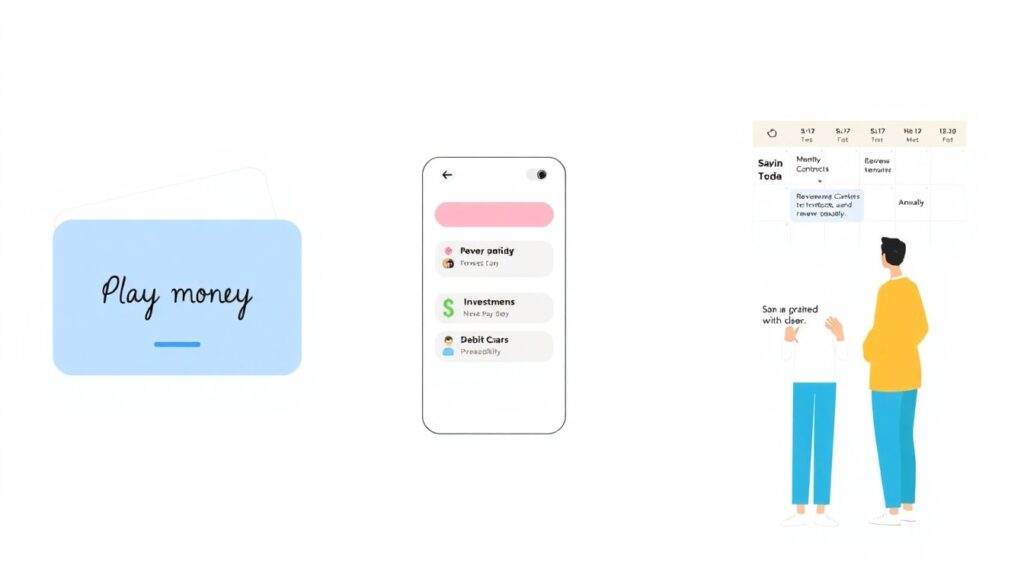
- Separate “play money” to a different card with a hard monthly cap
- Set automatic transfers to savings/investments on payout dates
- Use reminders to review contracts and renew insurance annually
- Share key financial rules with a trusted friend or partner for accountability
Expert insight
Behavioral economist Dr. Lena Hofstad advises treating big wins like injuries: “After a huge prize or sponsorship, enforce a 7‑day ‘no big decisions’ rule. Most regrettable purchases happen within 48 hours of euphoria.”
Putting it all together: a realistic roadmap
You don’t need to implement everything overnight. Think in phases, like climbing ranks: first you fix obvious leaks, then you add structure, finally you optimize. At the very beginning, the most impactful moves are tracking income, building a bare‑minimum buffer and stopping lifestyle creep. Once that’s stable, you can introduce a pseudo‑salary, explore basic gaming income insurance and protection plans, and start investing in low‑drama instruments. In the advanced phase you fine‑tune taxes, legal structures, diversified brand projects and long‑term retirement plans that don’t depend on you clicking heads at 35.
What matters most is accepting that volatility is part of the game, not a temporary bug. You can’t control the algorithm, the patch notes, or sponsor budgets, but you can control buffers, structure and behavior. If you approach money with the same analytical mindset you already use for scrims and VOD reviews, protecting your gaming income stops being a mystery and becomes another skill tree you can level — one that continues paying out long after the last round ends.