

Why turning reviews into a habit actually matters
Building a habit of regular portfolio reviews and rebalancing is less about spreadsheets and more about psychology. Left unchecked, portfolios drift: a few strong years in tech or energy, and suddenly your risk level is nowhere near what you originally signed up for. The trick is to make reviews so routine that they feel as normal as checking your email on Monday mornings. In 2025, market cycles are faster, correlations change quicker, and new asset types – from tokenized real estate to private credit funds – sneak into retail portfolios through apps. That makes a “set and forget” approach riskier than it used to be. A consistent review routine works like a circuit breaker for overconfidence, fear of missing out and panic selling, while giving you a structured moment to check if your portfolio still matches your life, not just the market narrative.
At the same time, too-frequent tinkering can be just as harmful as total neglect, because constant micro-adjustments turn long‑term investing into day trading in disguise.
How often should you rebalance in real life?
The classic academic answer is: rebalance either on a schedule (say, every quarter) or when allocations drift beyond a certain band (for example, stocks move 5–10% away from target). In practice, the “right” timing depends on how emotional you are about drawdowns, how concentrated your income is, and how complex your portfolio has become over the years. For many people, a hybrid rule works best: a light monthly check to catch red flags and a deeper quarterly portfolio review where you’re actually ready to make changes. That way you protect yourself from both extremes: ignoring risk creep for years or reacting to every headline with a trade. The key is to pick a cadence you can keep without feeling drained or obsessed.
Whatever schedule you choose, write it down in one sentence and treat it like a simple contract with yourself.
Comparing main approaches: DIY, robo, advisor and hybrid
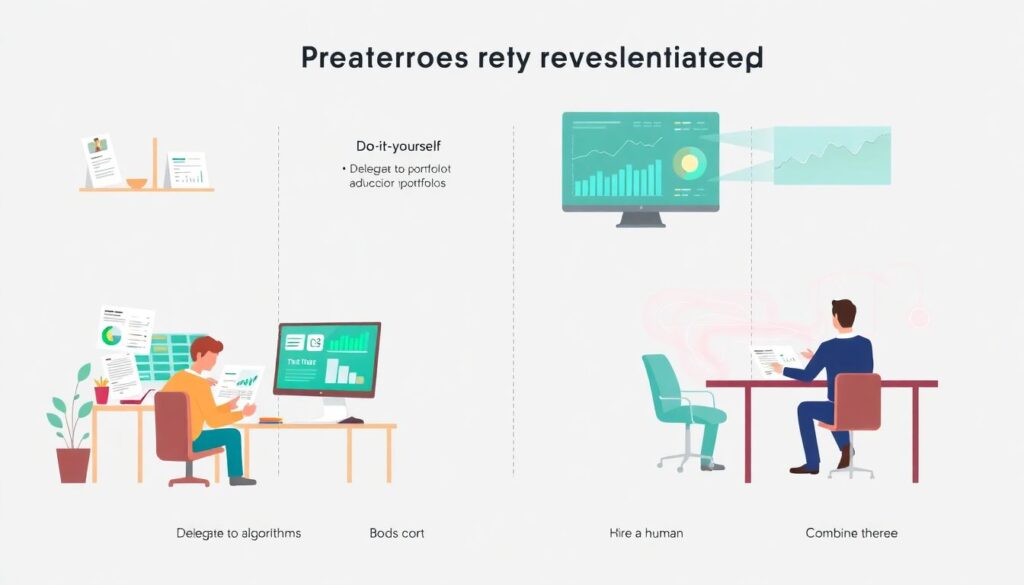
There are four broad ways to handle reviews and rebalancing: do‑it‑yourself, delegate to algorithms, hire a human, or combine all three. A pure DIY setup gives you maximum control and minimal cost, but demands discipline, time for data gathering, and at least a basic understanding of asset allocation and tax rules. Going all‑in on automation via portfolio rebalancing services lowers the cognitive load dramatically, yet tends to assume your goals and risk preferences are relatively stable and easy to quantify. Human advisors add context: job risk, family plans, concentrated stock positions, or equity compensation – things that rarely fit into a neat form. However, their fees accumulate, especially on larger portfolios. Hybrid models try to capture the best of each world: apps and algorithms for day‑to‑day mechanics and a human check‑in when life changes or markets break the usual patterns.
For most individual investors, the hybrid route ends up being both more realistic and more sustainable over a decade‑long horizon.
The role of technology in building the habit
In 2025 the best portfolio management apps for rebalancing are not just glorified dashboards; they act as behavioral scaffolding. They send nudges when your allocation crosses drift thresholds, highlight concentration risk and show the tax consequences of potential moves before you hit confirm. From a habit‑formation point of view, that’s gold: the app turns vague intentions into specific prompts at the right moment. The downside is that notification overload can desensitize you, and gamified interfaces may tempt you to trade for entertainment rather than long‑term alignment. Meanwhile, desktop‑first platforms still win on depth of analytics but often lose on day‑to‑day engagement. The practical question is less “Which tool is best?” and more “Which tool am I actually willing to look at every month for the next ten years without hating it?”
If you find yourself constantly muting or ignoring alerts, that’s a clear sign your setup is working against the habit you’re trying to build.
Automated vs manual rebalancing: pros, cons and trade‑offs
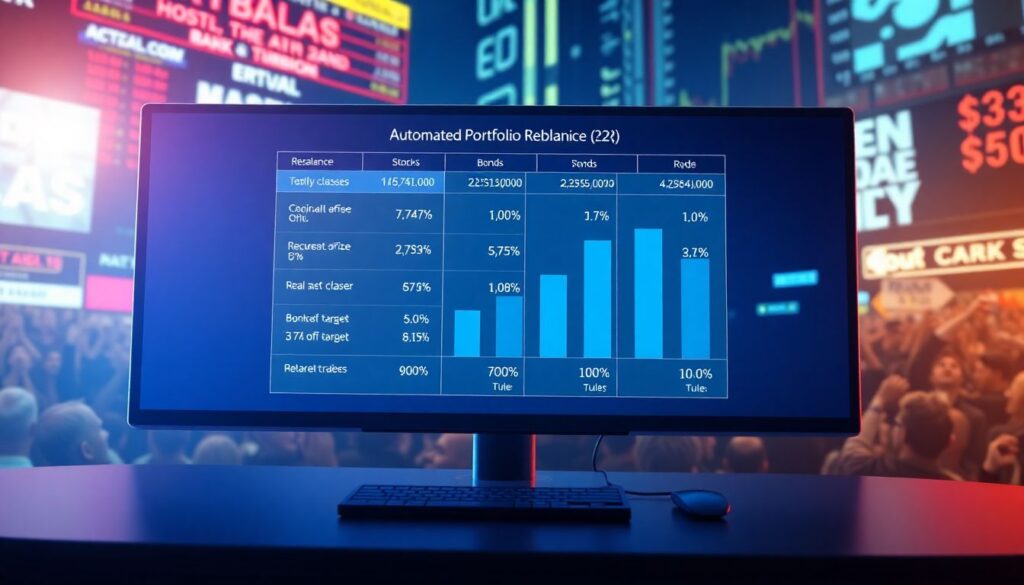
Automated investment portfolio rebalancing is fantastic at enforcing rules you’ve already agreed on. It is unemotional, punctual and consistent: if your policy says “Rebalance when any asset class is 7% off target,” the system will execute, even if the headlines scream panic or euphoria. The trade‑off is nuance. The algorithm doesn’t know your bonus was delayed, that you’re about to buy a house, or that a particular ETF sits in a tax‑sensitive account. Manual rebalancing lets you weave this context in, but also opens the door to procrastination and rationalized inaction – “I’ll fix it next month” slowly becomes “I haven’t checked my portfolio in two years.” The most robust setups use automation for mechanics (alerts, suggested trades, drift tracking) and let you retain a “veto power” window where you either approve or adjust proposed moves.
That way technology enforces your discipline rather than quietly taking over your decision‑making entirely.
When a human advisor actually adds value
A financial advisor for portfolio review and rebalancing makes the most sense when your financial life is messy: multiple jurisdictions, stock options, business ownership, or upcoming liquidity events. In those cases, the review is not just about shifting between funds; it’s about scenario planning. The advantage is interpretive depth: a good advisor will ask whether your portfolio still reflects your career risk, health outlook and family obligations, not just your age and income. The drawback is variability in quality and potential conflicts of interest, especially where product commissions are involved. Cost also matters: paying 1% annually for a purely mechanical rebalance is hard to justify when decent automated alternatives exist. In 2025, advisory relationships that survive scrutiny tend to look more like periodic strategy sessions layered on top of tech‑enabled monitoring rather than continuous micromanagement.
If an advisor can’t clearly articulate how their process improves on a basic policy‐plus‑app solution, that’s a red flag.
Robo and hybrid solutions in 2025
The current generation of robo advisor with automatic portfolio rebalancing has evolved well beyond the early “one‑size‑fits‑all” era. Modern systems integrate goal‑based planning, tax‑loss harvesting, and even basic cash‑flow forecasting. For habit building, this is powerful: once you’ve defined goals and risk, the system repeatedly nudges you back toward that path with minimal friction. The flip side is a subtle dependence risk: investors may stop understanding what’s happening under the hood, leaving them vulnerable to panic the moment markets move outside the historical range shown in the app. Hybrid platforms, where you get on‑demand human chats or scheduled video reviews on top of automated monitoring, are a response to that issue. They preserve automatic execution, while offering an outlet for questions and doubts that rise precisely when sticking to the plan feels hardest.
Used thoughtfully, these tools become a reliable backbone for your review ritual rather than just another shiny interface.
Practical way to lock in the habit
The most effective method to build any financial habit is to reduce the number of decisions required. Start by choosing a single “review day” each quarter tied to a stable anchor in your calendar – for example, the first Saturday after your paycheck. On that day, you follow the same short checklist: confirm goals, check drift from target allocation, assess big life changes since the last review, then rebalance within your predefined rules or approve system suggestions. Keep it boring on purpose. Over time, your brain learns that this is a routine maintenance task, not an emotional referendum on your net worth. Combine it with a visual cue – a recurring block in your digital calendar and a simple one‑page policy saved in the notes section of your app – so there’s no ambiguity about what to do when the reminder pops up.
If you repeatedly skip two consecutive review days, treat that as a signal to simplify your setup or add more automation.
Trends and forecasts for 2025 and beyond
Looking ahead from 2025, the biggest shift isn’t just better tools; it’s personalization. Expect portfolio rebalancing services to incorporate more “life data”: career volatility scores, health metrics, even location‑based housing risk, feeding into dynamic allocation rules. Regulatory pressure is pushing platforms to be more transparent about how algorithms decide when and how to rebalance, which should make it easier to evaluate whether a given service actually fits your behavior and objectives. Over the next five to ten years, reviews will likely become more continuous in the background, with micro‑adjustments happening automatically and humans stepping in mainly at “life event” checkpoints: career changes, family milestones, or big macro shocks. Investors who thrive in this environment will not be the ones with the fanciest dashboards, but those who consciously design a simple, repeatable review habit, and then let technology amplify – rather than replace – that discipline.