
Why Your In‑Game Discipline Is Secretly a Money Superpower
If you’ve ever spent an hour min‑maxing a build, grinding dailies, or planning a raid schedule, you already have the mindset most people struggle to build for years: focused, repeatable discipline.
The fun twist: the same skills that help you resist bad loot choices can help you resist bad money choices. That’s the core idea behind “From Microtransactions to Mega Savings” — using gaming habits to build real‑life money habits that actually stick.
—
Key Terms, But Make Them Gamer‑Friendly
Microtransactions (IRL Edition)
In games, microtransactions are those small purchases — skins, boosts, loot boxes — that “don’t really count” until you check your bank statement.
In real life, microtransactions are every:
– “It’s just a coffee”
– “One more cheap skin”
– “It’s only $2.99 per month” subscription
Individually, they’re tiny. Together, they’re a stealth boss fight against your budget.
Macro Savings
Macro savings = big, long‑term money wins formed by lots of small, repeatable decisions.
Think of it like:
– Daily quests → consistent saving
– Season pass → long‑term investing
– Character progression → net worth growth
We’re basically reskinning personal finance as a progression system.
Money Habits
Money habits are the auto‑pilot routines your brain runs with almost no effort.
Examples:
– Automatically transferring $50 to savings on payday
– Never buying in‑game currency at full price
– Checking a finance app once a day like you check your in‑game mail
You don’t “win” money management through willpower once; you win through habits that repeat like log‑in streaks.
—
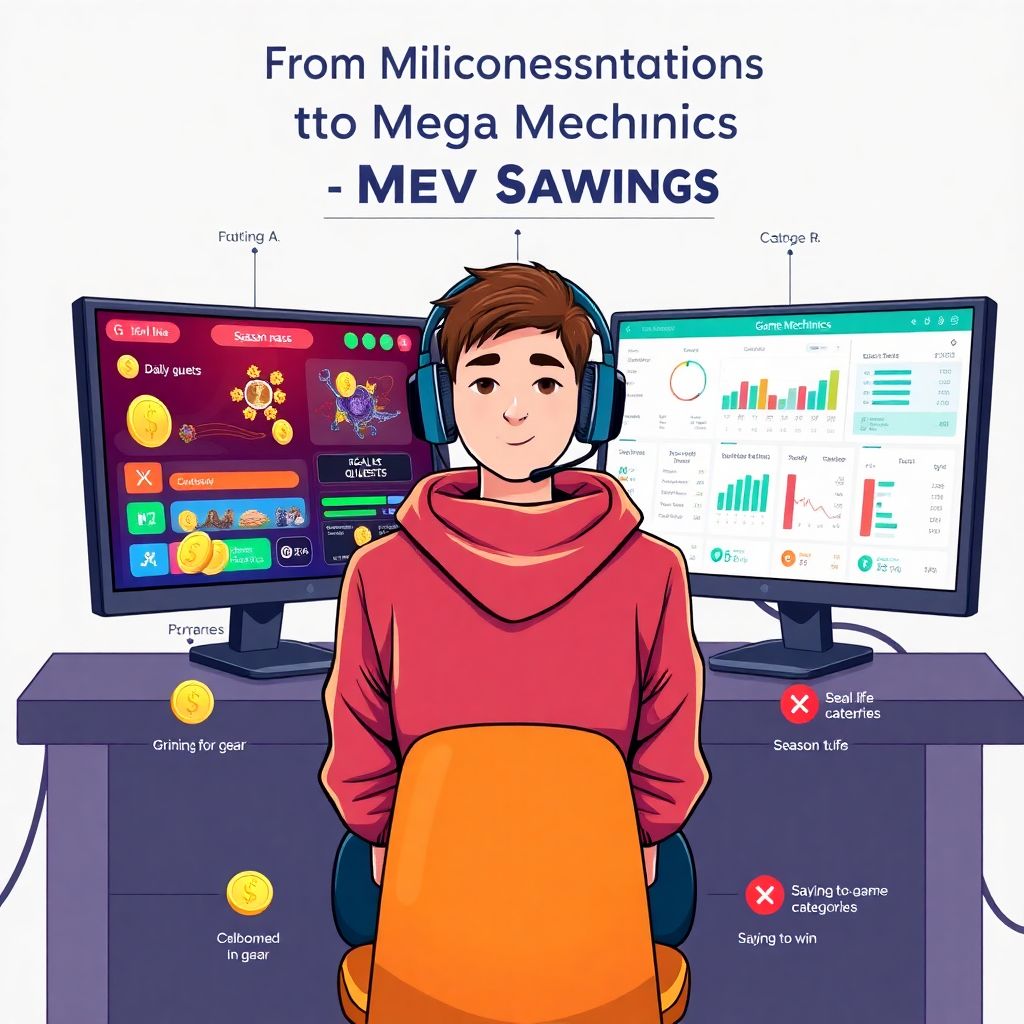
Diagram Time: Mapping Game Systems to Money Systems
Let’s build a mental diagram — no fancy graphics, just a picture in your head.
Imagine three vertical columns:
1. Column A: Game Mechanics
2. Column B: Skills You Build
3. Column C: Money Mechanics
Now imagine lines connecting them:
– From “Grinding for gear” (A)
↓
to “Patience + delayed gratification” (B)
↓
to “Letting investments grow over years” (C)
– From “Managing limited in‑game currency” (A)
↓
to “Prioritizing what actually matters” (B)
↓
to “Budgeting real money toward goals” (C)
– From “Saying no to pay‑to‑win trash offers” (A)
↓
to “Resisting impulses” (B)
↓
to “how to stop microtransactions and save money in real life” (C)
If you sketched it, it’d look like a three‑lane skill tree: game actions feeding skills, skills feeding financial behaviors.
—
How Microtransactions Sneak Past Your Money Defenses
Most gamers don’t get wrecked by one big purchase. It’s death by a thousand cuts.
A skin here, a loot box there, a battle pass you forgot to cancel, a “limited time” bundle that magically appears every week. The psychology is simple: tiny hits of dopamine for tiny hits to your wallet.
Here’s the trap:
– Your brain tags each purchase as “too small to matter”
– Your bank account experiences all of them combined
That’s exactly how IRL micro‑spending works too: food delivery, subs you don’t use, “just one drink,” cheap games you’ll never launch.
—
How to Turn Gaming Habits into Saving Money
Let’s tackle the phrase head‑on: how to turn gaming habits into saving money without killing the fun.
Step 1: Treat Your Money Like an In‑Game Resource
You already know:
– Gold is limited
– Upgrade costs go up over time
– You can’t buy everything
Copy‑paste that logic onto your paycheck.
Quick mental reframe:
– Your salary = daily/weekly quest reward
– Rent, bills, food = mandatory upkeep
– Savings/investing = upgrading your character
– Random spending = vanity items and impulse rolls
If you wouldn’t burn all your in‑game currency on a 1% stat boost, don’t burn your real money on the IRL equivalent.
Step 2: Set Money Goals Like You Set Game Goals
Gamers understand goals better than most:
– “Hit level 70 by Sunday”
– “Finish the campaign before DLC drops”
– “Unlock that legendary skin”
Do the same with cash:
– “Save $500 for an emergency fund by June”
– “Invest $100 a month for the next year”
– “Pay off this credit card in 6 months”
Short, clear, time‑bound — it’s basically a quest log.
—
Budgeting, But Explain It Like a Game
Budgeting gets sold as a boring spreadsheet chore. In gamer terms, it’s just resource allocation and build planning.
Three Gamer‑Friendly Budget Builds
1. The 50/30/20 Build
– 50% needs (rent, food, basic survival)
– 30% wants (games, dining out, fun)
– 20% future (savings, investments, debt payoff)
2. The “Main + Alts” Build
Your income is your main account, your goals are alts:
– Main: current living
– Alt 1: emergency fund
– Alt 2: investment account
– Alt 3: fun money
3. The “Season Pass” Build
Assume every month is a season:
– Define the main objective (e.g., save $200)
– Track progress weekly like a season track
– Unlock “rewards” (small treats) when milestones are hit
—
Best Budgeting Apps for Gamers to Manage Money
You don’t have to love spreadsheets. Apps can do the heavy lifting, like in‑game HUDs for your wallet.
Look for apps that:
– Give clear visual breakdowns of where your money goes
– Let you create separate “pots” or “vaults” for different goals
– Support automatic transfers on payday
– Have notifications that work like in‑game alerts (“You’re close to your budget cap!”)
So when people ask about the best budgeting apps for gamers to manage money, the real answer isn’t a single brand — it’s features that feel like a dashboard, not a lecture.
—
From Impulse Purchases to Cooldown Timers
Here’s a simple trick: add a “cooldown” to every non‑essential purchase.
The 24‑Hour Cooldown Rule
– See something you want (skin, accessory, extra game, random gadget)
– Put it on a list with the date
– Wait 24 hours before you’re allowed to buy it
If you still want it after the cooldown and it fits in your budget, go for it.
Most impulse wants vanish as soon as the emotional crit hit wears off.
You can even extend it:
– 24 hours for small stuff
– 7 days for anything over $50
– 30 days for huge purchases
This is the real‑life version of waiting to see if a game stays fun after the honeymoon phase.
—
Practical Financial Tips for Gamers to Save and Invest

Let’s turn this into actual moves you can make this week.
Low‑Friction Money Upgrades
– Automate a small transfer
– Even $10 per paycheck into savings builds the “I save money” identity.
– Audit subscriptions once a quarter
– Games, streaming, battle passes, “free trials” that aren’t free anymore.
– Cap your in‑game spending
– Decide a monthly limit for games and stick to it like a hardcore mode rule.
When You’re Ready to Invest
If you’re a gamer, you already get the idea of long‑term payoff: grind now, power later.
Look for:
– Low‑fee index funds or ETFs instead of trying to “stock pick” like loot boxes
– Automatic monthly investments (same day, same amount)
– Platforms that are simple and transparent, not casino‑like
That’s the core of financial tips for gamers to save and invest: make it boring, automatic, and harder to mess up than to succeed.
—
Stopping the Money Drain: In‑Game and IRL
If you’ve ever wondered how streamers or hardcore players afford everything, spoiler: most of them don’t buy everything. They prioritize.
How to Stop Microtransactions and Save Money (Without Quitting Games)
Try this combo:
– Turn off one‑click purchases
– Remove saved cards from your console or Steam account. Add friction.
– Use prepaid cards or a separate “fun money” card
– Load a fixed amount monthly. When it’s gone, it’s gone.
– Mute in‑game store notifications if possible
– Less visual spam, fewer “limited time offer” triggers.
This isn’t about never spending. It’s about making sure every purchase is a choice, not a reflex.
—
Learning the Money Meta: Courses, Content, and Community
In 2025, there’s a rising niche: personal finance courses for gamers and streamers. They use examples like sub revenue, donation spikes, or tournament winnings instead of “salary and pension talk”.
These courses usually cover:
– How to handle irregular income (common for streamers and esports players)
– Taxes on sponsorships, affiliate deals, and prize money
– Building a safety net so you’re not one ban, one burnout, or one game patch away from financial panic
Even if you’re “just a gamer” with a normal job, that style of teaching can click better, because it speaks your native language: XP, risk/reward, cooldowns, buffs.
—
Comparing Gamer Money Mindsets to Non‑Gamer Mindsets
Many non‑gamers:
– Hate numbers
– See money as mysterious and stressful
– Treat planning as punishment
Gamers often:
– Love systems, optimization, and builds
– Understand RNG, risk, and odds
– Accept grind as part of progression
So while other people ask “Why bother with a budget?”, gamers instinctively know:
– You can’t run high‑level content with trash gear
– You can’t build wealth with trash habits
The gap isn’t intelligence; it’s framing. Once you see money as just another system to master, everything gets less scary.
—
Examples: Turning Your Own Playstyle into a Money Strategy
If You’re a Grinder
– You’re good at repetition and consistency
– You don’t mind slow progress as long as the bar moves
Money parallel:
– Automate small, recurring transfers
– Use apps that show progress bars or goal trackers
– Check once a week like you check season progress
If You’re a Min‑Maxer
– You read guides, watch builds, theorycraft before committing
– You hate leaving value on the table
Money parallel:
– Dive into articles, videos, or courses about basic investing
– Optimize fees, interest rates, and rewards like you optimize stats
– You’re perfect for long‑term planning if you don’t get lost in perfectionism
If You’re Social / Team‑Oriented
– You love co‑op, raids, guilds
– You engage more with people than solo grinds
Money parallel:
– Join a small accountability group (friends, Discord, community)
– Share goals and monthly progress
– Treat it like a casual clan check‑in instead of a serious “finance meeting”
—
Looking Ahead: The Future of Gamer Finance (2025–2035)
Since it’s 2025, let’s peek a decade ahead. The lines between gaming, content creation, and money are blurring fast.
Here’s a text‑only “timeline diagram” you can imagine as a horizontal bar with milestones:
– 2025–2027: Normalization Phase
– More banks and fintech apps launch gamer‑branded products
– Budgeting apps add “gaming” as its own spending category
– Popular creators start openly sharing how they manage sponsorship income, subs, and savings, not just gear and settings
– 2028–2030: Integration Phase
– Big titles and platforms experiment with built‑in financial nudges
– Example: optional dashboards comparing your in‑game spending to savings goals
– Esports orgs bring in financial coaches for pros, like they now do for sports psychologists
– More colleges and bootcamps add crossover content: game design + economics + personal finance
– 2031–2035: Gamified Finance 2.0
– Fully gamified finance platforms where your savings progress literally looks and feels like leveling a character
– “Money RPGs” where:
– Pay off debt = defeating bosses
– Build an emergency fund = unlocking new zones
– Invest over 10 years = endgame progression
– AI financial assistants that talk to you like a coach, using your favorite games as reference points
We’re heading toward a world where “finance apps” feel less like banking portals and more like live‑service games — with one big difference: the microtransactions are working for you, not against you.
—
Bringing It All Together: From Microtransactions to Mega Savings
You don’t need a totally new personality to get good with money. You already have:
– Discipline from grinding
– Patience from chasing rare drops
– Strategy from building characters and team comps
– Risk awareness from RNG and loot systems
Now the mission is to:
– Point those skills at your bank account
– Swap loot chests for savings goals
– Turn your wallet from “pay‑to‑lose” into long‑term, compounding power
Use the same brain that optimizes your loadout to optimize your life.
Different game, same player — much bigger rewards.