
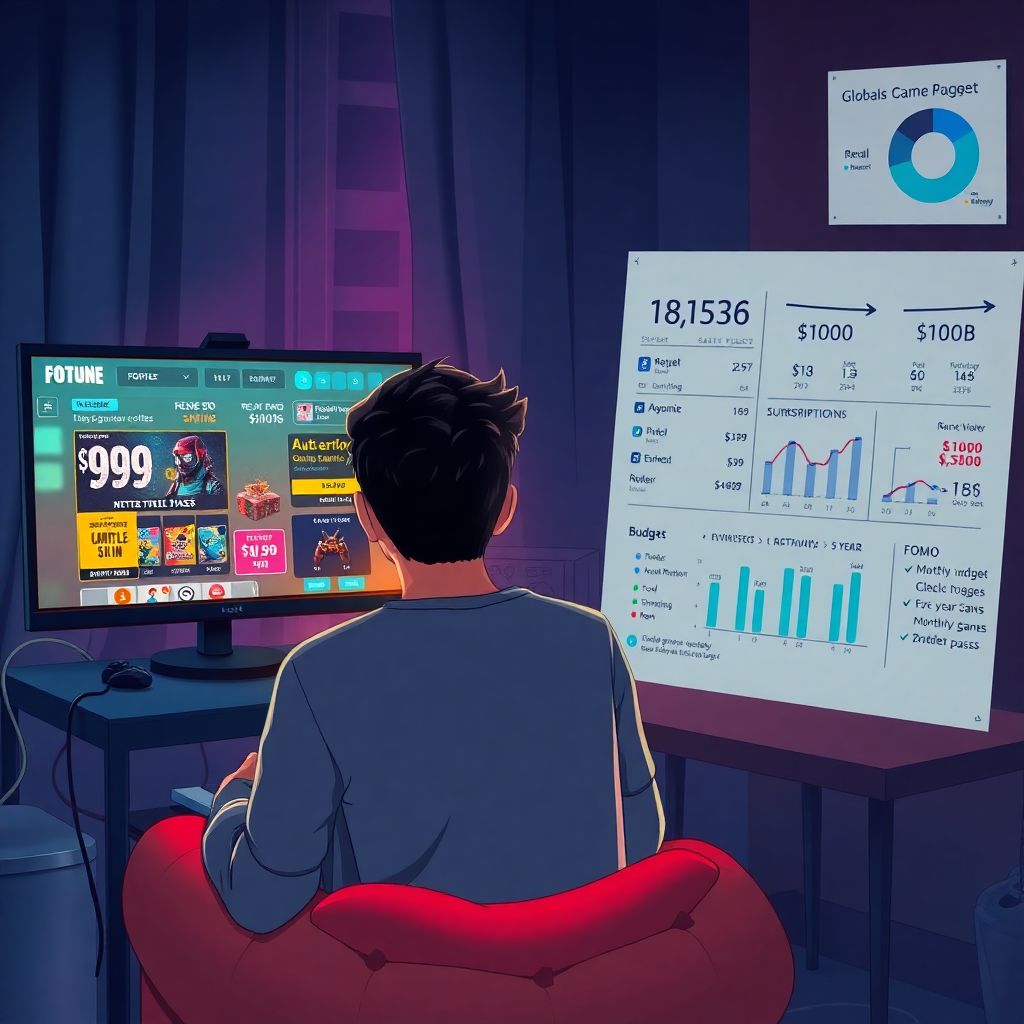
Most of us grew up thinking of games as “just a hobby.” Then microtransactions, battle passes and $70 releases showed up, and suddenly gaming started to look a lot like a subscription lifestyle. By 2025, that lifestyle quietly shapes monthly budgets as much as rent, food and streaming services — whether people admit it or not.
—
From arcade coins to auto-renewal: how we got here
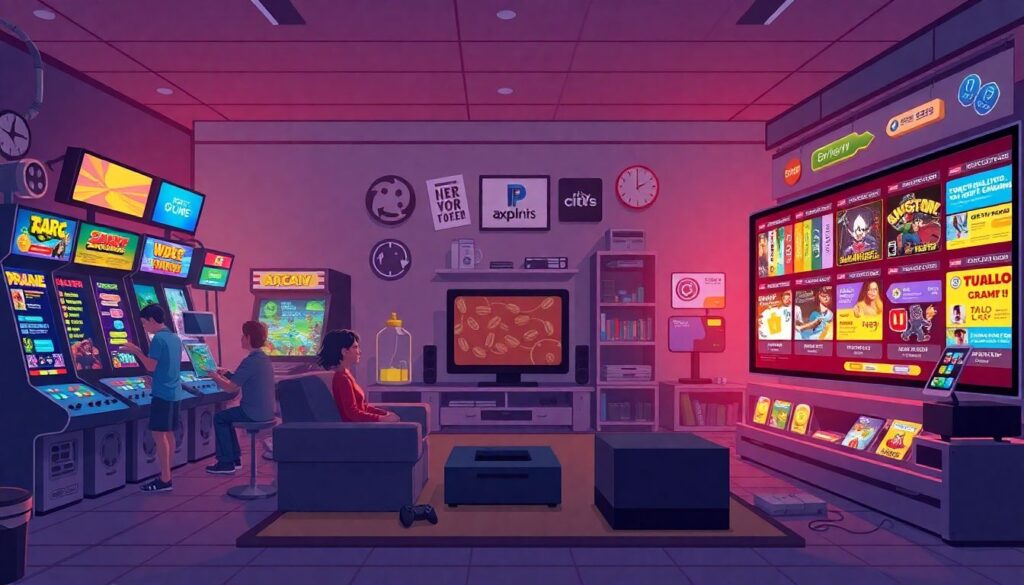
In the 1980s you paid per play: arcades, cartridges, maybe a joystick for your home console. Spending was visible and finite. The 2000s turned games into one‑time purchases with the occasional expansion pack, so “game money” still sat in a small, predictable corner of your wallet. The big break came in the 2010s: mobile free‑to‑play models, loot boxes, cosmetic shops and later battle passes rewired how, when and why players part with cash. Platforms normalized storing cards, one‑click buying and auto‑renewal. By the early 2020s, gaming culture and recurring payments merged into something that behaves a lot like a utility bill — just without the same level of scrutiny.
Today, global game revenue is estimated well above $200 billion a year, and analysts still expect mid‑single‑digit annual growth through the decade, led by mobile and live‑service titles. That means more studios chasing “engagement” and “lifetime value,” not just unit sales. If you don’t consciously define your own boundaries, the industry will gladly define them for you. That’s why financial planning for gamers isn’t a boring side note anymore; it’s a survival skill that keeps entertainment from turning into chronic overdrafts and lingering credit‑card balances.
—
Why gaming feels cheap until the bill lands
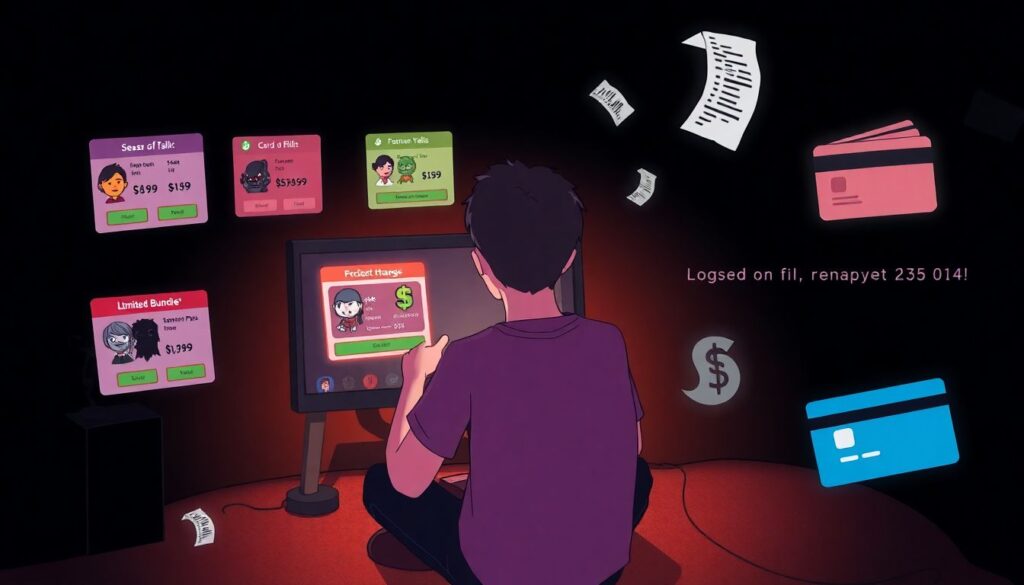
Short sessions, small prices and constant offers make individual purchases look harmless. A $9.99 skin here, a $14.99 season pass there, a “limited” bundle that expires in 12 hours — mentally it’s pocket change. But card-on-file systems and digital wallets blur the sense of loss. Many players only notice the true scale of their hobby when bank apps start flagging “digital entertainment” as a top spending category. That disconnect between feeling and reality is exactly where bad money habits breed.
A 2023 survey from several market researchers suggested that regular players aged 18–34 often underestimate their annual gaming spend by 30–50%. Add in hardware upgrades, subscriptions like Game Pass or PS Plus, DLC, and cosmetics, and it’s easy to cross $1,000 a year without calling yourself a “whale.” With inflation pushing base game prices upward and live‑service titles extending their revenue tails for years, that spending trajectory doesn’t flatten on its own. Learning how to budget for gaming expenses is no longer about guilt; it’s about aligning what you enjoy with what you can sustainably afford over time.
—
The economics behind modern game design
Studios don’t just hope you spend more; they design entire systems to nudge you there. FOMO‑driven events, rotating shops and time‑limited cosmetics deploy the same behavioral economics used in fintech and e‑commerce. Small, frequent purchases create a sense of control while actually increasing lifetime revenue. In this setup, the player’s task is to re‑introduce friction: deliberate pauses, hard caps and planned spending moments that break the “see, click, buy” reflex. Understanding those mechanics lets you enjoy the design without becoming the design target.
From the industry side, live‑service models shift financial risk away from one upfront launch toward long‑term engagement. Investors like the predictable cash flow; publishers get more data to refine offers; platforms earn a cut of every sale. This changes which games get greenlit: projects that support long monetization tails often win over risky, self‑contained single‑player titles. Your spending habits collectively act like votes. When enough players learn to reduce gaming spending and save money by ignoring predatory hooks and supporting fair monetization instead, they tilt the business math toward healthier models.
—
Bringing structure: turning vibes into numbers

You can’t manage what you never measure. Start by pulling three to six months of bank and platform history: Steam, PlayStation, Xbox, Nintendo, mobile stores, subscription services, hardware purchases. Add everything with even a loose tie to your hobby — headsets, controllers, in‑game currency, cloud saves. The number might sting, but it gives you a clear starting line. Skip the self‑judgment; you’re running a diagnostic, not a trial.
Once you see the pattern, set a monthly “fun budget” that includes gaming alongside streaming, eating out and other non‑essentials. Then carve out a specific slice just for games and in‑game purchases. That amount should fit inside your overall savings and debt‑repayment plan, not float on top of it. Some of the best money management tips for gamers are aggressively simple: use prepaid cards for platforms, turn off one‑click payments, require passwords for every purchase, and keep subscriptions on manual renewal. Each small barrier buys you a few seconds to ask, “Do I really want this, or am I just reacting to a timer or a flashy animation?”
—
Practical tactics for everyday play
Think in “slots,” not in titles. For example, decide that you’ll maintain at most one live‑service game at a time. If you want to jump into a new battle pass, you pause or drop another. This limits overlapping monetization systems competing for your attention and cash. Also, avoid treating “free‑to‑play” as “free by definition.” Assume you’ll eventually spend something if you enjoy the game, and pre‑decide a maximum lifetime budget per title before you get emotionally attached to a main character or skin collection.
When you’re looking to trim costs, start with recurring charges. Do an annual “subscription audit” every January or on your birthday. Cancel passes and memberships you don’t touch weekly. If you’re trying to seriously cut back, allocate a smaller monthly amount and treat it like a resource to optimize: sales hunting, backlog clearing, borrowing or lending physical copies with friends. To reduce gaming spending and save money without killing the fun, rotate between new releases and older classics, experiment with indie titles, and lean on library programs or legal subscription catalogs that offer huge libraries for a fixed fee.
—
Preparing for big buys: hardware and upgrades
Consoles, GPUs and peripherals are where impulsive behavior hits the hardest. A next‑gen card or limited‑edition console can wipe months of careful saving in one swoop if you treat it as a surprise purchase. Instead, treat hardware like a mini‑project: define the target cost range, the ideal purchase window (for example, post‑launch price drops or seasonal sales), and a checklist of features you truly need, not just what influencers hype this week.
Here, classic financial planning blends neatly with your hobby goals. Map upgrades to real performance and enjoyment gains: will that monitor or SSD materially change your experience, or are you paying for status? Spread savings for big items over several months in a separate “gear fund” so the purchase doesn’t cannibalize essentials or emergency savings. Some communities now even explore personal finance courses for gamers, where budgeting for rigs, events and digital libraries is taught using game metaphors: resource allocation, cooldowns, trade‑offs. If that resonates, lean into it — using a language you enjoy makes the discipline stick.
—
Community norms and cultural pressure
Gaming culture is social by design, and money dynamics inevitably slip into that social layer: who has the newest skin, which mount signals dedication, who can afford collector’s editions or premium battle passes. If your circle normalizes constant spending, it becomes harder to say no without feeling left out. Recognize those pressures for what they are: subtle status markers, not requirements for belonging. Voice chats and Discords that mock “default skins” or free players usually reflect insecurity more than genuine community standards.
Shifting norms starts small. Be open about budgeting: mentioning that you’ll wait for a sale or skip a cosmetic because it’s outside your limit plants a different narrative. Others often feel relieved to hear someone say what they’re already thinking. Clan leaders and content creators can reinforce healthier habits by spotlighting skill, creativity and teamwork instead of sheer wallet size. Over time, these micro‑signals can steer communities away from flex culture and toward sustainable enthusiasm, where no one feels forced to overspend to keep up.
—
Economic impact on the wider industry
Your individual choices roll up into market signals. When enough players support fairly priced expansions, transparent cosmetics and meaningful single‑player experiences, the revenue data justifies more of those projects. Conversely, if studios see that aggressive loot boxes trigger backlash, regulatory scrutiny and churn, they’re pushed to redesign. Europe and parts of Asia have already tightened rules around randomized monetization; more regions are exploring similar policies, which in turn pushes publishers to experiment with subscription bundles and à‑la‑carte cosmetics instead.
Analysts expect the next decade of growth to skew toward cross‑platform ecosystems, cloud gaming and subscription libraries that behave like Netflix for games. This shifts consumer risk from buying individual titles to managing a mix of subs — and it makes financial literacy even more critical. If players fall asleep at the wheel, they may end up paying for multiple overlapping catalogs they barely touch. Thoughtful subscription choices — and willingness to churn in and out instead of staying perpetually signed up — directly influence which models are profitable, which studios thrive and which pricing structures become the norm.
—
Forecasts: where money and play collide next
By 2030, don’t be surprised if your gaming profile, spending history and in‑game behavior feed personalized offers far more sophisticated than today’s “daily deals.” Dynamic pricing, battle passes tuned to your habits, and AI‑driven storefronts will all be technically feasible — some experiments are already visible in live‑service titles. This arms race between monetization design and consumer awareness will only intensify, making financial boundaries and clear priorities more valuable than any limited‑time discount.
On the upside, the same data tools can help you. Budget apps increasingly auto‑tag digital entertainment, flag overspending trends and suggest caps. Educators and streamers are beginning to weave money discussions into gaming content, from “rig upgrade roadmaps” to deep dives on economic systems in MMOs as gateways into real‑world finance. As these resources mature, the idea of best money management tips for gamers being a niche topic will fade. They’ll simply be part of how we talk about the hobby, right alongside patch notes and tier lists.
—
Bringing it all together
Balancing gaming culture with sound financial decisions isn’t about becoming a monk or quitting every live‑service game. It’s about recognizing that the industry is built to capture as much of your disposable income as possible — and then responding with structure, clarity and intention. Track what you spend, pre‑decide your limits, treat big purchases as projects, and don’t be afraid to talk openly about money in your circles.
When you do that, you get the best of both worlds: a hobby you genuinely enjoy and a money life that actually supports your long‑term goals. Games stay what they were supposed to be from the start — meaningful play — instead of an unexamined drain hiding in your bank statements.