
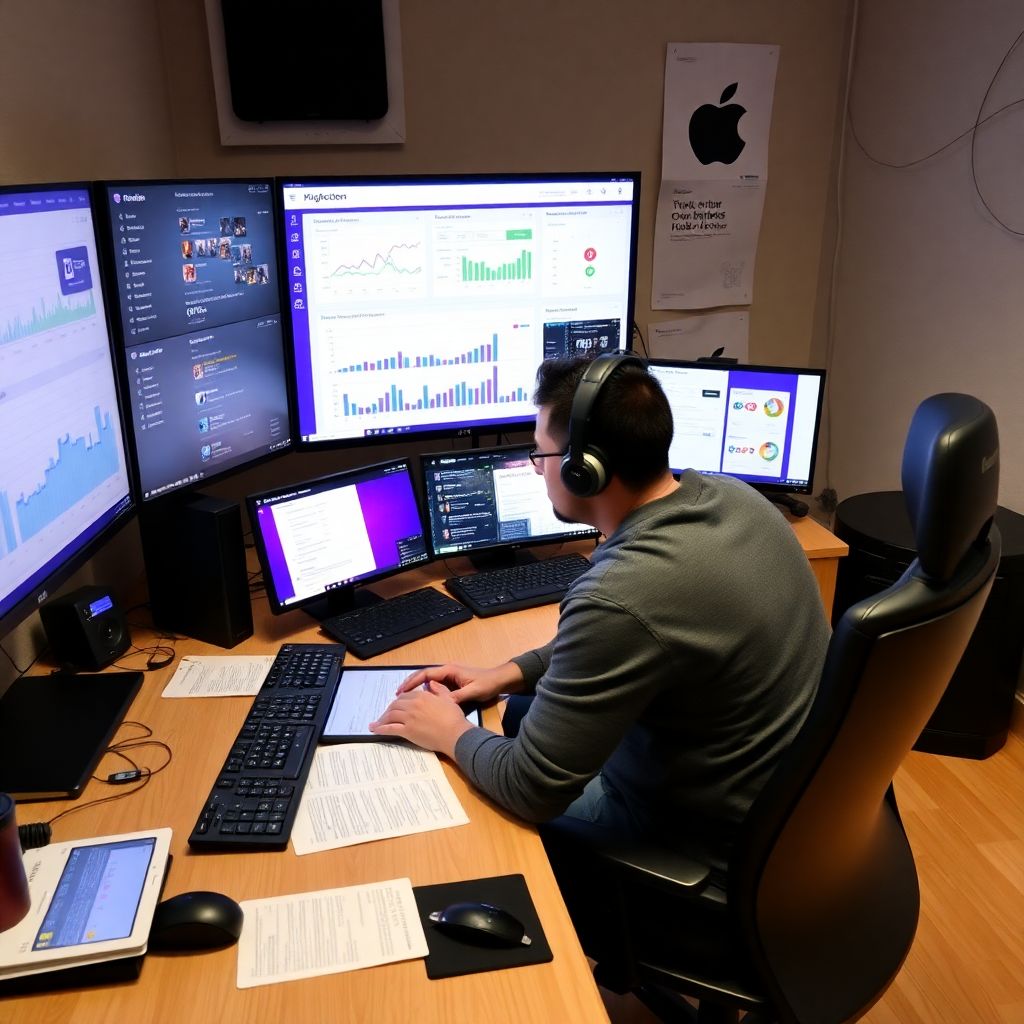
To manage streaming income safely, treat Twitch, YouTube, and sponsorship money like a real business. Build multiple revenue streams, track every payout, separate taxes, and stabilize cash flow before scaling. This twitch and youtube streamer income guide focuses on practical systems you can set up in a weekend and refine over time.
Essential Revenue Rules for Streamers
- Separate business and personal money with different accounts before income grows.
- Track every payout and invoice in one sheet or app from day one.
- Prioritize recurring income (subs, memberships) over only volatile ad revenue.
- Never rely on a single sponsor, platform, or algorithm for rent-level expenses.
- Pre-allocate money into taxes, fixed costs, savings, and growth every month.
- Use written agreements for all sponsorships, even “small” ones.
- Review analytics monthly and adjust your time toward the highest-ROI activities.
Mapping Revenue Streams: Subscriptions, Bits, Ads, and Tips
This section shows how to make money streaming on Twitch and YouTube using a mix of stable and variable income sources, and when each option fits your stage.
- Check if you are ready for monetization: Have a regular schedule, consistent average viewers, and basic branding (panels, banner, about page) before pushing monetization hard.
- Subs and memberships as your “base salary”: Treat Twitch subs, YouTube channel memberships, and Patreon as your core predictable income. Offer simple perks: VOD access, badges, member-only chat, and a monthly Q&A.
- Bits, super chats, and tips as bonus income: Design alerts and goals that celebrate, not guilt viewers. Cap “marathon” or “shot” style redemptions to protect your health and avoid unsafe behavior.
- Ads as background revenue, not the main focus: Use mid-rolls sparingly; favor pre-roll reduction tools and scheduled ad breaks during natural pauses instead of gameplay peaks.
- When not to push monetization: If your average view time is low or your chat is very quiet, focus on content quality and retention before stacking paywalls or frequent ad breaks.
- Simple revenue map: Write a one-line target like: “50% subs/memberships, 20% ads, 20% tips, 10% sponsors” and adjust quarterly based on what actually earns.
Monetizing YouTube: Shorts, Memberships, and RPM Optimization
Here is a practical twitch and youtube streamer income guide for YouTube specifically: set minimum requirements, build the right formats, and then tune RPM instead of just chasing views.
- Meet basic program requirements first: Aim to qualify for YouTube Partner Program and enable monetization on VODs and Shorts once allowed. Verify identity and connect a payout method early.
- Split content by intent: Use three pillars: discoverability (Shorts, highlights), depth (guides, VODs), and community (member-only posts, streams). Each supports different revenue types.
- Optimize RPM safely: Create more advertiser-friendly topics (guides, tutorials, reviews) separate from more edgy content, so at least part of your catalog remains fully monetized.
- Membership offers that are easy to deliver: Promise perks you can reliably maintain: members-only VODs, behind-the-scenes posts, one monthly member stream, and a Discord role, not daily complex rewards.
- Shorts as sponsor hooks: Use Shorts to demonstrate integrations tastefully. This supports the best ways to monetize twitch youtube channel with sponsors by showing results (clicks, comments) in a compact format.
- Basic tracking template: Log per-video views, watch time, RPM, and earned revenue monthly. Prioritize formats that bring both new subs and strong RPM instead of only viral spikes.
Sponsorship Deals: Negotiation Checklist and Deliverables
Safe sponsorships start with a clear offer, written expectations, and realistic pricing. This is the core of streamer finance tips managing twitch youtube sponsorship income without chaos.
Pre-negotiation preparation checklist
- Prepare a one-page media kit with key stats and audience profile.
- Decide your minimum acceptable deal size and ideal terms before calls.
- List all integration formats you are comfortable doing (ad reads, panels, pinned comments, videos).
- Confirm how you will track performance (links, codes, in-video metrics).
- Set a simple rule: no promotion of unsafe, shady, or disallowed products.
- Clarify your value and audience fit – Before discussing money, describe your niche, viewer demographics, and platforms (Twitch, YouTube, socials). Explain how your content style supports trust-based recommendations.
- Define sponsor deliverables in concrete units – Translate vague asks into clear pieces:
- Stream integrations: number of sponsored streams, minutes per stream, on-screen assets.
- YouTube: dedicated videos vs. mid-roll ad reads, Shorts inclusions, pinned comments.
- Static presence: panels, profile links, Discord channels, and duration of placement.
- Set pricing and structure the offer – Use an internal rate card based on average concurrent viewers, VOD views, and conversion history. Offer tiered packages (basic, standard, premium) instead of only a custom quote.
- Negotiate scope, timelines, and approvals – Agree on campaign start/end dates, revision limits for scripts or assets, and deadlines for feedback. Keep buffers so revisions do not force unsafe hours or rushed streams.
- Lock in tracking, payments, and legal basics – Decide how conversions are tracked (custom URLs, codes), when reports are sent, and payment terms (upfront, milestone, or net days). Ensure you retain content ownership and can label sponsored content clearly for compliance.
- Confirm everything in writing before work – Summarize deliverables, schedule, payment, and disclosure rules in a simple contract or email agreement. Do not start integrating a sponsor until this written confirmation exists.
Cash Flow Management: Budgeting, Taxes, and Emergency Fund for Creators
This checklist focuses on how to manage money from streaming and sponsorships in a stable, low-stress way.
- Use separate accounts for business income and personal spending, even if it is just different accounts at the same bank.
- Every payout day, split income into categories: taxes, fixed bills, savings, and flexible spending according to your plan.
- Track all streaming and sponsorship income plus expenses (gear, software, art, editing) in one central spreadsheet or app.
- Build an emergency fund strong enough to cover several months of essential expenses so a bad ad month does not push you into debt.
- Schedule a monthly “money review stream for one” where you check revenue by source, payouts received, and upcoming invoices.
- Avoid taking on new recurring costs (rent upgrades, car payments) based solely on a few exceptional sponsorship months.
- Keep records of contracts, invoices, and payment receipts organized by year and sponsor; this simplifies tax filing and disputes.
- Plan your content calendar with major sponsor campaigns and expected release dates so cash flow is not clustered into one period.
- Decide in advance how much you reinvest into the channel (editing, ads, coaching) each month instead of making impulsive purchases.
Analytics-Driven Pricing: Setting Rates for Sponsorships and Services

This section helps you avoid common mistakes when pricing sponsorships, edits, coaching, and other services.
- Guessing prices without data: Quoting random numbers instead of using historical CPMs, conversion rates, and watch-time metrics weakens your position.
- Undervaluing long-form content: Treating a permanent VOD or video like a one-time shoutout ignores ongoing views and brand exposure.
- Ignoring platform differences: Charging the same for Twitch overlays and YouTube pre-roll integrations can misalign value; live trust and VOD evergreen reach are priced differently.
- No minimum project rate: Accepting tiny one-off jobs (like underpriced ad reads or edits) burns time that could grow higher-ROI content.
- Not separating “friends” from business: Doing recurring discounts for acquaintances without limits leads to resentment and lost income.
- Forgetting non-public work: Strategy calls, scripting, and thumbnail revisions are part of your labor; leaving them out of prices quietly erodes earnings.
- Never raising rates: Keeping the same prices as your audience and impact grow makes it hard to hire help or reduce your hours later.
- Lack of clear packages: Selling only custom deals slows negotiations; instead, have 2-3 pre-made options with defined deliverables.
Scaling Income: Diversification, Outsourcing, and Passive Products
Once core income is stable, diversify safely using these alternatives that fit different goals and risk levels.
- Education-based products: Create guides, VOD reviews, or courses teaching specific skills you know well. This is ideal when your audience frequently asks the same “how do I do X?” questions.
- Digital assets and templates: Sell overlays, alerts, stream checklists, or content calendars-great if you enjoy design or systems more than being on camera daily.
- Outsourcing content repurposing: Hire editors or clip makers to turn streams into YouTube and social content, especially when you already understand streamer finance tips managing twitch youtube sponsorship income but lack time.
- Community-driven revenue: Launch Patreon, private Discord tiers, or coaching sessions when you have a core audience that wants deeper access, not just more casual entertainment.
Quick Practical Clarifications
How many income streams should a mid-size streamer aim for?
Have at least three: platform monetization (subs, ads), direct support (tips, memberships), and sponsors or products. Add more only when your systems for tracking and delivery are stable.
When is it too early to look for sponsors?
It is early if you lack consistent viewership, clear branding, or any proof of past campaign performance. Focus on content, then start with small, aligned brands once you can show stable analytics.
How often should I review my streaming finances?
Do a quick weekly check for payouts and pending invoices, plus a deeper monthly review of income breakdown, expenses, and progress toward savings goals.
What is a safe way to test higher sponsorship prices?
Increase your rate card for new deals first, keep 1-2 flexible slots for negotiation, and track whether close rates drop significantly before updating existing partners.
Should I prioritize paying off debt or building an emergency fund?
Generally, build a small emergency buffer first so one bad month does not push you deeper into debt, then prioritize high-interest debt repayment while keeping income stable.
How do I avoid burnout while growing income?
Cap weekly live hours, batch content, schedule offline days, and reinvest into tools or help that save you time instead of only adding more streams.
What if a sponsor wants content that feels unsafe or off-brand?

Decline or renegotiate the concept. Short-term money is not worth damaging your reputation, platform compliance, or mental health.
Комментарии