

From Loot Boxes to Looted Wallets: How We Got Here
If you’ve been gaming since the loot-box era, the jump to NFT skins and tokenized items probably felt weirdly natural. But the security stakes are way higher now. Early blockchain games around 2017–2018 were mostly experiments with on‑chain collectibles, and security for players was almost an afterthought. Most people reused the same weak seed phrases, clicked random links in Discord, and stored everything in a single hot wallet. When game economies were tiny, this looked “fine”. Once DeFi summer hit and in‑game tokens started trading like small-cap coins, attackers realized that gamers collectively sit on billions in assets and usually lack financial‑grade security. That’s when phishing, fake mints, and Discord token grabbers really exploded, and the community had to learn the hard way that crypto security for gamers is not a niche topic but a survival skill if you don’t want your digital inventory wiped overnight by a simple misclick or Trojan extension.
By 2021–2023, the picture changed again: professionalized ransomware groups started targeting game studios and launchpads, not just individual players. Supply‑chain attacks on game clients, malicious updates to browser wallets, and compromised Discord bots showed that even if you personally behave perfectly, infrastructure around you might not. Fast forward to 2025, and the Web3 gaming stack is bigger and more modular: rollups optimized for games, account abstraction wallets, MPC custody for guilds, and built‑in security prompts in launchers. At the same time, AI‑powered scams generate hyper‑personalized phishing messages that mimic your friends’ slang, game stats, and even your squad’s in‑jokes. The arms race is real: defenses are getting better, but attackers treat every competitive player, streamer, and guild treasury as an attractive target because game assets are liquid, often poorly guarded compared to institutional funds, and can be laundered quickly across chains using mixers and cross‑chain bridges.
Core Principles: Treat Your Game Assets Like Money, Because They Are
At a high level, the rule set is boring but non‑negotiable: control your keys, control your identity, and control your signing habits. Modern Web3 games blur lines between “account” and “wallet”, so you have to mentally upgrade from “I’m just logging into a game” to “I’m authorizing financial operations every time I click Sign”. In 2025, most serious players use a layered model: a cold or hardware wallet for long‑term holdings, a smart or account‑abstraction wallet for day‑to‑day gaming, and sometimes a throwaway burner wallet for suspicious mints or betas. Segmenting risk this way reduces the blast radius of a compromise. You also need to internalize that your seed phrase is not a login password you can “reset”; it is the ultimate master key. Anyone with that phrase owns your identity, your NFTs, your tokens, and every future drop tied to that wallet.
Another key principle is to understand what you’re actually signing on‑chain. In older wallets, you’d see a long blob of hex and just trust the source. Today’s better interfaces decode transactions to show “You are granting this contract permission to move all of token X” or “You are listing this NFT for 0.01 ETH”. Get in the habit of reading those human‑readable prompts like you’d read a ranked match confirmation screen before locking your main. If the message content doesn’t match the action you think you’re taking—like “claim reward” showing a huge token approval—back out. This is where learning how to avoid crypto scams in web3 gaming becomes less about memorizing threat lists and more about building a reflex: never confirm a transaction you don’t fully understand, and don’t let time pressure or FOMO push you into skipping those checks, especially during hyped mints or limited‑time tournaments that are prime hunting grounds for phishers pretending to be official partners.
Wallet Hygiene: Hot, Cold, and Smart
With so many wallet types now, it’s easy to get lost, but the logic is straightforward. Hot wallets—the browser extensions and mobile apps you connect to games—are like carrying cash into a LAN party: convenient but risky. Cold or hardware wallets act more like a vault, isolating your keys from malware and rogue browser extensions. In 2025, a lot of gaming‑focused products integrate hardware signing under the hood, so you can play fluidly while still having critical approvals gated behind a physical tap or PIN. When looking for the best secure crypto wallets for gamers, prioritize those that support account abstraction, fine‑grained session permissions for games, human‑readable transaction prompts, and easy connection to multiple chains where your games actually live, rather than just following influencer recommendations that may be paid promotions in disguise.
Smart wallets and MPC (multi‑party computation) setups are another emerging layer, especially for guilds and esports teams. Instead of one person holding a single seed phrase, signatures can be split across multiple devices or teammates, or even require both your phone and hardware key at the same time. That’s powerful, but it adds operational complexity: you don’t want to lose a key because someone rage‑quits a guild and walks away with a chunk of the signing power. The fix is boring governance: documented recovery procedures, role rotation, and clear rules about who can approve which on‑chain operations for the team’s treasury. Think of it as scrim discipline but for your financial stack—annoying until the day it saves you from a catastrophic misclick or an internal betrayal that would otherwise drain the collective stash of rare items and league prize pools.
Identity, Social Engineering, and AI‑Boosted Phishing
Most big losses in gaming aren’t pure “hacks” in the technical sense; they’re social engineering. Attackers masquerade as devs, mods, sponsors, or teammates, then talk you into doing the compromising action yourself. In 2025, AI makes this much nastier: phishing DMs can reference your recent match, your weapon loadout, or that clip you posted yesterday. Fake “security alerts” can include deepfaked voices of known casters or guild leaders asking you to “quickly verify your wallet” for an upcoming scrim. To stay ahead, mentally downgrade trust in any message that arrives out of band, even if it looks hyper‑personalized and friendly. Open links only from officially pinned sources, retype domains instead of clicking, and cross‑check announcements in at least two independent places before reacting. Attackers rely on your urgency—last‑minute qualifier invites, expiring airdrops, patch‑day bug warnings—so any situation framed as “act now or be left behind” should automatically trigger your suspicion.
Identity protection also means not tying everything to a single wallet‑based persona. Many modern platforms let you have separate “public” and “vault” identities, sometimes with built‑in bridging of items between them. Use that. Keep your flex skins, public achievements, and social presence on a wallet with limited balances and permissions, while high‑value NFTs and tokens sit on a deeper, less exposed account. That way, if your Discord gets hijacked or you accidentally leak a session token on stream, the damage is capped. It’s a similar mindset to not logging competitive matches from the same machine you use to run random cracked software; segmentation keeps isolated mistakes from cascading into full‑scale disasters that not only hurt your inventory but also compromise your allies through impersonation.
Modern Defensive Setups: What Actual Gamers Do in 2025

When you look at how disciplined Web3 gamers actually operate now, patterns emerge. A common flow: new drops and experimental games are first tested with a burner wallet funded with just enough to cover fees and a small amount of the relevant token. If the game proves legit and worth investing in, players gradually migrate to a main “hot” gaming wallet with stricter rules, like using a hardware signer and limiting token approvals via specialized dashboards. On top of that, more advanced users run periodic “security hygiene” sessions—revoking stale approvals, uninstalling unused extensions, and checking their wallet addresses on blockchain explorers to see if any suspicious contracts have interacted with them. It sounds tedious, but tools have improved: one‑click approver dashboards and automated alerts reduce the chore overhead.
Studios are also evolving. The better ones now design in‑game flows so you don’t have to sign raw, scary‑looking contracts in the middle of a match. They use session keys—limited‑scope permissions that let you play for hours without repeatedly confirming every inventory action. Well‑implemented session keys are a big win for both UX and safety, but only if they’re sandboxed: they should expire automatically and never grant unlimited token approvals. Following web3 gaming safety tips against hacks and rug pulls increasingly means evaluating the game’s architecture itself: is there a timelock on treasury moves, are core contracts audited and upgradeable only via multi‑sig, and does the game publish transparent on‑chain stats so you can see if the dev wallet is slowly dumping reward tokens while telling players to “hold”? These signals are now part of every serious gamer’s due diligence checklist before sinking time and money into a new title.
Concrete Scenarios: From “Free Airdrop” to Full Drain
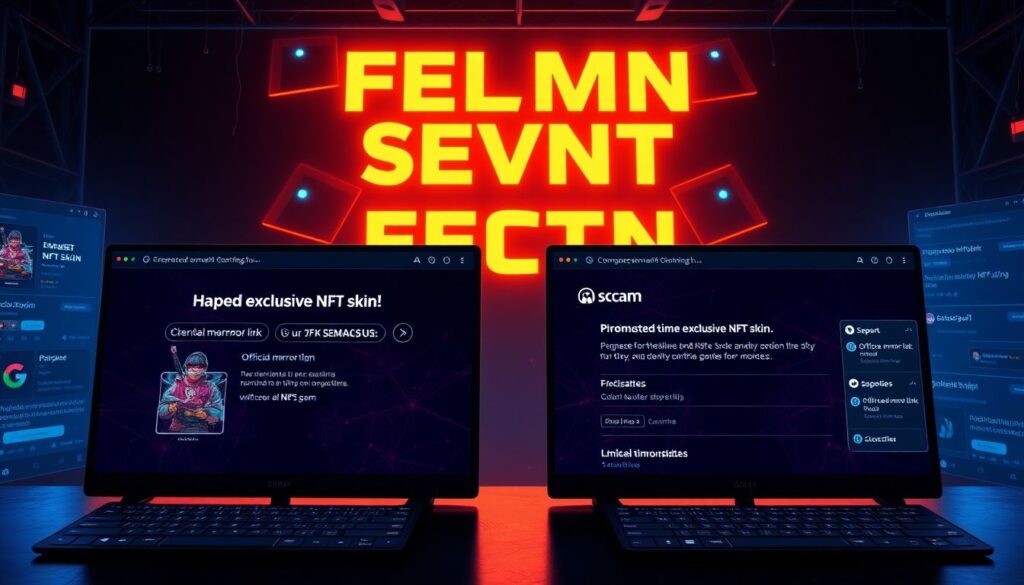
Consider a typical scenario from the last year: a hyped seasonal event promises an exclusive NFT skin for early participants. Scammers spin up a near‑identical site with a single character difference in the URL, run sponsored ads on social platforms, and flood Discord with “official mirror link due to traffic” messages. You connect your wallet and see a perfectly plausible interface, but the contract you’re interacting with asks for unlimited approval to your most traded token. If you accept, your wallet may look normal for hours or days, until a script quietly empties it at a time chosen to avoid drawing attention, like when the main event goes live and support channels are overwhelmed. The fake site then vanishes, and all you have is a transaction history with a legitimate‑looking approval you willingly signed in a rush. This pattern repeats across chains and genres, from card battlers to metaverse sandboxes.
On the flip side, there are positive examples where good architecture saved users. Some 2024–2025 games deployed built‑in “circuit breakers” that monitor abnormal withdrawals or sudden NFT floor crashes. When they detected exploit‑like behavior—say, a previously dormant contract draining hundreds of items within minutes—they automatically paused relevant functions or froze assets in game‑controlled escrow pending investigation. That kind of defensive design doesn’t make you invincible, but it buys precious time and drastically cuts loss magnitude. For individual players, layering personal defenses on top of such platform‑level safeguards—like regularly rotating wallets, splitting valuable items, and using secondary approvals for big-ticket trades—forms a security posture where a single mistake hurts, but doesn’t wipe out years of collection building and competitive grinding into thin air.
Protecting NFTs and In‑Game Value in Practice
In 2025, one major mindset shift is that players increasingly treat in‑game assets as part of a broader portfolio, not an isolated hobby inventory. Protecting nft gaming assets from hacks and scams means you think about them alongside your DeFi positions and stablecoin holdings, not as “just skins”. Practically, this means using watch‑only wallets on your phone to monitor balances without exposing keys, setting transaction alerts via bots or mobile apps, and sometimes even buying insurance products that cover losses from specific smart‑contract failures in partnered games. While these insurance markets are still young and imperfect, they’re a sign that the industry acknowledges the financial gravity of game economies, and they push studios to meet higher security and transparency standards if they want to be insurable.
Another evolving pattern is the rise of off‑chain custodial layers wrapped in non‑custodial guarantees. Some games keep fast in‑match logic on centralized servers for performance but periodically settle ownership and balances on‑chain, so even if the studio gets breached, your root ownership can be reconstructed from public ledgers. This hybrid design raises new questions: when you equip an item in a match, which layer “owns” it? If an attacker compromises your game account but not your wallet, can they still trade or burn your assets? Understanding these nuances is part of modern literacy. When you onboard to a new title, dig into its docs or ask in community channels how asset custody works in failure scenarios—what happens if servers go down, if the studio disappears, or if a critical contract has to be migrated after an exploit is discovered and patched under time pressure.
Common Myths That Keep Gamers Vulnerable
One damaging myth is “I’m small; no one will target me”. Attackers don’t need to pick you by name; they cast wide nets via phishing sites, malicious browser extensions, and compromised ad networks. If ten thousand players click and only a few hundred approve malicious transactions, it’s still highly profitable. Another misconception is that using a hardware wallet alone makes you safe. Hardware protects your keys from extraction but doesn’t protect you from willingly signing a bad transaction. You can very securely approve sending your entire inventory to an attacker if the interface lies to you and you’re not paying attention. That’s why behavioral hygiene—verifying URLs, double‑checking prompts, and avoiding blind trust in DMs—matters just as much as tools.
There’s also a belief that “audited equals safe”. Security audits reduce risk but don’t eliminate it; they’re snapshots in time. Contracts get upgraded, new integrations appear, and attackers adapt. Some rugged projects even waved around low‑effort audits to manufacture confidence before pulling liquidity. Learning how to read basic on‑chain signals—such as who controls admin keys, how token emissions are structured, and whether team wallets are transparent—is becoming as essential as learning meta strategies for a new season. In practice, how to avoid crypto scams in web3 gaming is less about having a single trusted “green checkmark” and more about combining signals: independent code reviews, open communication from devs, visible security practices like bug bounties, and a community that isn’t instantly banned or censored for asking tough but reasonable questions about treasury flows and roadmap delays.
Rug Pull Paranoia vs. Realistic Risk Management
Finally, some players swing too far the other way and assume every new game is a rug pull waiting to happen. That leads to missing genuinely innovative experiences—or piling only into a few blue‑chip titles that then become systemic risk points if something goes wrong there. The more balanced approach is to size your exposure: treat experimental games like early‑access investments. Never keep more value in a single unproven title than you’d be willing to see go to zero; don’t stake irreplaceable NFTs where unstaking depends entirely on unaudited custom code; and favor games whose economics you can explain without reading a 50‑page whitepaper. Most rugs and catastrophic failures share a profile: opaque governance, dev‑owned treasuries without checks, unrealistic APRs justified by vague “future utility”, and a culture that attacks critics instead of answering them.
Applying this lens doesn’t require you to be a Solidity engineer. It’s closer to social reading: who’s backing the project, how do they respond to incidents, and do they publish post‑mortems when small bugs occur? If the answer is silence, deflection, or aggressive marketing instead of technical clarity, treat that as a red flag rather than a minor quirk. As Web3 gaming matures, players who combine solid personal opsec, sane risk sizing, and a bit of on‑chain literacy will be able to enjoy the upside—true item ownership, interoperable skins, player‑run economies—without constantly living in fear of the next exploit headline. The goal isn’t paranoid perfection; it’s building habits and setups that make you an unappealing target compared to the vast pool of easier victims who still click every shiny link and sign whatever pops up between matches.