

Why game skins behave more like stocks than toys
If you’ve ever stared at a $500 CS:GO knife and thought “this is just pixels”, you’re half right.
The other half is where it gets interesting.
Cosmetic items — сharacter skins, weapon finishes, mounts, pets — behave like miniature financial markets. Prices move with news, influencers, patch notes and even scandals. There’s liquidity, speculation, bubbles and crashes. In a weird way, Fortnite and CS:GO are teaching an entire generation more about markets than any school textbook.
Let’s unpack what skins can teach you about value, rarity and investing — and how not to set your money on fire along the way.
—
Value: why “just pixels” can be worth thousands
We’ll start with the uncomfortable fact: some cosmetic items are objectively expensive.
– The “AK-47 | Case Hardened (661 pattern)” in CS:GO has sold in the $30,000–$40,000 range.
– A single Dota 2 Arcana set at its peak traded above $1,000 on secondary markets.
– In Counter-Strike 2, rare Karambit finishes still routinely go for four–five figures.
Is that irrational? Not entirely.
Three pillars of digital value
Cosmetic items sit at пересечении трех типов ценности:
1. Symbolic value
A skin is a status signal. In a popular title, thousands of players see it every match. That’s not so different from a luxury watch: same time, different social meaning.
2. Functional value (inside the game’s social logic)
Cosmetics don’t boost DPS, but they can unlock trade opportunities, bartering and even access to certain communities (“only owns OG skins” clans, collectors’ Discords, trading servers).
3. Financial value
When items are tradeable and somewhat scarce, they become digital collectibles with a price history, volatility and investment potential.
If you’ve ever wondered “are cosmetic items a good investment”, this is where the answer starts: they can be — when symbolic, functional and financial value line up and the game’s ecosystem is stable.
—
Rarity: why “limited” means nothing without context
Every marketplace screams about rarity. “Legendary”, “ultra-rare”, “mythic”. But in markets, rarity is not a label — it’s math plus demand.
Technical block: how rarity actually works
> Rarity basics (simplified):
> – Base drop rate: the chance an item appears in a case/loot box (e.g. 0.26% for Covert skins in a CS:GO case).
> – Additional constraints:
> – Pattern or seed (e.g. Case Hardened blue gem patterns are a tiny fraction of all Case Hardeneds).
> – Float value (condition) — Factory New vs Battle-Scarred.
> – Time-windowed availability (limited event cases, discontinued chests).
> – Effective rarity = base drop rate × probability of “good pattern” × players still opening that case.
Here’s the twist: an item can be *mathematically* rare but *economically* common.
Example: a holiday event skin with a low drop rate in a game that later dies has no active buyers. Mathematically rare, economically worthless.
Conversely, a relatively “common” skin in a top-tier esport title with millions of active players can command real money because enough people want it at once.
—
Lessons from real markets: when pixels beat blue chips
Let’s look at actual numbers.
– A CS:GO Case Hardened Karambit (good pattern) bought for ~$400 in 2014 could be sold for $4,000+ by 2021, a 10x return.
– Certain CS:GO sticker capsules released in 2014–2015 for about $0.25 have traded above $50 per capsule — a 200x move over several years.
– Meanwhile, the broad U.S. stock market (S&P 500) returned roughly 150–200% total from 2014 to 2021, depending on how you count dividends.
That doesn’t mean skins are “better than stocks”. It means they are higher risk, higher variance. For every 10x skin, there are mountains of cosmetics that went nowhere or went to zero when a game lost popularity.
—
What cosmetics can teach you about real investing
Digital items quietly train you in core investment principles — if you pay attention.
1. Liquidity matters more than hype
In skins, you learn the hard way that it’s easy to buy into hype and much harder to sell when everyone is exiting.
Holding a niche Battle Royale skin that nobody wants is like holding a random penny stock: theoretically “worth” something, practically unsellable at your desired price.
Lesson: Before you buy anything — stock, ETF, NFT or skin — ask: *who will realistically buy this from me later, and where?*
—
2. Narratives move prices
A single YouTuber featuring a specific knife, an esports pro using a particular skin on stage, or a rumor about a case being discontinued can move prices within hours.
That’s softer but very real information: narrative and attention.
Traditional markets are the same:
– Tesla spikes on Elon tweets.
– Meme stocks like GameStop moon on Reddit threads.
Lesson: Learn to separate *story* from *numbers* without ignoring either. Skins teach you to watch both patch notes and social media — the same dual focus you need when investing in growth stocks or crypto.
—
3. Supply changes can nuke your thesis
Developers can:
– Re-release an “exclusive” pattern.
– Inject more of a once-rare item via new cases.
– Ban certain trading routes (as Valve did with some third‑party marketplaces).
In stocks, regulators can change rules, companies can issue more shares, or a new competitor can flood the market.
Lesson: No supply assumption is sacred. Always ask: *what could increase the supply or reduce the scarcity story here?*
—
From “how do skins work?” to “how markets work”
The modern gamer asking how to invest in cs go skins for profit is closer to an amateur trader than they might think. You’re already thinking about:
– Entry price
– Exit price
– Fees and spreads
– Illiquidity risk
– Information asymmetry
You’re building the same muscles used for stocks, just in a low-cap, high-volatility playground.
Now let’s flip it: what strategies from serious investing translate back to cosmetics — especially if you’re curious how to make money trading digital game assets without just gambling?
—
Non-obvious strategies for skin “investing”
Here are a few less mainstream approaches that borrow thinking from traditional finance.
1. Think like an index fund, not a lottery player
Most people try to find “the next $10,000 knife.” That’s basically startup-style angel investing: high risk, low probability of success.
Instead, consider a boring but effective approach:
1. Pick a game with long-term staying power (CS2, Dota 2, maybe Valorant if tradeable cosmetics expand).
2. Define a budget you can forget about for 3–5 years.
3. Split it across a basket of:
– Older discontinued cases
– Blue-chip, consistently demanded skins (popular AK/M4/knife finishes)
– A small satellite allocation to “weird” assets (stickers, souvenir packages, etc.)
You’re diversifying across types of scarcity (time-limited, pattern-based, performance-linked via tournament drops).
You won’t brag about a single 100x flip, but your *portfolio* might reasonably do better than inflation over a long cycle — if the game and its economy keep thriving.
—
2. Exploit timezones and patch windows
This one is closer to being a trader than an investor, but it’s great practice.
Cosmetic markets are global and very emotional right around:
– Patch releases
– New seasons / passes
– Esports finals
– Major leaks or drama
Because players are in different timezones and react at different speeds, mispricings appear.
Example scenario:
– Developer announcement: “Case X will no longer drop.”
– Within 6–12 hours, traders in some regions buy aggressively; others sleep.
– Prices may overshoot, then partially correct.
If you’re fast but not reckless, you can:
1. Buy quality items from panicked sellers right before the general public realizes the impact.
2. Or sell into early overreactions when you know similar items stayed in circulation longer in past cycles.
This is real-world practice in event-driven trading, just with knives instead of earnings reports.
—
3. Become a “market maker” in a tiny niche
In stocks, market makers quote constant buy/sell prices and profit from the spread. You can do a lightweight version in cosmetics.
Pick a narrow niche:
– Only pink-tier rifle skins from a certain collection
– Only old operation cases
– Only one specific high-volume skin in all conditions
Then:
1. Track typical buy/sell spreads on the main platforms for a few weeks.
2. Place standing buy offers slightly above the low end.
3. List for sale slightly below the high end.
4. Rotate inventory; your profit is the spread minus fees.
It’s not glamorous, but it teaches you:
– Order flow
– Patience
– Risk management (when not to hold too much of one item)
You’ve effectively created your own little prop-trading desk, just built on pixels.
—
Technical block: platforms, fees and friction
> When you think about the best platforms to buy and sell game skins, treat them like different stock exchanges:
>
> – Steam Community Market
> – Pros: Biggest buyer base, instant delivery in-ecosystem.
> – Cons: Steam wallet only (no direct cash-out), platform cut ~15%.
>
> – Third-party marketplaces
> – Pros: Cash-out options, sometimes lower fees, off-Steam liquidity.
> – Cons: Counterparty risk, ToS issues, regulatory gray zones.
>
> – P2P / Discord / forums
> – Pros: Custom deals, bulk trades, potential arbitrage.
> – Cons: High scam risk, no guaranteed escrow, time-consuming.
>
> Always factor:
> – Total fee stack (platform fees + payment processing + withdrawal)
> – Settlement risk (can the other side default?)
> – Legal/regulatory risk (some regions ban certain types of gambling-like loot mechanics)
These frictions are the same ones you deal with in brokerage accounts (commissions, spreads, market access), just dressed in gaming colors.
—
Step-by-step: a skin deal as a mini investment case
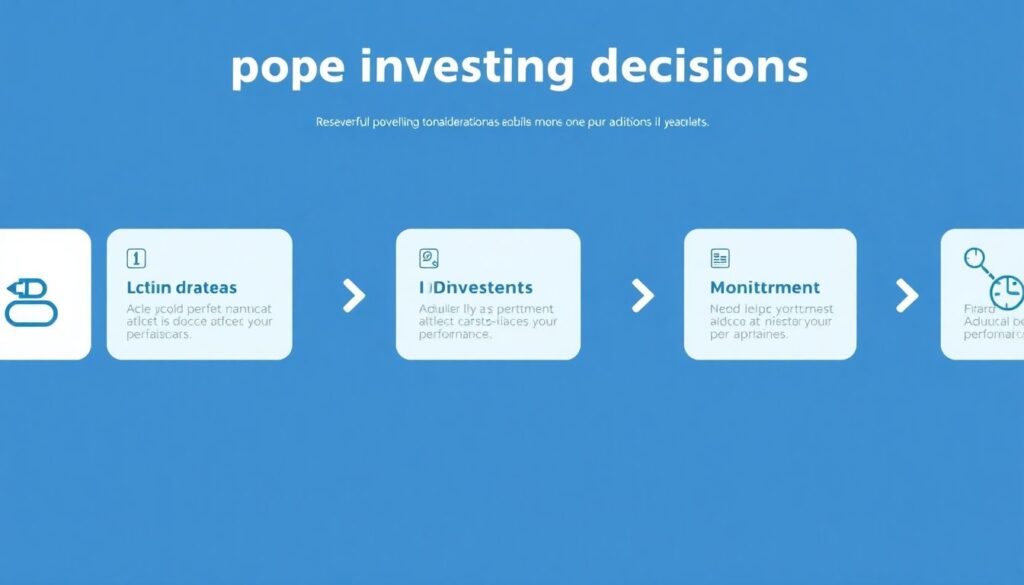
To make this less abstract, here’s a simple 5‑step flow that mirrors proper investing decisions.
1. Define your thesis in one sentence
“Old CS:GO souvenir packages from Majors before 2016 are structurally scarce and underpriced relative to later events.”
If you can’t write a clean sentence like this, you’re gambling, not investing.
—
2. Check the numbers, not just vibes
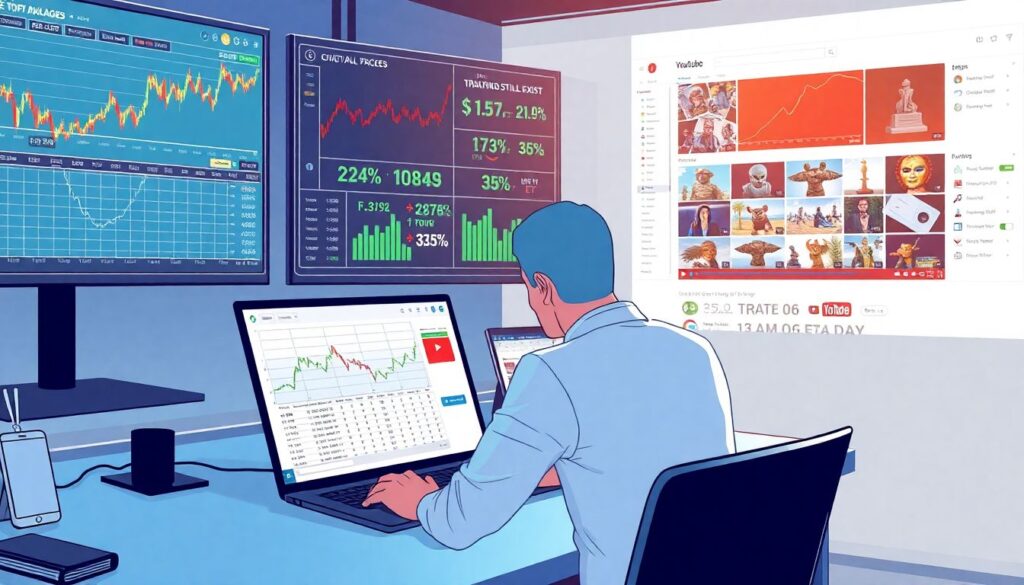
– How many of those packages still exist (rough estimate from marketplaces)?
– How many are being opened daily (you can proxy from trade volume and YouTube “unboxing” activity)?
– What is the annual return you’d need to beat just buying an ETF and forgetting about it?
Even a rough spreadsheet forces you to treat the decision like capital allocation, not “this looks cool”.
—
3. Size the position
Never go all-in on any one item, no matter how good the story sounds.
A simple rule:
– Max 5–10% of your total skin portfolio into any single asset or narrow idea.
– Max 1–2% of your net worth in game items overall (unless you’re a professional trader).
That’s straight from traditional portfolio management: size bets so you can be wrong and still play tomorrow.
—
4. Decide exit conditions upfront
– Price target (e.g. “I’ll start scaling out when the price doubles”).
– Time limit (e.g. “If nothing happens in 3 years, I’ll liquidate regardless”).
– Thesis-breaker (e.g. “If Valve re-releases these packages, I’m out”).
Writing this down — even in a note app — prevents half of the panic selling and greed FOMO.
—
5. Review and learn
Every 6–12 months, look back:
1. What did you predict correctly (game longevity, meta shifts, playerbase)?
2. Where were you totally wrong (liquidity, update timing, regulatory moves)?
3. How would the same logic play out in stocks or crypto?
You’re not just managing pixels; you’re building a personal virtual items trading guide value and rarity that becomes mental scaffolding for bigger financial decisions later.
—
Cross-training your investor brain
Here’s the interesting part: doing this well in cosmetics makes you better with real assets.
– Understanding how Fortnite skin hype cycles work helps you recognize momentum and mean reversion in stock charts.
– Watching a beloved game die and its marketplace with it teaches brutal but necessary lessons about platform risk and technological obsolescence.
– Seeing shady third-party sites implode is a live-fire exercise in counterparty risk and due diligence.
By the time you open a brokerage account, phrases like “diversification”, “liquidity” and “risk-adjusted returns” won’t just be jargon — you’ve lived the analogues in-game.
—
Weird yet practical ideas to bridge skins and stocks

Let’s end with a few unconventional ways to use this experience that go beyond “flip more knives.”
1. Build a personal “market journal” using skins
Whenever you make a notable trade (profit or loss):
1. Write down:
– Why you entered
– Why you exited
– What surprised you
2. Then force yourself to add a parallel question:
– “What’s the stock-market version of this mistake?”
– “Where in crypto could this pattern repeat?”
After 20–30 entries, you’ll have a unique, experience-based primer in behavioral finance — written in your natural language, not textbook speech.
—
2. Use your trading history as a portfolio lab
Take 12–24 months of your cosmetic trades and pretend:
– Each skin is a stock.
– Each sale is a rebalancing.
– Fees are taxes and commissions.
Then:
– Calculate your “portfolio return” over that period.
– Compare it to a simple benchmark (e.g. “If I had put the same cash in a global index ETF”).
If your “fun” trading massively underperforms a boring benchmark, that’s a gentle nudge for your real-money strategy: maybe speculate with a small slice, but automate and chill with the rest.
—
3. Treat one game as an “emerging market” sandbox
Pick a less stable title with tradeable cosmetics — something that could either blow up in popularity or fade.
Invest tiny amounts as if it were an emerging market country: big upside, big political/developer risk.
Track:
– How news, scandals, balance overhauls crush or pump prices.
– How quickly liquidity vanishes when player numbers drop.
– How a single decision by the devs can change the entire economy overnight.
It’s a visceral preview of what can happen to real emerging market stocks with currency crises, coups or sanctions — only much cheaper tuition.
—
So… are you a gamer or an investor? Yes.
The line between “trading skins” and “trading securities” is thinner than it looks. Economics doesn’t care if the asset is steel, software or a purple AK-47.
You care about:
– Who wants this?
– How many exist?
– How fast can I sell?
– What could change the game?
Answer those questions well in cosmetics, and you’re halfway to answering them in equities, real estate or startups.
Cosmetic items won’t make you Warren Buffett. But if you approach them consciously, they can be the most engaging crash course in market behavior you’ll ever get — and a surprisingly effective, low-stakes way to learn how to invest rationally long before you touch your retirement account.
Use that curiosity wisely, and the jump from skins to stocks won’t feel like a leap at all.