

Why gamers suddenly need “boring” asset protection in 2025
If you earn real money from games in 2025—tournaments, streaming, skins trading, coaching, modding, Web3 projects—you’re already playing a financial meta where asset protection planning for gamers matters as much as game sense. Prize pools in top esports have crossed hundreds of millions per year globally, Twitch and Kick streamers routinely make six to seven figures, and digital item markets move billions. That cash doesn’t just attract sponsors; it attracts tax authorities, contract disputes, angry ex-partners, and sometimes outright scams. Asset protection isn’t about “hiding money”; it’s about structuring your income and property so one lawsuit, chargeback wave, or platform ban doesn’t delete your real‑life inventory screen.
From hobby money to real economy: what changed
Ten years ago most gamers could shrug off legal and tax talk; revenue was side income. Today, according to industry reports, over 40% of top‑1% creators on major platforms list gaming as their primary content category, and a growing slice of tier‑2 esports pros earn middle‑class or better income. At the same time, regulators in the US, EU and parts of Asia are tightening rules around digital goods, loot boxes, and crypto‑linked assets. That combination—higher, traceable income plus more regulation—means informal “PayPal and vibes” setups are now a direct risk vector, not just a harmless improvisation.
Core idea: separate “you” from your gaming business
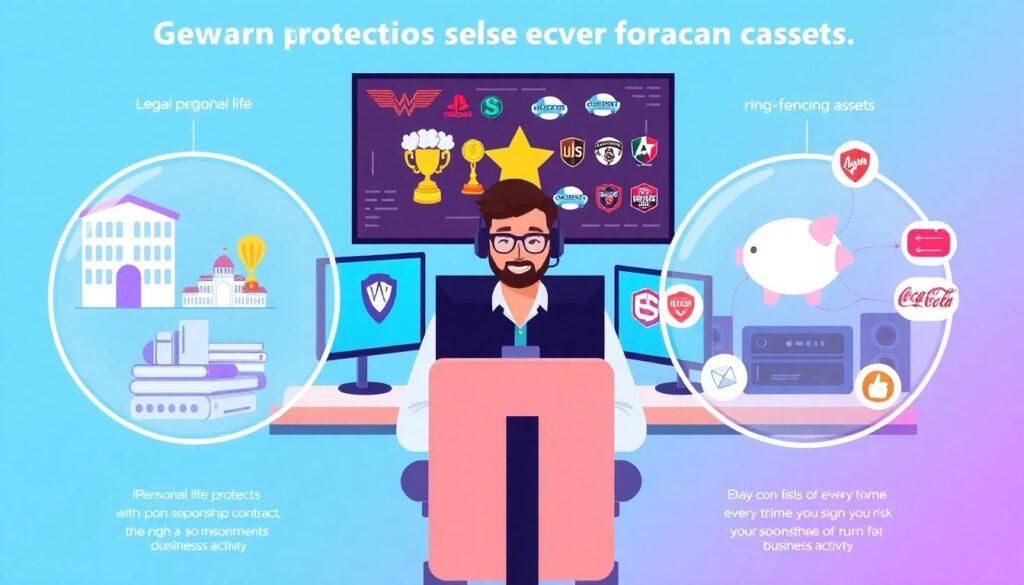
The main technical principle behind modern wealth protection strategies for professional gamers is legal separation of risk. Lawyers call this “ring‑fencing” assets. In plain terms: your personal life (apartment, car, savings) should not be on the line every time you sign a sponsorship contract, run a giveaway, or launch a paid Discord. When everything is under your personal name, any dispute—DMCA fight, ex‑manager claiming a revenue share, viewer injured at a fan meetup—can hit your whole net worth. Once you route deals and IP through properly formed entities, you create legal firebreaks that limit what can be attacked if something goes wrong.
Trusts, LLCs and other not‑so‑scary acronyms
That’s where trust and LLC setup for streamers and gaming influencers comes in. In 2025 most serious creators use some combo of a limited liability entity (LLC, Ltd, GmbH, etc.), a holding company, and sometimes a trust for long‑term ownership of big assets like IP rights and investments. The LLC usually invoices sponsors, takes platform payouts, signs org contracts, and owns brand trademarks. A trust or holding company can own the LLC itself, adding another protective layer. Done right, you still control everything economically, but there’s a legal buffer between random operational drama and the assets you want to protect for the next decade.
Stats: how big the risk surface really is
Risk stopped being theoretical. Industry lawyers report a steady rise in disputes around unpaid sponsorships, chargeback‑driven bans, and IP conflicts over clips, VODs, and music on streams. A 2024 survey of mid‑tier esports players in North America and Europe showed that roughly one in five had faced a serious contract or payment conflict, and a smaller but notable share had received formal legal threats. At the same time, tax authorities are data‑matching platform payouts, marketplace records, and even NFT sales. The more transparent the ecosystem becomes, the less room there is for “I didn’t know” as a defense when audits start landing in creators’ inboxes.
Income volatility and the “one bad month” problem
Gaming income is notoriously spiky: a single viral clip or LAN win can skew your year, but a ban, patch change, or meta shift can nuke it. That volatility amplifies risk. If you spend like your best month is normal and keep zero buffers or structures, one negative event—chargebacks tied to a charity stream, cancelled tour, or a contractual penalty—can create debts you can’t service when the hype dies down. Modern asset protection is partly about smoothing those spikes with buffers, and partly about making sure that if a shock does hit, recovery is possible because your baseline assets weren’t exposed in the first place.
How taxes and lawsuits intersect with your GG moment
A big piece of how to protect gaming income from lawsuits and taxes is timing and documentation. In multiple jurisdictions, moving assets or changing ownership only after a dispute starts can be treated as “fraudulent conveyance,” meaning courts can simply ignore your late‑game maneuvers. That’s why proactive planning, before the first big sponsor or before your first six‑figure year, is so valuable. Clean contracts, separate business accounts, clear records of business vs personal expenses, and formal IP assignments from “you” to your entity dramatically reduce what can be challenged later, and often make settlements faster, cheaper, and less stressful.
Legal services tuned to esports realities

The growth of legal asset protection services for esports players shows how far the scene has matured. Instead of generic small‑business templates, you now see firms that actually understand exclusivity clauses in org contracts, revenue splits from tournament stickers or skins, streaming platform rev‑share, and regional salary cap rules. They build playbooks: standard contract riders, jurisdiction choices, and dispute‑resolution mechanisms that fit the fast pace of competitive seasons. For a working pro, that means fewer nasty surprises like lifetime image rights hidden in a clause, or revenue shares that outlive the usefulness of a team brand.
Economic implications: from creators to full micro‑enterprises
On the macro side, as more gamers formalize, the ecosystem shifts from individual “gig” earners to a network of micro‑enterprises with employees, contractors, and proper P&Ls. That attracts more institutional capital—VC funds backing esports orgs and content houses, private equity rolling up studios, brands committing multi‑year sponsorships—because the risk profile looks more predictable. Economists already track the “creator economy” as a substantial slice of digital GDP, and gaming is the spearhead. Asset protection structures don’t just shield individuals; they standardize how money flows, which in turn stabilizes valuations and long‑term investment decisions across the industry.
Forecast: what 2025–2030 probably looks like
Trend‑wise, expect regulators to keep closing gaps: more reporting obligations for platforms, clearer classification of in‑game assets as taxable property, and coordinated rules on gambling‑like mechanics. Contract standards will likely consolidate, with major leagues and platforms imposing baseline requirements that quietly push players toward proper entities. On the tech side, tokenized contracts and on‑chain royalties may automate splits between orgs, players, editors, and agents, but they won’t remove the need for legal wrappers around them. By 2030, running a successful gaming career without at least one company and decent insurance will probably look as outdated as playing LAN finals on a 60 Hz monitor.
Комментарии