
Defining a “Financially Sustainable” Gaming Hobby
Before talking numbers, it helps to define terms. By “financially sustainable gaming” I mean a hobby that: 1) fits inside your monthly budget without stressing savings, rent or debt payments; 2) keeps delivering fun over time, not just short-term hype; 3) leaves room to adapt when life changes (job loss, moving, kids). That’s different from “gaming cheap at all costs”. Some players buy a lot, then feel guilty or pressured to grind every purchase “to justify the money”. A sustainable approach looks at total cost of ownership: hardware, games, subscriptions, in-game purchases and even electricity, then aligns them with your disposable income, i.e. money left after fixed obligations and realistic savings.
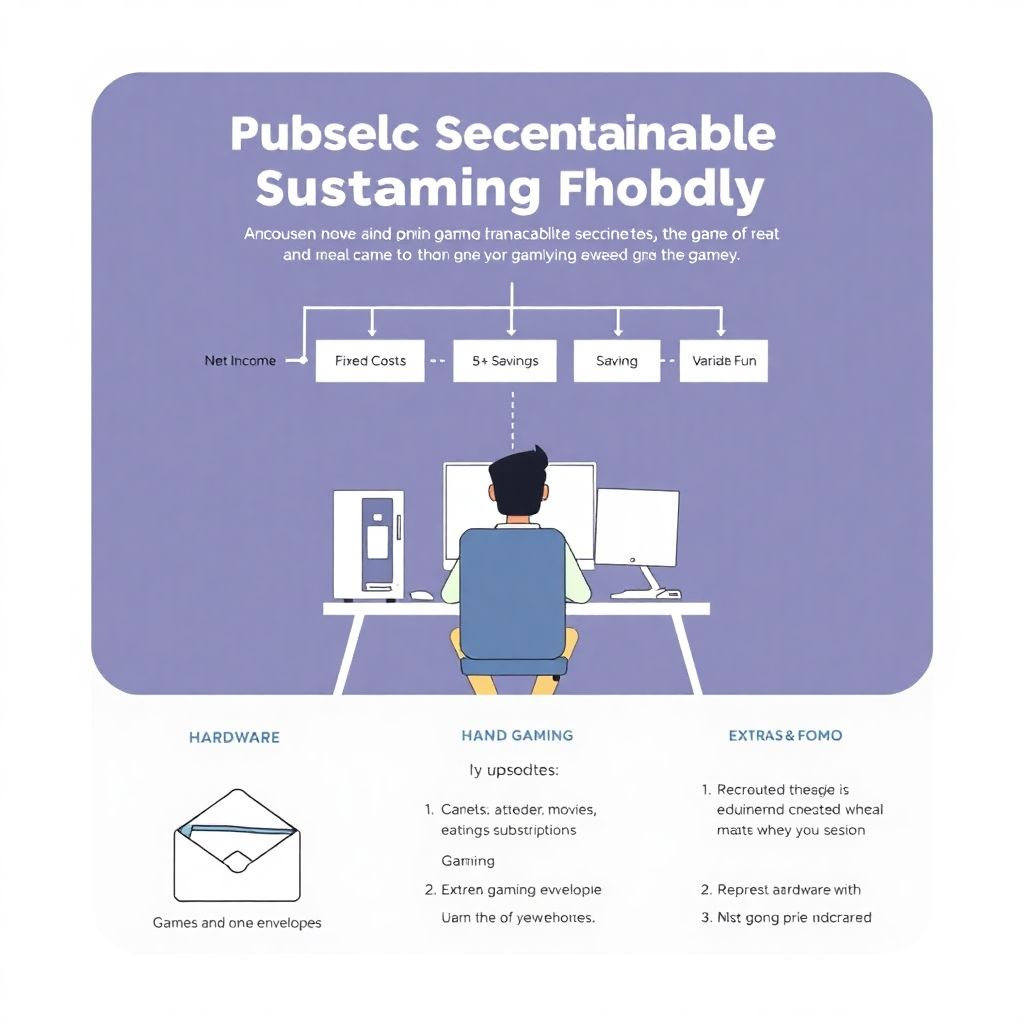
Picture a simple text diagram: `[Net Income] -> [Fixed Costs] + [Savings] + [Variable Fun]`. Gaming should sit inside “Variable Fun” alongside movies, eating out and travel. If your “Variable Fun” slice is small, pushing gaming beyond it forces tradeoffs you may not consciously choose, like skipping medical checkups or paying only minimums on credit cards. One client, Alex, earned a solid salary but spent impulsively on collector’s editions. Once we mapped his year of spending, we saw gaming quietly consuming what could have been a full emergency fund; the games themselves didn’t make him happier, the lack of control made him anxious.
Building a Realistic Gaming Budget (Without Killing the Fun)
Many people ask how to budget for gaming on a tight budget without turning the hobby into an accounting exercise. The trick is batching decisions. Instead of asking “Can I afford this game?” twenty times a month, you decide once: “How much per month do I allocate to gaming for the next quarter?” For most people a percentage works better than a fixed number; 5–10% of your disposable income can be a good upper bound. If your financial situation is shaky, that might be 1–3% for a while. Write down this limit somewhere visible; constraints reduce decision fatigue and emotional overspending.
A helpful mental diagram is a three-envelope system: `[Hardware] [Games & Subscriptions] [Extras & FOMO]`. Hardware is lumpy but infrequent; games and subs are recurring; extras include skins, loot boxes or battle passes. A sustainable plan might dedicate 60% to games/subs, 30% to hardware savings, 10% to extras. Case in point: Maria, a student, loved new releases and kept pre-ordering. We set her a monthly cap of $30 for all gaming. She picked one subscription service and rotated it every three months. Her spending dropped by half, yet her “hours of fun per dollar” doubled because she actually played what she already owned instead of bouncing between new titles.
Stretching Your Library: Getting More Playtime per Dollar
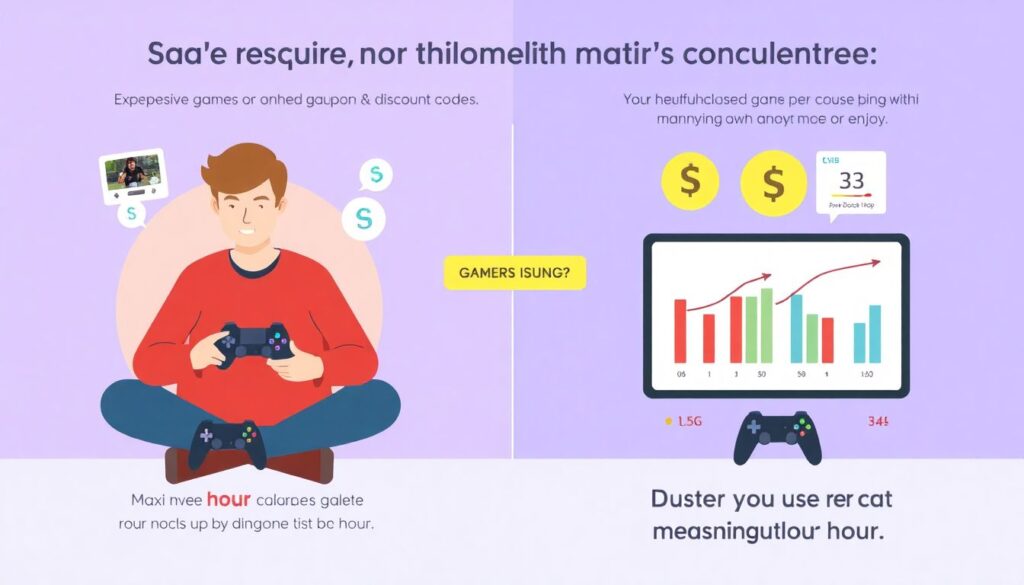
When people search for the best ways to save money on video games and subscriptions, they often focus on coupons and discount codes. Those help, but the real leverage is utilization—how many meaningful hours you get from each purchase. Think of “cost per meaningful hour” as a core metric. A $60 game with 10 genuinely enjoyable hours is $6/hour; a $60 game you love for 120 hours is $0.50/hour. In that sense, long-tail genres like roguelikes, strategy or good live service titles can be more cost-effective than short, flashy releases, provided you actually like them.
Imagine a bar chart in text: `[Game A: 8h / $60] [Game B: 40h / $20] [Sub Service: 60h / $15]`. At a glance, the subscription wins on value, but only if you truly use it. A friend, Dan, cycled through three services, each “only” $10–15, but played one title heavily on just one platform. Canceling two subs and buying that game outright cut his monthly costs by $20 and improved performance because he no longer cloud-streamed over a wobbly connection. Case study: another gamer, Nina, built a spreadsheet tracking purchase date, cost and hours played. After three months she saw her weakness: discounted impulse buys from big sales that she never launched. Simply banning herself from sale browsing unless she had finished two previous games reduced her backlog and expenses simultaneously.
Smart Hardware Choices: Cheap Now, Not Expensive Later
A lot of people want a cheap gaming setup for beginners under budget, but “cheap” can mean two different things: “low price today” or “low total cost over several years”. Entry-level prebuilt rigs with weak power supplies and proprietary cases often look attractive, yet they’re hard to upgrade, forcing an early full replacement. Sustainable hardware thinking looks at upgrade paths and bottlenecks. Instead of chasing the newest GPU, prioritize a solid power supply, motherboard with extra slots, and enough RAM to avoid constant swapping.
Text diagram for priorities might look like: `[Stable PSU & Case] -> [CPU & Motherboard] -> [RAM & SSD] -> [GPU] -> [Peripherals]`. The idea is similar to building a house: changing the foundation later is hard, repainting is easy. Case story: Leo wanted a “pro” setup on a tight budget and nearly financed an expensive laptop. We ran the numbers: the loan interest plus limited upgradability made it more costly over three years than a modest desktop built in stages. He started with a used mid-tier GPU, reliable PSU and second-hand monitor. Over 24 months he swapped only the GPU and added RAM while keeping the core intact. Compared to colleagues who bought flashy laptops every two years, his hourly cost of performance was about half, with minimal e-waste.
Subscriptions, FOMO and Hidden Recurring Costs
Recurring costs are the silent killers of a “cheap” hobby. Game passes, MMO subs, premium battle passes and cloud services feel light individually but compound quickly. Text diagram: `[Base subs] + [Battle passes] + [Boosts] + [Cloud/Online] = Recurring Burn Rate`. Knowing that rate is vital. Take your annual target for gaming, say $600, divide by 12 to get $50/month. If your recurring burn rate is already $45 before buying any new games, you’re boxed in. That’s often where people suddenly feel broke despite “nothing big” being purchased recently.
A client, Sam, had one console, two PC launchers, three subscriptions and regular battle passes “because everyone has them”. We listed them with renewal dates, then rated each by “joy per month”. Two were barely used; canceling them freed $25/month. He then used a rotation model: only two active subs at a time, switched quarterly. This reduced both cost and FOMO because he had a clear plan: focus on a subset of libraries, then move on. If you’re looking for tips to reduce gaming expenses without quitting gaming, start by pruning subscriptions, capping cosmetic spending and turning auto-renew off so each renewal becomes an active choice rather than a silent default.
Turning the Hobby into Income: Reality vs Hype
People often search how to make gaming hobby pay for itself (streaming, esports, content) and get flooded with success stories, but survivorship bias is massive. For every streamer who replaces their job, thousands make little or nothing. Still, supplementary income is realistic if you treat it like a small business with risk and time investment, not “free money”. Define clear terms: ROI (return on investment) for gear like microphones or capture cards, and opportunity cost—what you could earn or learn if you weren’t grinding low-viewer streams.
Let’s describe a flow diagram: `[Hobby Gamer] -> [Skill Development & Content Experiments] -> [Consistent Output] -> [Tiny Revenue Streams: ads, donations, coaching, guides]`. One pragmatic case: Irina, a high-ranking competitive player, didn’t try to become the next big streamer. Instead, she offered 1-on-1 coaching sessions at modest rates and wrote matchup guides on a blog with light ads. After six months her gear upgrades were effectively funded by this side income, yet she kept a full-time non-gaming job. Another example: Max recorded short, tightly edited tutorial clips instead of long streams, then reused scripts as written guides on community sites. Combined, those channels generated enough over a year to cover his annual game spending—still far from a salary, but a meaningful offset without burning him out.
System Thinking: Comparing Gaming to Other Hobbies
To see whether your spending is reasonable, it helps to compare gaming with analog hobbies. A weekend sports league, music production or photography all require equipment, maintenance and time. Gaming often looks expensive because transactions are frequent and digital, but the cost per hour can actually be lower than bar nights or concerts. Using a mental chart: `[Gaming: $600/year, 500h] vs [Bars: $1200/year, 100h] vs [Cinema: $800/year, 80h]`. In this simple comparison, gaming is the cheapest per hour.
However, gaming has unique pitfalls: microtransactions with no physical friction, always-on stores and psychological tricks like limited-time offers. That’s why analytical tools matter more here than in some other hobbies. One practical exercise: for a month, log all entertainment spending, not just games. A client, Oleg, was convinced that gaming “ate all his money”; the log showed that food delivery and random shopping were bigger drains. With that clarity, he kept his gaming budget intact but attacked the real leak. Looking across hobbies also helps in negotiations at home: a partner might tolerate your gaming purchases more when they see they’re modest compared to other common leisure costs.
Putting It All Together: A Personal Sustainability Blueprint
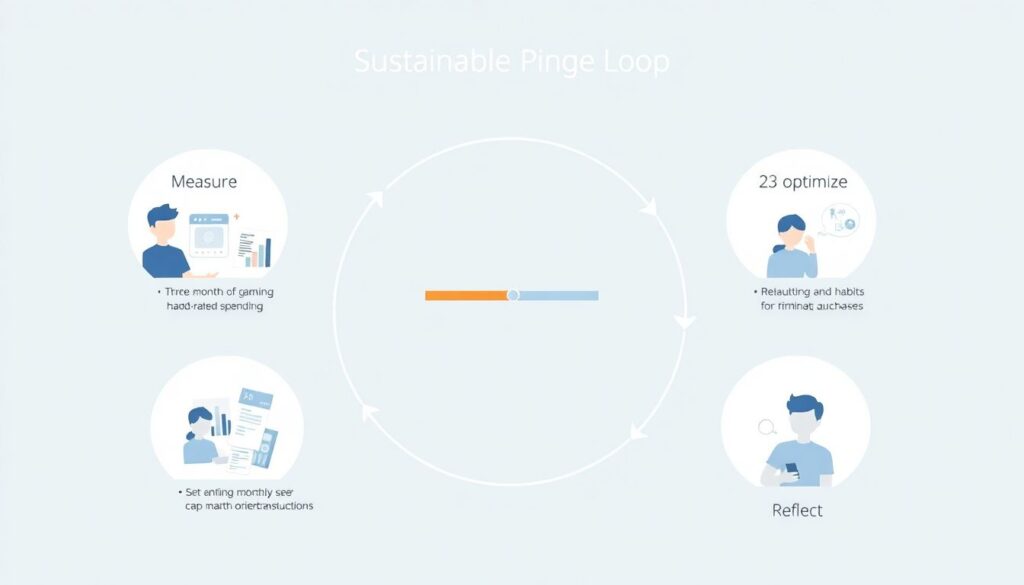
Combining everything, a sustainable plan is essentially a loop: Measure → Limit → Optimize → Reflect. First, measure your current pattern: track three months of gaming-related spending, including hardware and small microtransactions. Next, set a realistic monthly cap aligned with your situation—low if you’re in debt, higher if your essentials and savings are secure. Then optimize inside that cap: prioritize games with high fun-per-dollar, choose upgradeable hardware, prune subscriptions and avoid financing gadgets. Finally, reflect quarterly: what did you actually play, what felt wasted, what surprised you? Adjust the structure, not just the numbers.
If you’re still wondering how to budget for gaming on a tight budget, try this simple starter model for the next three months: pick a firm dollar ceiling, choose one main platform or ecosystem, keep at most two active subscriptions, and commit to finishing or dropping each purchased game before buying another. Use a note app to jot down why you bought each title; reviewing those reasons later often exposes emotional triggers like boredom, stress or peer pressure. Over time, the aim isn’t moral purity or zero spending—it’s a hobby that fits your life, not one you have to escape from financially a year from now.