

Why bothering with future income at all?
Thinking about money 5, 10 or 30 years ahead sounds abstract — until you try to answer a very concrete question:
*Can I afford my goals if I keep earning like this?*
To get a sensible answer, you don’t need a finance degree. You need a simple, structured way to estimate your future earning potential and turn vague hopes into approximate numbers you can work with.
That’s exactly what we’ll do here: no magic, just realistic assumptions, a couple of formulas and a practical mindset.
—
Step 1. Turn your current income into hard numbers
Before any projections, fix your starting point.
Figure out your real annual income
Don’t use your “on paper” salary. Use what actually reaches you.
Include:
– Base salary (after tax if you’re planning your personal finances)
– Regular bonuses and commissions (average over the last 1–3 years)
– Overtime you *consistently* do
– Side gigs that are stable (not one‑off projects)
Skip anything that was a lucky accident or clearly non‑recurring.
Now sum it up to one clean number: current annual income. This will be the base for every later calculation and for any future income calculator or salary projection tool you might try.
—
Step 2. Identify your income “engines”
Your future earnings do not grow randomly. They’re driven by a few very specific mechanisms. Understanding them helps you avoid wishful thinking.
Five main drivers of future income
– Seniority raises – automatic or semi‑automatic increases for staying in the same position
– Promotions – jumps to higher responsibility roles
– Job changes – switching companies or industries
– Skill upgrades – learning something that employers pay more for
– Geography & market – changing country, city or niche with different pay levels
If you stay in the same role, at the same company, in the same city, with the same skills, your income curve will usually flatten fast.
So when we estimate lifetime earnings, we’re really imagining how often those “engines” will trigger and by how much.
—
Step 3. Build a simple salary growth scenario
Let’s keep it practical and approximate. You don’t need perfect precision; you need a reasonable scenario.
Pick a realistic annual growth rate
Look at your situation and ask:
– In your field, what’s a typical raise percentage per year?
– How often do people at your level get promoted?
– How dynamic is your industry overall?
If you’re unsure, a rough starting range looks like:
– Low growth (1–3%/year) – mature or shrinking industries, limited promotion opportunities
– Moderate growth (3–6%/year) – stable companies, regular raises, occasional promotions
– High growth (6–10%+/year) – hot industries, fast promotions, frequent job jumps
You can start with one “base” scenario and later check an optimistic and a pessimistic one.
—
Step 4. Do a back‑of‑the‑envelope projection
Now let’s turn that growth rate into future numbers. We’ll avoid scary math.
The mental math version
Say you earn $40,000 per year now and expect about 5% growth on average.
You can think like this:
– In about 14 years, at 5% per year, your salary roughly doubles
– In about 28 years, it roughly quadruples
So a very crude long‑term view:
– Today: $40,000
– In ~14 years: ~$80,000
– In ~28 years: ~$160,000
This is not exact, but it gives you scale. The point is to get a sense of “If I stay on this trajectory, is that enough for the life I want?”
When you need more detail
For finer planning (e.g., “how much will I earn in the future over the next 10 years?”):
1. Choose a yearly growth rate (e.g., 4%)
2. For each future year, multiply last year’s income by 1.04
3. Add the years up to see total earnings over the decade
You can do this in a spreadsheet in minutes — or use any basic future income calculator online and plug in your numbers.
—
Step 5. Don’t forget career jumps
A flat percentage doesn’t tell the whole story. Real careers grow in steps, not smooth curves.
Map likely promotion points
Look at people 5–10 years ahead of you in the same profession:
– How many promotions did they get?
– How big were the pay jumps (percentage, roughly)?
– How long did it take them to move up?
Then sketch something like:
– Years 1–3: junior role, slow raises
– Years 4–7: mid‑level role, decent raises
– Years 8–12: senior role, higher base, smaller percentage raises
– Beyond: leadership / expert track, bigger jumps but less frequent
Tie rough numbers to each level. This is your career salary growth projection, and it will be more realistic than one flat percentage.
—
Step 6. Factor in job changes
Changing employers is often where the biggest pay jumps happen.
Use conservative assumptions
Industry data often shows people get:
– 0–5% for staying
– 10–30% for switching companies (depending on market and leverage)
Instead of assuming every move will be a 30% miracle, be cautious:
– Assume one solid job switch every 4–6 years
– Assume 10–15% average uplift per switch
– Combine that with smaller yearly raises in between
Now your projection looks less like fantasy and more like a realistic plan.
—
Step 7. Adjust for skills and specialization
Your skills are “dials” you can turn to influence your income path.
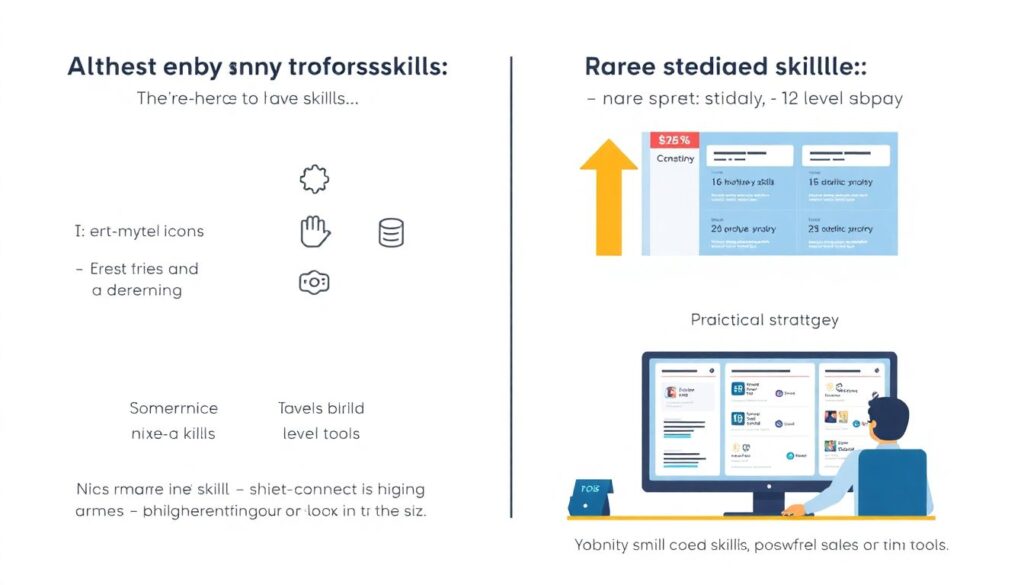
Identify high‑leverage skills
In almost any field there are:
– Skills that are nice‑to‑have (base stability, little premium)
– Skills that are rare and valuable (big pay impact)
Practical moves:
– Look at job ads for roles 1–2 levels above yours
– Note which skills and tools appear repeatedly
– Prioritize what clearly connects to higher offers, not just what’s trendy
Then estimate: “If I gain this skill and use it for 3 years, is a 10–20% pay increase realistic?” If yes, bake one or two such jumps into your plan every 5–7 years.
—
Step 8. Build your own simple “salary projection tool”
You don’t need fancy software; a small spreadsheet can be powerful and transparent.
What to put into it
Create a sheet with these columns:
– Year
– Age
– Role / level
– Company (optional)
– Annual income (projected)
– Notes (promotion, job switch, new skill, etc.)
Then:
– Start with your current year and income
– Apply a modest raise for each “normal” year
– Add bigger jumps in years where you expect job changes or promotions
Now you have a custom, visual path. You can tweak numbers and instantly see the impact.
—
Step 9. Turn projections into decisions
The value of all this isn’t the exact numbers. It’s the decisions you make after seeing them.
Questions to ask yourself
– If nothing changes, does my income path support the lifestyle and savings I want?
– If I add one extra job change in the next 10 years, how much does that change my total?
– Which skill upgrade gives the biggest long‑term difference in income?
– Does switching countries or industries make a measurable impact on my curve?
Use your projection as a quiet, rational answer to “Is this effort really worth it?”
Often, small strategic shifts (one extra promotion, one higher‑paying employer, one rare skill) have outsized effects when you estimate lifetime earnings, not just next year’s paycheck.
—
Step 10. Stress‑test with scenarios
Life won’t follow your spreadsheet exactly. That’s normal. So don’t cling to one precise line; build scenarios.
Three simple scenarios to compare
– Base case – what seems most likely given your current path
– Upside case – a bit more aggressive on promotions and job switches
– Downside case – slower promotions, one or two bad years, maybe a career pause
Things to vary:
– Raise percentages
– Timing and size of job changes
– Time out of the workforce (study, burnout, parental leave, illness)
– Shifts between full‑time and part‑time
Seeing all three next to each other gives you a realistic corridor of outcomes instead of a single fragile prediction.
—
What online calculators can and can’t do
Online tools are convenient, but they have limits.
How to use them sensibly
Many sites offer some form of future income calculator where you insert your current pay, growth rate and a time horizon. They’re useful for:
– Quick checks (e.g., “If I grow 4% per year for 15 years, where do I land?”)
– Comparing different growth rates side by side
– Playing with what‑if questions without building a spreadsheet
But they usually:
– Assume smooth, constant growth
– Ignore promotions or career breaks
– Don’t factor in tax changes or inflation properly
So treat any career salary growth projection from a website as a rough sketch, not a destiny. Your own, more nuanced scenario will always be closer to reality.
—
Common mistakes when estimating future earnings
1. Ignoring inflation
If your salary grows 3% and inflation is also 3%, your purchasing power is flat. Nominal growth is not real growth.
Practical fix:
– When planning lifestyle, think in today’s money (“What will this feel like in current prices?”)
2. Assuming every year will be great
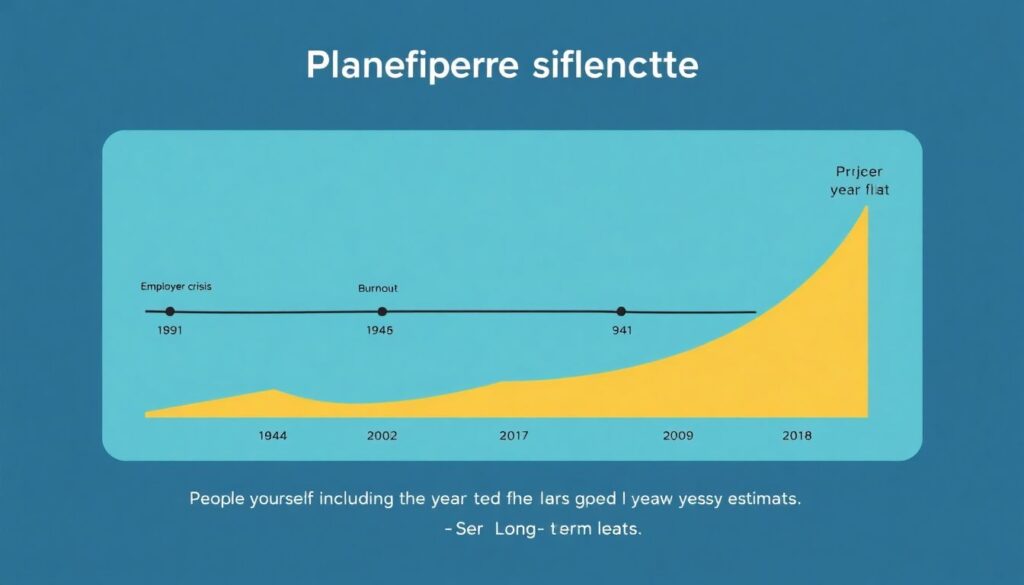
People tend to project the last good year forever. Real careers include:
– Flat years
– Employer crises
– Burnout
– Personal events
Protect yourself by including a few “bad years” in every long‑term estimate.
3. Overestimating promotions
“Promotion every two years” looks great in theory. In reality, there are fewer senior seats than junior ones.
Better approach:
– Use evidence from your company and industry
– Ask mentors how long it really took them to move up
—
How to keep your projection useful over time
A projection is not something you do once and forget. It’s more like a living model.
Simple maintenance routine
Once a year:
– Update your actual income for the past year
– Compare to your last projection (did you overshoot or undershoot?)
– Adjust the next 5–10 years if your career direction changed
– Re‑check whether your goals (housing, kids, retirement age) still fit the income path
Every major change — new job, new country, big promotion — is also a good time to revisit the numbers.
—
Bringing it all together
Estimating your future earning potential is less about predicting the exact number you’ll see on a payslip in 2040 and more about:
– Understanding what *drives* your income
– Making deliberate choices about skills, promotions and job changes
– Seeing the long‑term effect of today’s decisions in clear numbers
When someone asks you “how much will I earn in the future?”, you won’t need to shrug. You’ll have a range, a logic behind it, and a plan to push yourself toward the better end of that range.
Not perfect. But informed, adjustable and actionable — and that’s exactly what you need to steer your career instead of letting it drift.