

Why gamers are eyeing DeFi staking in the first place
Gamers already understand digital economies: grinding for loot, managing in‑game currencies, flipping items on a marketplace. DeFi staking is basically the crypto version of locking your “gold” into a system so it can work for you and generate passive rewards, usually in more tokens. Instead of XP bars, you watch APY and reward rates. Instead of game servers and publishers, you deal with blockchains and smart contracts.
The hook is simple: you deposit gaming tokens or coins into a protocol, it uses that liquidity to secure a network or power financial operations, and you get a share of the rewards. Sounds like free loot drops. But unlike a game, you can lose real money if you misclick, trust the wrong smart contract, or chase yield without understanding the downside.
What DeFi staking actually is (and how it differs from yield farming)
In plain language, DeFi staking means locking crypto into a protocol to help secure it or provide liquidity and, in return, earning rewards. For gamers, this might involve tokens from blockchain games, metaverse assets, or governance tokens of gaming platforms.
A common early confusion is defi staking vs yield farming for gaming crypto. Staking usually implies a more straightforward, often lower‑risk setup: you stake a single asset (or a simple pair), earn a predictable reward rate, and do not constantly move your funds. Yield farming is more like “raid hopping” across dungeons: you chase the highest returns across different protocols, often supplying liquidity to volatile token pairs, compounding rewards, and stacking strategies. More moving parts, more gas fees, more potential exploits.
Expert recommendation: start with simple staking first. Treat yield farming as “endgame content” for when you already understand gas, slippage, impermanent loss, and contract risk.
Necessary tools: your basic DeFi loadout

You don’t need a pro streamer setup to start, but you do need a solid toolkit. Think of it as your starting gear before entering a new season.
First, you’ll need a non‑custodial wallet. MetaMask, Rabby, or a well‑maintained browser extension or mobile wallet is typical. For console‑first gamers, mobile wallets with built‑in browser dApps may be more convenient, but browser wallets still offer the broadest support. A hardware wallet (Ledger, Trezor, etc.) is strongly recommended once you’re staking more than you’d be comfortable losing in a bad match.
Next is a safe on‑ramp into crypto. That usually means a reputable centralized exchange where you can buy the base coins you’ll later convert into gaming tokens. Choose platforms known for security practices and regulatory compliance; don’t rely on random links from Discord or Telegram.
You’ll also want a blockchain explorer (Etherscan, Polygonscan, BscScan, depending on chain) bookmarked. It’s your “debug console” for checking whether transactions actually went through. Finally, use a portfolio tracker or DeFi dashboard to monitor staking positions. Think of it as your HUD for health bars, except the bars are token balances and APYs.
How to choose where to stake: platforms, coins, and chains
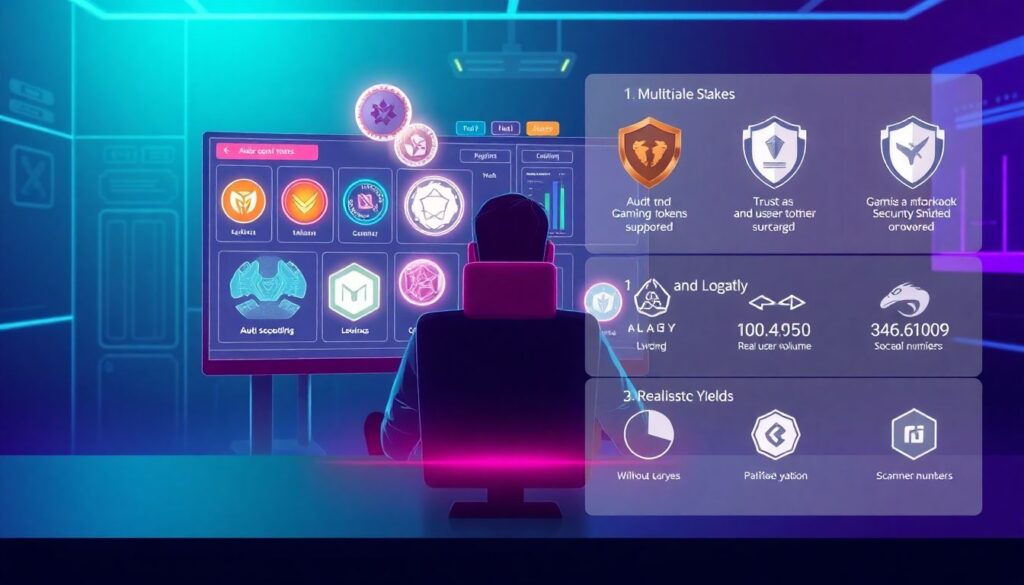
For gamers, the best defi staking platforms for gamers usually share three traits: they support the gaming tokens you actually hold, they’ve been around long enough to have public audits and real user volume, and they don’t promise miracle returns that scream “trap.” Protocols that partner with known gaming projects or launchpads are often a safer starting point than random forks.
If you’re wondering how to earn crypto rewards with defi staking using your gaming coins, the logic is straightforward: pick a chain where gas fees won’t eat your entire yield, choose gaming tokens with active player communities, and verify that the staking contract has been audited or at least widely battle‑tested. LP pools that pair gaming tokens with a major asset (like ETH or a stablecoin) are usually less fragile than obscure token pairs.
Security analysts frequently point out that the safest defi staking sites for gaming tokens rarely advertise the absolute highest APYs. Extremely high rates can signal unsustainable token emissions, thin liquidity, or outright Ponzi‑like mechanics. A slightly lower APY with strong security and liquidity is often the rational choice.
Step‑by‑step: from zero to your first staked position
Let’s walk through a simple, realistic flow you can reuse on multiple platforms:
1. Get the base coin for gas.
Buy the native token of the chain (ETH, MATIC, BNB, etc.) on an exchange. You’ll need it both to stake and to pay transaction fees.
2. Move funds to your non‑custodial wallet.
Withdraw from the exchange to your personal wallet address. Always test with a tiny amount first to avoid disastrous mis‑copies of addresses.
3. Swap into your chosen gaming token.
Use a reputable DEX or the exchange itself to obtain the gaming token you plan to stake. Double‑check the contract address from an official project page or explorer to avoid scam clones.
4. Connect to the staking platform.
Navigate to your chosen platform’s official URL by typing it manually or using a verified link from the project’s site. Connect your wallet and confirm network.
5. Approve token spending.
Before staking, you’ll usually have to “approve” the contract to move your tokens. Set a reasonable spending cap instead of unlimited, especially for new or unproven protocols.
6. Stake your tokens.
Enter the amount, review the displayed APY, lockup period (if any), and reward token. Confirm the transaction in your wallet. Wait for a few block confirmations.
7. Monitor and claim rewards.
Over time, rewards accrue. Some platforms auto‑compound; others require manual claiming. Factor in gas fees when deciding how often to claim.
This flow is similar for high apy defi staking for gaming coins, but the more aggressive the yield, the more carefully you should check tokenomics, lockups, and whether rewards are paid in a token that actually has sustained demand.
Key risks: what can actually go wrong
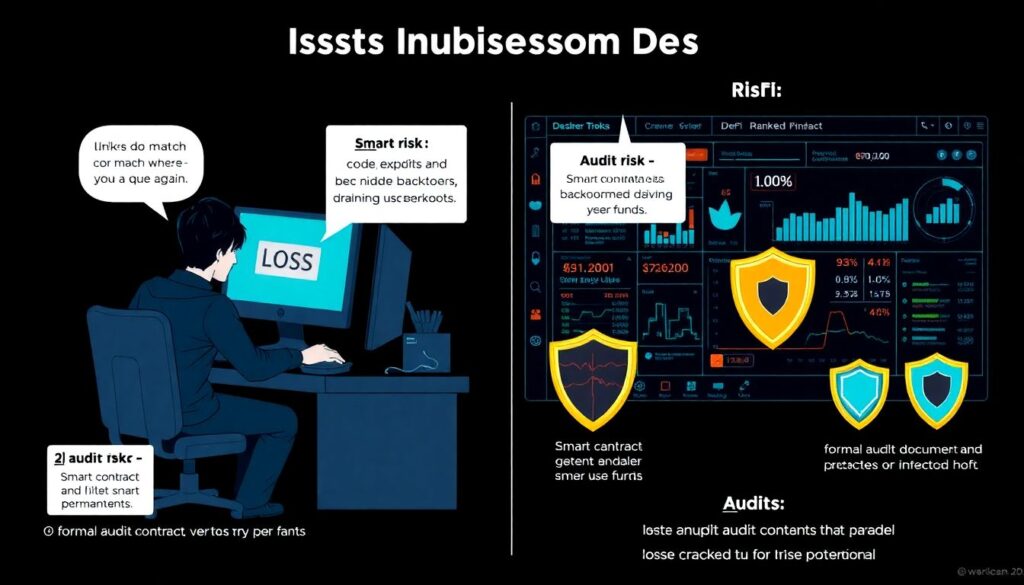
Unlike a bad ranked match, you can’t just queue again after a loss in DeFi. The main risks fall into a few categories that experts see repeatedly:
Smart contract risk is first. Bugs, exploits, and backdoors in the staking contract can drain funds. Audits help but are not a silver bullet. Code that controls large TVL is a tempting target for attackers.
Market risk is next. Gaming tokens are notoriously volatile. Even if you earn a solid yield, a sharp drop in token price can wipe out your gains. In LP positions, impermanent loss adds another layer, especially when one side of the pair pumps or dumps hard.
There’s also counterparty and governance risk. If a team controls upgrade keys, a multisig wallet, or the treasury, corrupt or compromised decision‑makers can break the protocol or rug‑pull. Low‑effort forks are particularly vulnerable here.
Finally, there’s user‑side risk: phishing, malicious browser extensions, or approving unlimited token allowances to contracts you barely checked. Most high‑profile individual losses stem from these “social engineering” angles, not just sophisticated code exploits.
DeFi staking vs gaming: time management and psychology
One underrated angle for gamers is mental load. DeFi adds another “game” you’re playing, with dashboards, token charts, and Discord alerts. Constantly checking APY and price swings can feel like watching the in‑game market 24/7, which easily turns into tilt.
Experts often suggest treating staking like a mid‑term strategy game rather than a twitch shooter. Decide your risk profile and holding period in advance, just as you would pick a build before entering a ranked season. If you find yourself changing platforms every day chasing 2–3% higher APY, you’re not staking anymore—you’re speculating.
How to compare platforms like a pro, not a degen
When you evaluate platforms that claim to be the best defi staking platforms for gamers, don’t stop at the headline APY. Look under the hood:
Long paragraph:
Check if the project has undergone third‑party audits and whether those audits found critical issues that were later fixed. Look at total value locked (TVL) and the number of unique wallets staking; a protocol with low TVL can be more fragile but also easier to move in and out of. Inspect how rewards are funded: are they purely inflationary emissions of the same token, or do they come from real protocol revenue like fees or in‑game transactions? Also, scan the project’s governance: is there a DAO, do token holders actually vote, and is there transparency around treasury usage?
Short paragraph:
A platform that explains its risks and limits clearly is often safer than one that only advertises “guaranteed” gains.
Expert recommendations for gamer‑friendly staking strategies
Seasoned DeFi users who come from gaming communities often recommend three simple principles. First, only stake assets tied to games and ecosystems you’d be willing to hold through a full market cycle. If you’re only there for the reward token and don’t care about the game, you’re gambling on hype.
Second, diversify your positions: a bit in core chain staking (like ETH or a major L2), a bit in established gaming tokens with strong studios, and a smaller experimental slice in new projects you’re actively following. Avoid putting your entire stack into one high‑yield pool just because it looks exciting on paper.
Third, put security above everything. Hardware wallet for significant funds, strict separation of “play wallet” and “cold wallet,” and never approve contracts from links dropped in random chats. Treat signing a transaction like accepting a trade request from a stranger with full inventory access—you wouldn’t do it lightly.
Troubleshooting: when things don’t work as expected
Inevitably, something will glitch: transactions pending forever, rewards not showing, or a UI desync. Your first step is to avoid panicking and verify the on‑chain reality. Use the block explorer to see whether the staking or claim transaction was confirmed. If it shows as successful on‑chain, but the website still shows zero, try clearing your browser cache, reconnecting the wallet, or checking from another device.
If a transaction is stuck as “pending,” you may need to speed it up or cancel it by sending another transaction with a higher gas fee and the same nonce. This sounds technical but your wallet often provides a “speed up” or “cancel” button as an abstraction. For missing rewards, confirm the rules: some platforms distribute once per epoch or only after a specific block height.
Finally, check the project’s official channels—website, X (Twitter), or Discord—for maintenance announcements or outages. If everyone is reporting the same issue, it’s likely a front‑end or indexer problem, not that your funds vanished. If you’re the only one with a problem, triple‑check you interacted with the legit site and not a fake domain.
When to walk away—and when to double down on learning
Not every staking opportunity deserves your attention, even if it looks like high apy defi staking for gaming coins. If the numbers feel disconnected from reality, the team is anonymous with no track record, or the docs are copy‑pasted from another project, closing the tab is often the rational play.
At the same time, DeFi and gaming are converging fast. Learning how to earn crypto rewards with defi staking in a controlled, risk‑aware way can give you an edge as more games integrate on‑chain economies. Treat it like mastering a new complex title: start with the tutorial, understand the mechanics, learn from expert players, and scale your commitment only when you can explain—not just repeat—why your strategy makes sense.