

Most gamers are already good at managing scarce resources: gold in an MMO, ammo in a shooter, time in a speedrun. Liquidity in money works a bit like those in‑game resources — it’s about how quickly you can “sell your loot” for cash without losing value. When you start thinking about investment strategies for gamers, liquidity stops being a dry financial term and becomes a practical question: “If my PC dies, my team wants to bootcamp, or I spot a crazy opportunity, how fast can I get to my money?”
Historical background: от «скинов» к настоящему капиталу
Ten–fifteen years ago, most gamers didn’t think of themselves as investors at all. Prize pools were small, streaming wasn’t mainstream, and the average “gaming income” was more about pocket money than capital. Around 2015–2018 everything began to shift: Twitch and YouTube Gaming exploded, esports prize pools broke records, and game economies with real‑money trading (CS:GO skins, MMO gold, NFT experiments) showed that time spent in games can be monetized in very real cash.
By 2022, according to Newzoo and other industry trackers, the global games market was bringing in roughly $184–186 billion per year, rebounding after the 2020–2021 pandemic spike. In 2023 revenue stayed in that same neighborhood (around $184 billion again), and early 2024 estimates pointed to a return to steady single‑digit growth. This stability meant more streamers, semi‑pro players and creators could rely on gaming as a consistent income source — and that’s when the question “what do I do with this money?” stopped being hypothetical.
За последние три года цифры по киберспорту и контенту тоже подросли. Esports prize pools have hovered around the $250–300 million mark annually since 2022, with The International, Worlds, and a few mobile titles grabbing an ever larger share. Streaming platforms reported that Gen Z and millennials — the main gaming audience — are also the fastest‑growing group of retail investors. Several brokerages noted between 20–30% growth in under‑30 customers from 2021 to 2023, which lines up with what we see anecdotally: more gamers asking not “can I live off games?” but “how do I make sure I don’t blow it all?”
Базовые принципы ликвидности: что это вообще такое
Liquidity is how quickly and easily you can turn an asset into spendable money without taking a big loss. Cash in your bank account is perfectly liquid. A stock of a large company traded on a major exchange is very liquid: you can usually sell it in seconds during market hours. A rare Yu‑Gi‑Oh card, a high‑end gaming PC, or a token of some obscure crypto game is illiquid: you might sell it eventually, but not instantly, and probably not at the price you want.
From a gamer’s point of view, think of a liquid asset as something you can “quick‑sell” like common loot to a vendor, and an illiquid one as a rare drop that might sit on the auction house for days. Liquidity risk is the danger that when you really need money — emergency flight, new GPU, medical bill, or your team’s bootcamp — the only assets you own are those “rare drops” no one wants to buy right now.
There are three core ideas you can use as a framework for financial planning and investing for gamers:
1. Time horizon. Money you might need within 1–2 years should stay in highly liquid investments. Funds you won’t touch for 5–10 years can live in less liquid, potentially higher‑return assets.
2. Risk vs. liquidity. Not all liquid assets are safe (crypto is very liquid but volatile), and not all illiquid assets are risky (some bonds are ultra‑safe but not easy to sell). You need both dimensions in mind.
3. Layers of money. Just like you gear up your character in layers — basic armor, then rare pieces, then situational items — you build layers of cash, liquid investments, and long‑term holdings that match your lifestyle and career path.
Как ликвидность вписывается в стратегию геймера‑инвестора
Over the last three years, gaming income has become more unpredictable and more flexible at the same time. Twitch and YouTube ad revenue change month to month; donations spike during big events; sponsorships and prize money arrive in lumps. That’s why any realistic guide on how to invest gaming profits wisely starts with the same recommendation: anchor your unstable gaming money to very stable, very liquid buffers.
Imagine you’re a mid‑tier streamer earning $1,500–2,000 a month on average, with big spikes during new game launches. A sensible liquidity‑focused strategy could look like this:
1. Emergency fund: 3–6 months of your average expenses in a high‑yield savings account or money market fund you can access in a few clicks.
2. Short‑term goals (1–3 years): money for a future PC upgrade, a move to a gaming house, or tournament travel costs in low‑risk, liquid investment options for gamers such as short‑term government bond ETFs.
3. Long‑term stack (5+ years): a diversified mix of stock and bond ETFs, maybe some real estate exposure via REITs, that you don’t touch unless your life goals change dramatically.
This layered approach turns volatile gaming cash flows into something closer to a stable mana pool: you always have resources ready when the raid (life) demands them, while a part of your gold quietly compounds in the background.
Статистика 2022–2024: что делают молодые инвесторы
Survey data from 2022–2024 paints a clear picture: young people — the same age group that spends the most on games — are heavily entering markets. For example, a 2023 Charles Schwab report found that about 54% of Gen Z in the U.S. were already investing in some form, up from the mid‑40s only two years earlier. Various brokerages in North America and Europe reported that investors under 30 accounted for roughly 25–35% of new accounts opened between 2021 and 2023.
At the same time, these new investors tend to be under‑diversified and over‑concentrated in “hype” assets. Several studies from 2022–2023 showed that a significant chunk of young retail investors (often 30–40%) held crypto as their largest or second‑largest asset class, while only a minority kept a proper cash buffer. Among gamers and creators, this skew can be even stronger, because we’re used to chasing “high DPS” strategies and underestimate boring defense. This is exactly where understanding liquidity can prevent a lot of unnecessary pain.
Примеры реализации: сценарии для разных типов геймеров
To make all of this practical, let’s look at three scenarios and see how liquidity changes the outcome. These aren’t strict recipes, more like builds you can tweak, the way you’d adjust your loadout for a different map.
1. Part‑time gamer, full‑time job
You stream a few evenings a week and sometimes win local tournaments. Gaming brings in an extra $200–500 a month. Here, the role of liquidity is modest but important. You might: keep 1–2 months of expenses in cash, sweep your side‑income into a low‑cost, broad‑market ETF through one of the best platforms for gamers to invest money (i.e., any beginner‑friendly, low‑fee brokerage app), and keep maybe 10–15% of your portfolio in “fun” high‑risk plays you’re ready to lose.
2. Aspiring pro / full‑time streamer
You rely mostly on gaming income and maybe some freelance work. Volatility is high; one month you’re up, another you’re barely covering rent. In this case, liquidity is your lifeline. Instead of YOLOing every surplus dollar into crypto or meme stocks, you build: 4–6 months of bare‑bones expenses in a highly liquid account, automatic monthly contributions to diversified ETFs, and clear rules like “I never invest tournament prize money I may need for travel within the next year into anything that’s not easily sellable.”
3. Established pro or large creator
You earn solid five‑ or six‑figure sums a year from prize pools, sponsorships, or content. Now you’re playing in “wealth builder” mode. Liquidity still matters, but in a more strategic way. You can afford: 6–12 months of expenses plus business costs (editor salaries, team travel) in liquid assets, a sizable long‑term portfolio that may include less liquid stuff (private investments, real estate), and maybe even a separate “angel investing” bucket for gaming startups — which you treat as illiquid money you won’t see again for 5–10 years.
Где держать «быстрые» деньги: практичные инструменты
In the last three years, fintech competition exploded, which is great news if you’re looking for liquid, low‑friction places to keep your cash. Many neo‑banks and brokers now offer high‑yield savings and instant‑access money market funds with rates that often beat traditional banks, especially in a higher interest‑rate environment like 2022–2024.
When you look for liquid investment options for gamers, prioritize a few traits: no crazy lock‑ups or withdrawal penalties; clear fee structures; and simple, diversified products like broad‑market ETFs for money you don’t need instantly but still want to be able to sell within minutes. For pure short‑term parking of funds, a boring high‑yield savings account linked to your main bank or broker often beats the thrill of day‑trading — and statistically protects you from the most common rookie mistakes.
Частые заблуждения о ликвидности (и почему они опасны)
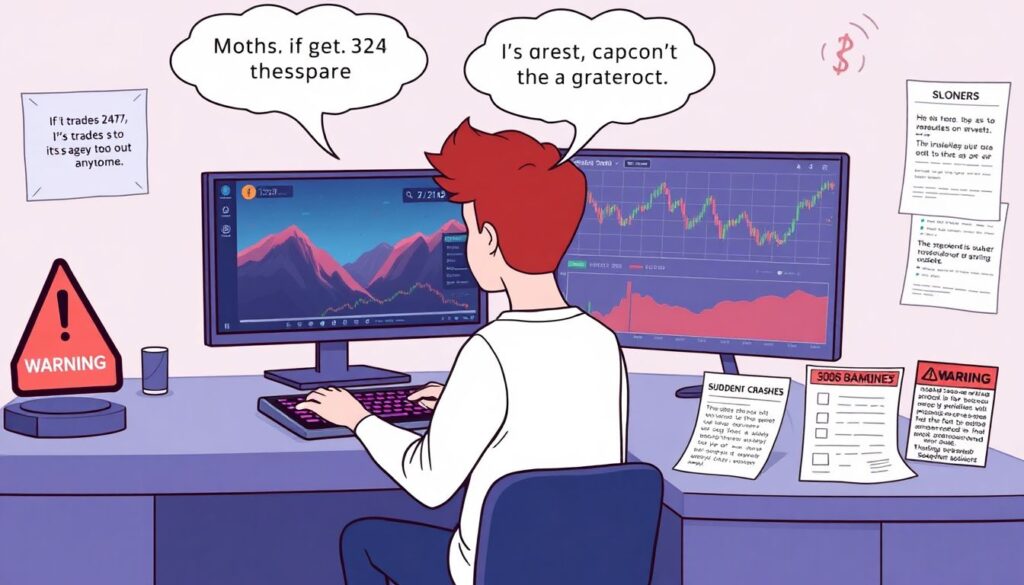
There are a few myths that repeatedly trip up people moving from gaming into investing. The patterns are so consistent over the 2022–2024 period that many brokers and regulators have explicitly warned about them.
First misconception: “If it trades 24/7, it’s safe to get out anytime.” Crypto markets are extremely liquid on paper, and many gamers got into them heavily after 2020. But the crashes of 2022 showed that when volatility spikes, spreads widen and platforms can halt withdrawals. In other words, being *tradable* is not the same as being *reliably liquid under stress*.
Second misconception: “Cash is trash; invest everything.” Between 2020 and 2023, a lot of social media finance content pushed the idea that holding cash is stupid because of inflation. For someone with a stable salary and strong safety nets, that’s debatable but survivable. For a gamer with volatile income, it’s often fatal. Without a liquid buffer, a single bad month can force you to sell long‑term investments at the worst possible time — turning what could have been a temporary drawdown into a permanent loss.
Third misconception: “Locked = guaranteed profit.” Some platforms market staking, time‑locked savings, or long vesting schedules as a way to “force discipline.” That can help *if* you already have plenty of liquid reserves. But too many gamers lock up what little savings they have into products they don’t fully understand and then get wrecked by real‑life emergencies. Liquidity is not the enemy of discipline; it’s the foundation that allows discipline to exist.
Как геймеру собрать свою ликвидную стратегию: пошаговый план
If you prefer clear quests over vague advice, here’s a straightforward, liquidity‑first framework to adapt to your situation. Think of it as a base build for financial planning and investing for gamers that you can respec later as your “level” (income) goes up.
1. Calculate your burn rate.
Track at least three months of real expenses: rent, food, internet, subscriptions, travel, meds, game purchases — everything. Average it out; that’s your monthly “mana cost” to stay in the game.
2. Set a liquidity target.
If gaming is a side hustle, aim for 3 months of expenses; if it’s your main income, 6+ months is safer. That total is your emergency and opportunity fund.
3. Choose your liquid vehicles.
Split that target between an instant‑access bank account and a low‑risk, highly liquid fund (like a money market fund or short‑term government bond ETF, depending on your country). Keep it boring and fee‑light.
4. Automate the refill.
After every payout — Twitch, YouTube, prize money, freelance gig — send a fixed % straight into your liquid layer until you hit your target. Only then start scaling up more volatile investments.
5. Define your illiquid experiments.
Cap your high‑risk, less liquid plays (small‑cap stocks, niche crypto, private deals) to a fixed share of your total net worth, maybe 5–15%. That way, even if the “bets” go to zero, you’re still in the game.
Платформы и экосистема: на что смотреть геймеру‑инвестору
When people search for the best platforms for gamers to invest money, they often imagine some kind of “gamified broker” with leaderboards and loot boxes. In reality, the best platforms for you are usually the ones that do *less*: fewer distractions, fewer complicated products, more transparency, and easy access to your funds.
In 2022–2024, the trend has been clear: regulators and serious brokers are pushing for simpler, evidence‑based products for retail investors, while the more aggressive apps lean into gamification. If you already get your dopamine from games, you don’t need your investing app to feel like a gacha machine. Look for: low fees, solid reputation, clear information about how fast you can deposit and withdraw, and easy ways to buy diversified funds instead of forcing you into constant trading.
Итог: ликвидность как ваша универсальная кнопка «panic save»
Liquidity doesn’t sound glamorous, but for anyone living off gaming — or even just earning a decent side income from it — it’s the difference between constantly playing life on “hardcore mode” and having a reliable checkpoint system. Over the last three years, as both gaming and retail investing have grown, we’ve seen the same storyline repeat: players who treat their money like a one‑shot boss attempt often get wiped; those who layer cash, liquid assets, and longer‑term investments tend to survive bad patches and capitalize on good ones.
If you remember nothing else, keep these three lines in your head: build a cash and liquid buffer before you chase returns; don’t confuse 24/7 trading with real safety; and adjust your liquidity level whenever your life or career “difficulty” spikes. That simple mindset shift turns random investment strategies for gamers into a coherent plan — and lets you focus on winning the games you actually care about.